
Best betting sites with acca bets in 2026
 Available in US
Data current as of October 30, 2026. Operator licences and remote betting permissions were cross-checked against the Gambling Commission’s public register for Great Britain.
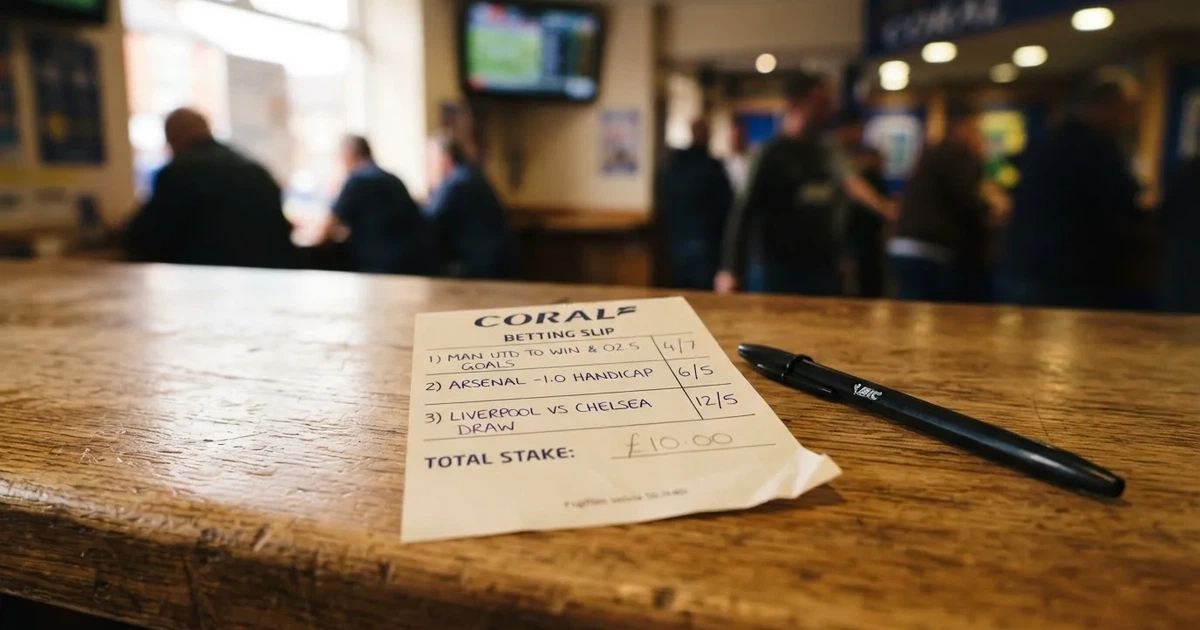
Accumulators draw a particular kind of punter: the sort who wants four football results on a Saturday rather than one. The appeal is obvious on a betting slip, where four short prices multiply into a long one and a small stake becomes a tempting return. The arithmetic behind that slip is less obvious, and so is the question of which bookmaker builds the right product around it. This page works through both: how an acca is built, priced and settled, and which of ten Gambling Commission-licensed brands serve it best for whom.
How UK betting is regulated
Every bookmaker reviewed here holds a remote operating licence issued by the Gambling Commission under the Gambling Act 2005. The Act covers Great Britain, meaning England, Scotland and Wales; Northern Ireland runs on a separate, older framework and is not covered by a GB licence. A bookmaker taking remote bets from customers in Great Britain needs a Commission licence regardless of where the company itself is incorporated. The Commission’s public register is the test of who holds one: it is searchable by business name, trading name, domain or account number, and it lists every licence category the operator runs under.

The relevant categories for the brands reviewed here are remote general betting standard (real events), which covers pre-match and in-play sports betting, and remote general betting standard (virtual events), a separate permission that covers computer-simulated fixtures. A pool-betting licence covers horse and greyhound pool products, while a betting-intermediary licence is the one exchanges run under. No statutory list of permitted markets exists; an operator decides what to offer within its licence category and the Licence Conditions and Codes of Practice (LCCP).
Since the Gambling (Licensing and Advertising) Act 2014, the point-of-consumption rule means a Curaçao, Maltese or Gibraltar licence is not enough to serve a customer in Great Britain. The remote general betting standard licence is what makes a brand legal to use from a British address. There is no state monopoly, no cap on the number of licences and no published ceiling on stakes. Operators set their own maximum stakes and may restrict individual customers, which is why a bookmaker that accepts £500 on the Premier League from one account might decline a similar stake from another.
The player pays no tax on sports betting winnings in Great Britain. General Betting Duty is the operator’s tax, currently 15% on gross profits from general betting, with a new remote betting rate of 25% taking effect on 1 April 2027 alongside a 15% rate that stays in force for remote bets on UK horse racing, self-service terminals in licensed premises, pool betting and in-person betting. Until that date the remote rate stays at 15%. Whether operators pass duty through into odds is not established, and a bettor’s return on a winning acca is paid out gross.
Betting and casino are distinct permissions with distinct rules. A casino stake limit is not a betting stake limit; a casino free bet is not a betting free bet. The brands reviewed here hold remote betting permissions, and what is written about them applies to that activity.
Safer gambling tools and customer protection
The British framework layers several protection mechanisms on top of the licence. GAMSTOP is the national multi-operator online self-exclusion scheme and a mandatory condition of every remote betting licence since 31 March 2020. Self-exclusion periods run six months, one year, five years, or five years with auto-renewal, and after the minimum period the exclusion stays in place for a further seven years unless the customer asks GAMSTOP to remove it. GAMSTOP covers online sites and apps; betting shops use a separate, land-based scheme. Every GB-licensed online operator takes part in GAMSTOP.

The financial vulnerability check, an LCCP condition in force since 30 August 2024 and triggered in practice since 28 February 2025, applies to remote betting when a customer’s deposits minus withdrawals cross £150 in a rolling 30-day window. It is a public-record check, the kind that surfaces bankruptcy orders or county court judgments, not an income check and not a credit reference check. The broader financial risk assessments, sometimes called affordability checks in the press, are announced in a staged plan issued by the Commission on 7 July 2026, with no start date.
Deposit limits under Remote Technical Standard 12 require operators to offer a gross deposit limit set on a fixed time frame. The first changes have applied since 31 October 2025 and a second phase was postponed to 30 September 2026; whether that second phase is live is not established. There is no state-set deposit or loss ceiling for sports betting, and any limit a customer sets is the customer’s own choice, not a regulatory one. Where a brand offers its own deposit or stake cap above the regulatory minimum, that cap is a commercial decision and not a licence requirement.
Credit cards are banned for gambling in Great Britain since 14 April 2020 (LCCP condition 6.1.2), and the ban extends to credit-card-funded payments through an e-wallet. Debit cards and bank-based payments are not affected. Identity verification is mandatory before the first deposit or gamble, including where a free bet or bonus is claimed, with name, address and date of birth checked since 7 May 2019; no licensed site allows an anonymous account.
The help lines for anyone whose betting is becoming a problem are GamCare (which runs the National Gambling Helpline), GambleAware, the NHS gambling clinics, and Gamblers Anonymous. Each is free, confidential and available regardless of which operator a customer uses.
A note on offshore brands, written here once because it does not change between sections: an unlicensed site that takes bets from a British address is committing an offence under section 33 of the Gambling Act 2005, aimed at the operator; the customer is not prosecuted for using it, but loses the protections above (no GAMSTOP coverage, no Commission complaints route, no approved dispute-resolution body, no British consumer redress if funds are withheld, no bonus cap, no vulnerability check) and may lose the deposit itself if the operator walks away. Honest framing: licensed means checks, limits, GAMSTOP, bonus cap and identity verification; unlicensed means none of those, and the bettor carries the risk. Neither is “the safe choice” by default.
Bonuses and free bets on accumulators
The marketing around accumulator betting tends to lean on two words: free and boosted. Both are worth examining before they appear on a slip.
A free bet is exactly that: a token the operator credits to the account, which the customer uses as stake. The stake is not usually returned with the winnings, meaning a £10 free bet at decimal odds of 4.00 returns £30 in profit and the £10 stake disappears, rather than the £40 total a cash stake would produce. That distinction is the value of a free bet, and any advertised headline that compares it with a cash bonus has skipped past it. Free bets on accumulators work the same way as on singles: the stake funds one bet, the odds of each leg multiply into one price, and the winnings land as cash once qualifying conditions are met. Common conditions are a minimum number of selections (often three or four), a minimum odds floor per leg (a typical line is 1/5 or 1/2 decimal odds), a 7-day or 14-day expiry, and a market exclusion list that often rules out virtual sports, esports and non-UK or non-Irish horse racing.
Price boosts, sometimes called enhanced odds, raise the payout odds above the market price for a defined selection or acca. A boosted four-fold from 25/1 to 50/1 pays twice the un-boosted return, but the boost usually caps the stake at a fixed amount and the maximum winnings are capped at a fixed ceiling, so a “boost” that wins £5,000 on a £100 stake can be quietly limited to £500. The advertised line is the ceiling, not the floor.
Acca insurance refunds the stake as a free bet (not as cash) when one leg of a multi lets the customer down. The typical version applies to four-folds or larger, refunds only the stake (never the winnings), pays as a free bet with its own expiry and minimum odds, and excludes certain markets. The relevant cost is the requirement to land five, six or seven legs to win anything in cash; the insurance pays out only on the failure case.
Wagering requirements, the multiplier that turns a bonus into withdrawable cash, are capped at 10x by the Commission for bonuses with a wagering condition, in force since 19 January 2026. A £10 bonus at 50x would have needed £500 of qualifying bets; under the cap no bonus can demand more than £100 of qualifying bets for every £10 awarded. Mixed-product promotions, offers that require gambling on two or more product types (betting, casino, bingo and lottery, for example), are banned under the same rules. Whether the cap applies to a free bet with no wagering condition and any cap on the money value of a bonus are not established.
The relevant figure is the value of the offer once the conditions are read, not the size of the headline. A £30 free bet with a 7-day expiry, a 1/2 minimum odds floor per leg and four selections required is worth roughly what a £30 cash stake would clear at the same odds, minus the unrecovered stake, minus the qualifying bets a customer must place elsewhere to earn it in the first place. That calculation helps a reader compare the actual worth, rather than just the promotional headline.
Predictions, tips and the limits of acca tips
Tipsters sell four-fold and five-fold accumulators every Saturday, and the trade is worth naming for what it is. No tipster can predict the outcome of a sporting event with the certainty a price implies, and an accumulator compounds that uncertainty across each leg. A four-fold at 1/2, 1/2, 1/2, 1/2 (decimal odds 1.50, 1.50, 1.50, 1.50) multiplies to 5.06, which looks attractive on a slip, but each leg has roughly a 67% chance of winning at those prices and the four-fold has roughly a 20% chance of winning all four. The price is the inverse of the probability the bookmaker attaches to each leg, with a margin taken out, and the bookmaker’s margin sits inside every price.
A tipster who claims a hit rate of, say, 40% on accumulator tips is selling a figure that sits between the probability of a single short-priced leg and the compounded probability of the full acca, and the gap between the two is where the margin disappears. The honest framing: tips can narrow a field, but they cannot move the price below the cumulative margin, and any service that promises regular accumulator wins is selling certainty nobody has.
What a tipster can do is curate a shortlist, flag a market the bookmaker has mispriced, and identify a sport or league with form the public prices overlook. The rest is staking, and staking is where most acca bettors lose. A small punter who backs three four-folds a week at £10 each will, on a 20% hit rate at 5.06, see roughly one winner a week returning £50.60 against £30 of stakes, a £20.60 weekly deficit before the margin is taken out, and a larger deficit after. The honest staking plan is to size the stake to the bank, accept that the margin is permanent, and treat the acca as a lottery-ticket product rather than an income.
Predictions are free at the Racing Post, the BBC, and the form sections of every GB-licensed bookmaker reviewed here. A paid tipster is a discretionary spend, and the price of a paid tipster should be set against the cumulative hit rate and the price of free information.
Bet types, odds and how an acca is built
An accumulator (also called a parlay, acca, combo bet or multi) is a single bet that links two or more individual wagers. The bet wins only if every linked selection wins; a losing leg loses the whole bet. In fixed-odds accumulators the payout odds are the product of the odds of each selection, which is why decimal odds suit the format and why every price quoted on a British betting slip carries the bookmaker’s margin.
A leg that ties, a push in American usage, is removed from the bet and the payout odds are reduced to match the remaining selections. The bet does not lose; the stake is preserved and the odds recompute. An each-way accumulator places two bets of equal stake, one on the win and one on a place finish, so the stake doubles. Each-way terms vary by sport and by race; a horse-racing each-way acca typically pays 1/4 or 1/5 of the win odds on the place finish, with the number of places set by the race and the field.
Full-cover bets are pre-built multiples that cover every combination of a chosen set of selections:
| Bet | Selections | Bets |
|---|---|---|
| Trixie | 3 | 4 |
| Patent | 3 | 7 |
| Yankee | 4 | 11 |
| Lucky 15 | 4 | 15 |
| Super Yankee (Canadian) | 5 | 26 |
| Heinz | 6 | 57 |
| Goliath | 7 | 247 |
The total stake on a full-cover bet is the unit stake multiplied by the number of bets, so a £1 Trixie costs £4 and a £1 Lucky 15 costs £15. A Lucky 15 also includes four singles, which pay out even when the multiples lose, and that is the relevant feature for a punter who wants some return on a near-miss.
Bet Builder, also called a same-game multi on some sites, combines markets from a single event into one bet. A typical builder might combine the match result, total goals, both teams to score and the first goalscorer into one price. Bet Builder+ extends the feature into in-play. Builders carry the bookmaker’s margin twice over because each market within the builder carries its own margin and the builder price is compounded.
Cash Out settles a bet before the final event has run. The cash-out figure is the bookmaker’s live estimate of the bet’s current value, with the margin taken out twice: once in the original price and once in the cash-out figure. A punter who routinely cashes out four-folds at the third leg is paying the margin four times on each leg and once on the cash-out, and the cumulative cost is the difference between the advertised return and the cashed-out figure.
Worked return on a four-fold acca
A £10 stake on a four-fold accumulator at illustrative fractional prices of 1/2 (1.50), evens (2.00), 6/4 (2.50) and 4/5 (1.80) pays decimal odds that multiply to 1.50 × 2.00 × 2.50 × 1.80 = 13.50. The return, including the £10 stake, is £135.00; the profit is £125.00. The same four-fold at six prices instead of four multiplies further; the same four-fold with a single leg at odds-on (3/10, decimal 1.30) drops the price below 10.00 and the return to £90.00.
The illustrative stake of £10 is a page example, not a recommended price, and the leg odds are placed to show the multiplication rather than the price of any real fixture. The condition that matters for any punter is that the four-fold needs all four legs to win for any return at all.
The bookmaker’s margin
The bookmaker’s margin sits inside every price and is the cut the operator takes from every unit staked on a market. The margin of a three-way 1X2 football market (home win, draw, away win) is calculated by converting each price to its implied probability and adding them up: home at 2/1 (decimal 3.00) implies 33.3%, draw at 9/4 (decimal 3.25) implies 30.8%, away at 4/5 (decimal 1.80) implies 55.6%, for a total of 119.7%. The margin is the 19.7% over 100% — the overround. The payout share is the 100% divided by 119.7%, or 83.5%. The margin of one market is not the margin of another: a totals market, a handicap market and a combination bet each carry their own margin, and one sport’s margin is not another’s.
A typical Premier League 1X2 margin at the major bookmakers sits between 4% and 8% before kick-off; the in-play margin widens because the price moves faster than the book can fully reprice. A typical horse-racing SP margin is wider because the betting pool carries the takeout. The accumulator margin compounds the margin of each leg, so a four-fold with 5% per leg carries a margin closer to 19% across the bet.
Ten UK-licensed bookmakers with accumulator betting
The comparison below ranks ten bookmakers that hold a remote general betting licence from the Gambling Commission and offer accumulator products. A place in this comparison is not a recommendation, a licence is not an endorsement, and the order reflects how the product suits a particular punter rather than the regulatory standing of the brand.
| Brand | Gambling Commission licence | What the operator states on accumulators |
|---|---|---|
| bet365 | 055148-R-331498-002, Hillside (UK Sports) ENC | Bet Builder+ combines markets from one event into a single bet, available pre-match and in-play; Super Boosts, Winnings Boosts on Bet Builders and selected singles, and daily Bet Boosts. |
| Geoff Banks | 054095-R-330366-010, GB Sports Advisors Limited | Live in-play prices and ante-post prices on future events; the app is published by GB Sports Advisors Ltd. |
| Kwiff | 044448-R-323408-017, Eaton Gate Gaming Limited | Supercharge feature can instantly boost the odds on a bet, for example from 2/1 to 20/1, and it can apply to single or multi bets on any sport. |
| Fitzwilliam Sports | 048760-R-335434-009, SBKI Limited | Prices based on Oddschecker’s average price for each selection; Apple and Google mobile apps. |
| Dabble | 065677-R-340363-005, Dabble Sports UK Ltd | Welcome offer of “Bet £10, Get £10 in Free Bets” on first deposit for new customers, with minimum odds, a 7-day free bet expiry and the stake not returned. |
| Swifty Sports | 058957-R-334734-006, Swifty Global (UK) Ltd | Best Odds Guaranteed, Cash Out on markets including horse racing and football, daily price boosts, live streaming and in-play betting; Bet Builder listed as coming soon. |
| Octobet | 062545-R-337248-006, Octopus Game Limited | Best Odds Guaranteed on UK and Irish horse racing, up to £150 per customer per race. |
| BetGoodwin | 002927-R-327985-008, Goodwin Racing Limited | Welcome offer of “Bet £10 & Get £15 in Free Bets” split into a £5 sports bet, a £5 acca and a £5 Sub-Cover bet. |
| Betfred | 039544-R-319290-010, Petfre (Gibraltar) Limited | Bet Builder, Sub Switch, Racing Post data, Extra Places, live casino and bingo. |
| BetUK | 039198-R-319450-029, LeoVegas Gaming PLC | Free bets exclude virtual sports, esports and non-UK/IE horse racing, with minimum odds applying. |
The brand-by-brand reviews that follow cover each operator against the same set of questions: what the acca product looks like, what the welcome offer demands, what the licence covers, and which punter each bookmaker suits.
1. bet365
bet365 holds Commission licence 055148-R-331498-002 under Hillside (UK Sports) ENC. The product range for accumulators is the deepest in this list: Bet Builder+ combines markets from a single event into one bet, available both pre-match and in-play; Super Boosts run on selected events; Winnings Boosts apply to Bet Builders and selected singles; and daily Bet Boosts cover a curated shortlist. Cash Out and partial Cash Out are standard, and Edit Bet allows a punter to add, swap or remove selections on open accumulators, which suits a punter who wants to react to team news. Best Odds Guaranteed applies to UK and Irish horse racing.
The licence is the longest-running of the brands reviewed, the product range the broadest, and the in-play offering the most complete. The price is rarely the headline price, because Super Boosts and price-driven promotions carry the marketing, and a margin comparison against a sharper bookmaker will usually show bet365 a tick or two wider on the same fixture. That gap is the cost of the product range.
For a punter who wants the full accumulator toolkit under one roof and is comfortable paying for it in margin, bet365 is the default choice. For those prioritizing absolute margin, consider a specialist provider.
2. Geoff Banks
Geoff Banks holds Commission licence 054095-R-330366-010 under GB Sports Advisors Limited. The app, published by GB Sports Advisors Ltd, offers live in-play prices and ante-post prices on future events. The product range is narrower than bet365’s: there is no Bet Builder on the public-facing app page, no Supercharge-style odds boost, and the welcome offer is modest.
The brand suits a smaller-stake punter who wants the ante-post market and the in-play prices without the marketing weight of the major bookmakers. The acca product is a standard accumulator, and the feature that distinguishes the brand is the focus on future-event prices rather than day-of prices.
For a punter building a long-shot ante-post accumulator, Geoff Banks offers a sharper product than a generalist bookmaker. For those preferring modern Bet Builder features, however, the brand may feel limited.
3. Kwiff
Kwiff holds Commission licence 044448-R-323408-017 under Eaton Gate Gaming Limited. The product is built around the Supercharge feature, which can instantly boost the odds on a bet (for example from 2/1 to 20/1) and can apply to single or multi bets on any sport. The feature is the marketing line and the differentiator in the comparison.
The Kwiff acca is a standard accumulator with an unpredictable boost layer on top. The stake limit on a boosted bet is typically capped, and the maximum winnings are capped at a fixed ceiling, so the headline price is the ceiling, not the floor.
For a punter who values the surprise boost over the predictable margin, Kwiff is a distinct product in the market. It prioritizes the odds-boost mechanics over the traditional accumulator depth.
4. Fitzwilliam Sports
Fitzwilliam Sports holds Commission licence 048760-R-335434-009 under SBKI Limited. The pricing model is built on Oddschecker’s average price for each selection, which is a public price-aggregation feed rather than the operator’s own traders. The brand publishes Apple and Google mobile apps.
The acca product is a standard accumulator priced at the Oddschecker average, which usually sits between the major bookmakers and the sharper ones. The product range is narrower than the generalists: there is no Bet Builder on the public-facing page, no Supercharge feature, no daily price boost.
For a punter who wants an average-priced accumulator without the marketing weight, Fitzwilliam Sports is a solid entry. Those requiring the full toolkit of a massive generalist book may prefer a larger provider.
5. Dabble
Dabble holds Commission licence 065677-R-340363-005 under Dabble Sports UK Ltd. The welcome offer is “Bet £10, Get £10 in Free Bets” on a first deposit for new customers, with minimum odds applying, a 7-day free bet expiry and the stake not returned.
The Dabble acca is a standard accumulator with a small welcome free bet. The stake is not paid back with winnings, which is the typical free-bet structure rather than the typical cash-bonus structure. The 7-day expiry is short against the 14-day or 30-day window of some competitors.
For a new customer who wants a small free bet to test the product, Dabble is a clean fit. For experienced bettors seeking a long-term loyalty program or stake-returned offers, this might not be the primary choice.
6. Swifty Sports
Swifty Sports holds Commission licence 058957-R-334734-006 under Swifty Global (UK) Ltd. The product range includes Best Odds Guaranteed, Cash Out on markets including horse racing and football, daily price boosts, live streaming and in-play betting; Bet Builder is listed as coming soon.
The Swifty Sports acca is a standard accumulator with a comprehensive in-play layer. The Bet Builder feature is not yet live, so a punter who wants a same-game multi on a single fixture will not find it on this brand.
For a punter who wants Best Odds Guaranteed and live streaming on horse racing and football, Swifty Sports is a clean fit. Integration of Bet Builder is currently pending, which impacts its scoring for accumulator specialists.
7. Octobet
Octobet holds Commission licence 062545-R-337248-006 under Octopus Game Limited. Best Odds Guaranteed applies to UK and Irish horse racing, up to £150 per customer per race.
The Octobet acca is a standard accumulator with a Best Odds Guaranteed ceiling that caps the per-race payout. The £150 ceiling is lower than the £/€1,000 or unlimited ceilings some competitors publish on major festivals, so a punter backing a long-priced winner at Cheltenham will see the offer clipped.
For a punter backing modest stakes on UK and Irish horse racing, Octobet is a clean fit. For those seeking higher or unlimited Best Odds, other operators may offer more flexibility.
8. BetGoodwin
BetGoodwin holds Commission licence 002927-R-327985-008 under Goodwin Racing Limited. The sports welcome offer is “Bet £10 & Get £15 in Free Bets”, split into a £5 sports bet, a £5 acca and a £5 Sub-Cover bet, which is an unusual three-part structure rather than a single free bet.
The BetGoodwin acca is a standard accumulator with a £5 acca free bet component. The Sub-Cover bet is a partial-cover multiple, which suits a punter who wants exposure to a multi without the cost of a full-cover bet. The £15 headline is split across three bet types, so the acca-specific value is the £5 acca component.
For a punter who wants a sample of three bet types from one welcome offer, BetGoodwin is a clean fit. For a punter who wants a single £15 free bet on the accumulator, the brand is the wrong fit.
9. Betfred
Betfred holds Commission licence 039544-R-319290-010 under Petfre (Gibraltar) Limited. The product range includes Bet Builder, Sub Switch, Racing Post data, Extra Places, live casino and bingo. The Betfred acca is a standard accumulator with a Bet Builder layer.
The product range is broader than most of this list and the Racing Post data integration is a differentiator. The brand carries the marketing weight of a long-established high-street bookmaker, and the welcome offer is the standard format rather than a headline-grabbing line.
For a punter who wants Bet Builder and form-data integration on the same slip, Betfred is a clean fit.
10. BetUK
BetUK holds Commission licence 039198-R-319450-029 under LeoVegas Gaming PLC, with a remote general betting standard (real events) category. Free bets exclude virtual sports, esports and non-UK or non-Irish horse racing, and minimum odds apply.
The BetUK acca is a standard accumulator with a defined exclusion list. The exclusion of non-UK and non-Irish horse racing is the relevant restriction for a punter who backs international racing, and the exclusion of virtual sports and esports is the relevant restriction for a punter who builds a multi around computer-simulated fixtures or competitive gaming.
For a punter focused on UK and Irish sport with a standard accumulator, BetUK is a clean fit. For a punter who wants a multi that mixes racing and virtuals, the brand is the wrong fit.
The accumulator landscape in one read
An accumulator is the British punter’s default multiple bet, but the landscape around it splits into a few clear strands. One strand is the broad product range, where bet365 and Betfred lead with Bet Builder, in-play, cash-out and price boosts that compound the feature set. A second strand is the price-driven product, where Kwiff’s Supercharge and Swifty Sports’s daily price boosts lead, and the headline odds are the marketing line rather than the underlying margin. A third strand is the average-priced product, where Fitzwilliam Sports’s Oddschecker feed leads, and the price is the public average rather than the operator’s own traders. A fourth strand is the racing-led product, where Octobet and Geoff Banks lead with ante-post and Best Odds Guaranteed, and the rest of the sport book is a smaller line. A fifth strand is the welcome-led product, where Dabble and BetGoodwin lead with a free bet, and the accumulator is one component of the offer rather than the whole product.
Which strand a punter wants depends on what the acca is doing for them. A punter who treats the acca as a Saturday-morning flutter with a small stake wants the broadest product range, because the headline features are the marketing line. A punter who treats the acca as a serious staking plan wants the thinnest margin and the cleanest terms, because the marketing features are the cost. A punter who treats the acca as a long-shot ante-post bet wants the racing-led product and is happy to pay for it in a narrower sport book. A punter who treats the acca as a way to use a free bet wants the welcome-led product and reads the expiry and the exclusion list before the stake lands.
The honest summary: every brand on this list is licensed, every brand pays out, and the differences are in the product range, the price, the welcome offer and the punter each one suits. The right pick is the one that suits the punter in front of you.
A worked return on the worked example
The worked example from the bet-types section, a £10 stake on a four-fold at illustrative fractional prices of 1/2, evens, 6/4 and 4/5, multiplies to decimal odds of 13.50. The return, including stake, is £135.00. The profit, excluding stake, is £125.00. The range of plausible returns at the same stake, on a four-fold where each leg carries roughly 5% margin, runs from a low around 12.00 (where each leg is at the longer end of the implied probability) to a high around 15.00 (where each leg is at the shorter end), which puts the worked example in the middle of the band and the return between £120 and £150.
The condition that matters is that every leg must win. A four-fold where one leg has a 60% chance of winning has roughly a 13% chance of all four winning, before the margin is taken out, and roughly a 16% after. A £10 stake at 13.50 returns £135 on that 16% probability, which gives an expected return of £21.60 over many bets at £10 each. The £10 stake costs £10; the expected return costs £21.60; the difference is the bookmaker’s margin, compounded across four legs.
The figure is an illustrative example, not a guaranteed outcome for any single bettor, and it assumes the same four-fold at the same odds over many bets. The expected cost on the worked stake is roughly £10 minus the £11.60 of expected return, or a deficit of about £1.40 per £10 staked across many bets. That calculation gives a reader the expected return on the bet, assuming only the stake is at risk and only the four legs are in play.
What to check before claiming any accumulator offer
The conditions attached to a free bet, a price boost or acca insurance matter more than the headline. A £30 free bet with a 7-day expiry, a four-selection minimum, a 1/2 minimum odds floor per leg and a virtual-sports exclusion is worth less than the headline suggests, because the qualifying window is short and the qualifying constraints rule out the markets a punter might prefer. Read the expiry, the minimum selections, the minimum odds, the market exclusions and the stake-returned clause before the offer is claimed.
The wagering requirement, where it applies, is capped at 10x the bonus for any offer with a wagering condition, and mixed-product promotions are banned. Whether the cap applies to a free bet with no wagering condition is not established; treat any advertised free bet as carrying its own conditions until the operator’s terms confirm otherwise. A bonus that pays in cash without wagering is a different product from a bonus that pays in cash after wagering, and the difference is the cost of the offer.
The stake-returned clause is the relevant figure for any free bet. A free bet whose stake is not returned pays the winnings only, so a £10 free bet at 4.00 returns £30, not £40. A free bet whose stake is returned, sometimes called a “bet credit” or “bonus bet”, pays the winnings plus the stake, so the same £10 at 4.00 returns £40. The headline rarely distinguishes the two; the terms always do.
The expiry is the relevant figure for any welcome offer. A 7-day expiry on a free bet assumes the punter has a settled accumulator within a week; a 14-day or 30-day expiry allows more time. The minimum odds floor is the relevant figure for the qualifying bet, because a free bet earned on a 1/10 shot is the same headline as a free bet earned on an evens shot but a different qualifying stake. The exclusion list is the relevant figure for the markets a punter prefers, because a free bet that excludes virtual sports, esports and non-UK horse racing rules out the markets that dominate some punters’ slips.
Glossary of accumulator terms
An accumulator is a single bet that links two or more individual wagers and wins only if every linked selection wins. A double is a two-selection acca; a treble is a three-selection acca; a four-fold is a four-selection acca, and so on. A single is a one-selection bet and is not an acca. A each-way bet is two bets of equal stake, one on the win and one on a place finish, with the stake doubling. An each-way acca is an acca where each leg is an each-way bet, so the total stake is twice the unit stake multiplied by the number of combinations.
Full-cover bets are pre-built multiples that cover every combination of a chosen set of selections: a Trixie (3 selections, 4 bets), a Patent (3 selections, 7 bets), a Yankee (4 selections, 11 bets), a Lucky 15 (4 selections, 15 bets), a Super Yankee or Canadian (5 selections, 26 bets), a Heinz (6 selections, 57 bets), and a Goliath (7 selections, 247 bets). The unit stake is multiplied by the number of bets to give the total stake.
A Bet Builder, sometimes called a same-game multi, combines markets from a single event into one bet. The builder price is compounded from the markets within it, and each market carries its own margin. Cash Out settles a bet before the final event has run, with the margin taken out twice. Edit Bet allows a punter to add, swap or remove selections on an open acca. Best Odds Guaranteed pays the higher of the SP and the taken price on UK and Irish horse racing. Each-way terms vary by race and operator.
A free bet is a token the operator credits to the account, which the customer uses as stake; the stake is usually not returned with winnings. A bet credit is a similar token whose stake is returned with winnings. A price boost raises the payout odds above the market price for a defined selection or acca, with a stake cap and a winning cap. Acca insurance refunds the stake as a free bet when one leg of a multi lets the customer down, with a minimum-legs threshold, a stake-only refund and a free-bet expiry. A wagering requirement is the multiplier that turns a bonus into withdrawable cash, capped at 10x in Great Britain.
The bookmaker’s margin is the cut the operator takes from every unit staked on a market. The payout share is the inverse of the implied probabilities, and the margin is 1 minus the payout share. Decimal odds are the format that suits accumulators because the payout odds are the product of the leg odds; fractional odds (5/1, 11/4, evens) convert to decimal as a divided by b plus 1, so 5/1 is 6.00 and 11/4 is 3.75 and evens is 2.00.
Frequently asked questions
What are acca bets?
An accumulator (often shortened to acca) is a single bet that links two or more individual wagers and pays out only if every linked selection wins. A losing leg loses the whole bet, and the payout odds are the product of the odds of each leg. Decimal odds suit the format because the multiplication is direct. The product is also called a parlay, combo bet or multi.
How do accumulator acca bets work?
The bettor selects two or more outcomes from different events (or from a Bet Builder on a single event), the book prices each leg, and the leg prices multiply into one accumulator price. A £10 stake at decimal odds of 13.50 returns £135 including the stake and £125 in profit. Each leg must win for any return; a void leg reduces the acca to the remaining selections. The bookmaker’s margin sits inside each leg price and compounds across the bet.
Can you use acca freeze on free bets?
Acca Freeze (sometimes called Edit Bet on other brands) lets a punter lock in part of the return by removing a selection from an open acca, typically after one or more legs have won. Whether the feature works on a free-bet stake depends on the operator’s terms; most major bookmakers treat the free-bet stake the same as a cash stake for Acca Freeze purposes, but a free bet whose stake is not returned will still pay winnings only on the locked-in leg.
How can it be checked that a bookmaker holds a Gambling Commission licence?
The Commission’s public register, on its website, is searchable by business name, trading name, domain or account number. Every licensed operator is listed with the licence category and the licence holder, and the register is the whole test of who holds a licence. A brand whose domain is on the register, with a remote general betting standard (real events) category, is licensed to take bets from customers in Great Britain.
How is the return on a bet worked out from the stake and the odds?
The return, including the stake, is stake multiplied by decimal odds, so a £10 stake at 4.00 returns £40. The profit, excluding the stake, is stake multiplied by (odds minus 1), so the same stake at 4.00 returns £30 in profit. For an accumulator the odds are the product of the leg odds, so a four-fold at 1.50, 2.00, 2.50 and 1.80 multiplies to 13.50 and a £10 stake returns £135 including stake.
What is the bookmaker’s margin and how can it be seen in the odds?
The margin is the cut the operator takes from every unit staked on a market. For a three-way 1X2 football market, convert each price to its implied probability, add them up, and the margin is the over 100%. A market that sums to 105% has a 5% margin and a 95% payout share. The margin of one market is not the margin of another, and one sport’s margin is not another’s.
Bet types & in-play – Independentbookies.com
Content created by the «Independentbookies.com» team
