
Boxing Betting Odds in Britain: Markets, Margins and the Real Cost of a Price
 Available in US
The price on a boxer is not a tip and not a verdict. It is a margin dressed up as a tip, and the reader who treats it as one pays for the costume. The pages that follow work through what a boxing betting market looks like in 2026, how odds are quoted on a British screen, how the bookmaker’s cut sits inside every line, and where the arithmetic stops being friendly. The angle is cost: what each market and offer takes from the punter’s wallet once the headline is stripped away. A reader who finishes this page should know which market a bookmaker makes the thinnest margin on, which rule a free bet carries that changes the maths, and which corner of the British licensing regime applies to every fight they back.
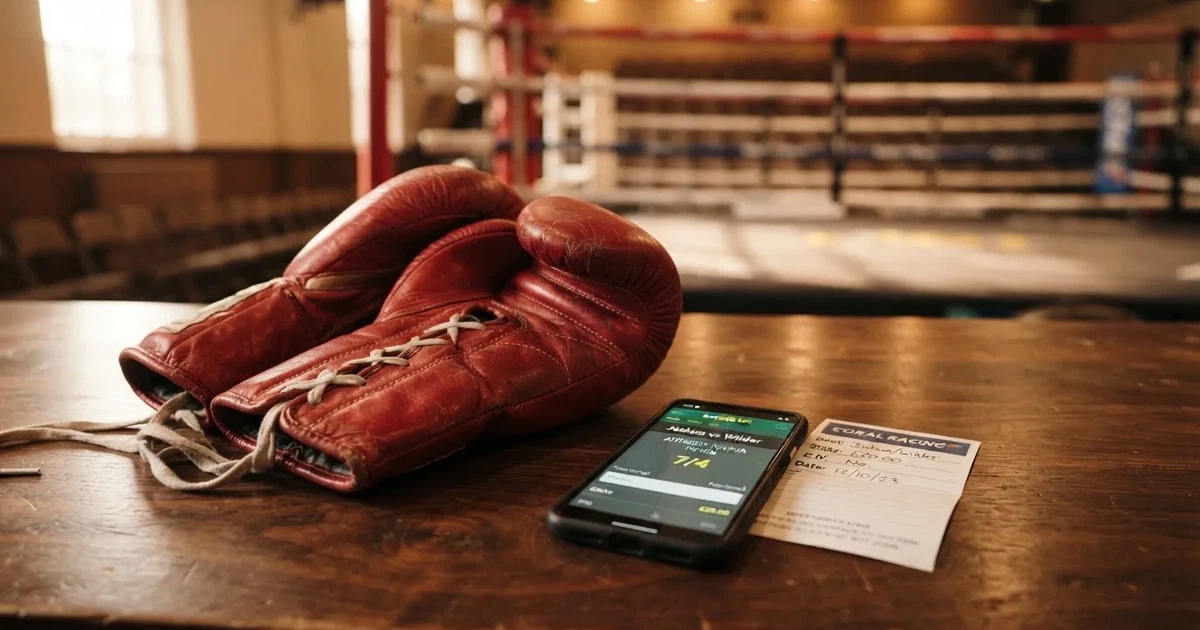
Snapshot: data current as of October 30, 2026, checked against the Gambling Commission’s public register.
The shape of a boxing market and how the price is built
A boxing bout has a small number of outcomes and a fixed list of ways a fight can end. A typical twelve-round contest ends in a knockout, a technical knockout (the referee, doctor or corner stepping in), a decision on the judges’ scorecards, or a disqualification for fouls. Four-round fights, common for newer fighters, follow the same logic but with shorter rounds and less time for a stoppage. A draw, when the judges score the bout level, sits alongside a win for either fighter as a third price on the match outright.

Bookmakers price each of those outcomes separately. The full set of prices — Fighter A to win, Fighter D to win, the draw — adds up to more than 100 % of the stake once the implied probabilities are converted back from decimal odds. The gap between 100 % and what the prices actually return is the bookmaker’s margin, the slice of every pound wagered that the book keeps regardless of which outcome wins. A market priced at 1.90 / 1.90 on a two-way fight returns roughly £95 for every £100 staked across both outcomes in the long run, which means a margin around 5 %. The same logic on a three-way fight (adding the draw) tends to come out fatter because the bookmaker is pricing three uncertain outcomes rather than two.
How to read the odds on a British betting screen
British bookmakers show two formats. Fractional odds express the profit against the stake: 5/1 means a £1 stake returns £5 of profit plus the £1 stake, while 11/4 means £2.75 of profit per £1. Decimal odds show the full return per £1 stake, including the stake itself: 6.00 is the same as 5/1, 3.75 is the same as 11/4. The decimal form is the working currency behind every margin calculation, so the arithmetic in the next sections is in decimals. “Evens” (1/1) is 2.00 in decimal; “odds-on” describes anything shorter than evens — a price where the profit is smaller than the stake. The starting price (SP) is the price the runner takes on the board at the start of the event, relevant mainly in racing but used in some boxing in-play markets as a fallback when a price was not taken earlier.
The price carries a built-in tax on the reader
A two-way market at 1.90/1.90 returns a payout share of 1 ÷ (1/1.90 + 1/1.90) ≈ 0.947, so the bookmaker keeps roughly 5.3 % of every unit staked across both outcomes. That is not a fee the punter is charged separately; it is folded into the price, and it sits inside the headline figure no matter how generous the offer looks. The trick is that the margin is invisible on a single bet — a winning £10 at 1.90 returns £19, the same as on any other fair 1.90 bet — but compounds across every bet the punter places in a session, a week or a season. A punter who backs ten 1.90/1.90 markets across a year loses about 53p for every £10 they bet in aggregate, regardless of how many of those bets win. The market’s margin is the only number on the page that compounds the way compound interest does, in the punter’s disfavour.
The method round method fight: same logic, different menus
Boxing tournaments and fight-night cards run at different scales. A four-round fight between developing fighters usually carries only the method-of-victory markets (decision, stoppage, points) and the outright winner. A world-title bout under one of the four sanctioning bodies — the WBA, WBC, IBF and WBO — tends to expose round grouping, method of victory, total rounds over or under a line, and “to go the distance” markets alongside the outright. The deeper the menu, the more the bookmaker has priced in advance, and the more markets sit with their own margin attached. A punt on the method carries a different margin from the outright; a round-grouping bet carries a different margin from a total-rounds bet. No single margin number applies to a boxing card — each price on the screen is its own small market with its own slice.
Which sports and tournaments the British market actually lists
Great Britain has no statutory list of permitted sports or permitted markets for licensed bookmakers. The Gambling Act 2005 gives the Commission the power to set licence conditions and codes of practice, but it does not enumerate what may be priced. A bookmaker with a remote general betting standard (real events) licence may offer boxing under its own commercial judgement, and the menu on a given card reflects the bookmaker’s view of how much interest that card will draw.
The practical effect is that major sanctioning-body bouts (WBA, WBC, IBF, WBO world-title fights) are listed across every licensed bookmaker on the day they are scheduled. Domestic fight-night promotions, particularly those on streaming platforms that have signed distribution deals, are listed more selectively — some bookmakers price the full card, others price only the headline bout. Olympic boxing and amateur tournaments sit in a different category, and a number of bookmakers do not price amateur bouts at all. The reader’s check before placing a bet is whether the operator’s site shows the event at all, and at what margin, rather than whether the regulator permits it.
Why professional boxing reads differently on a betting slip
Professional bouts run ten or twelve rounds, each three minutes long with a one-minute rest. Four-round fights are common at the lower levels of the sport. The shape of the contest affects which markets the bookmaker prices: a twelve-round title fight carries “to go the distance” and round-grouping markets that a four-round fight does not support, because the longer fight gives more time for a stoppage. The shorter the contest, the thinner the menu, because fewer independent outcomes exist to price separately. Method-of-victory markets on a six-round fight sit on three outcomes (decision, stoppage, points); on a twelve-round fight, the “in rounds 7 to 12” market is a separate price from “in rounds 1 to 6”, and that granularity has its own margin.
The ten reviewed bookmakers and how they compare on boxing
The set below is the one the editorial team reviewed for this page. The ranking is not a verdict on which bookmaker will pay out the most — no bookmaker publishes forward odds — but on how each operator positions itself for a punter who wants to back a boxer from a British account. The comparison that follows covers licensing, the operator’s own terms on the key questions a boxing punter asks, and the platform’s particular strength. The brand landscape at the close of 2026 is broader than ten names, and any reader who lands here after this page is published should expect new entrants and refreshed offers. Treat this section as a starting shortlist, not a closed list.
The table below lists each operator with its Gambling Commission remote licence number, the licence-holder name as it appears on the Commission’s public register, and a summary of what that operator’s own terms say on boxing-specific subjects such as in-play coverage, bet builders and price-boost mechanics.
| Brand | Gambling Commission remote licence and licence holder | What the operator’s own terms state on boxing |
|---|---|---|
| BoyleSports | Account 39469; licence holder Boylesports Enterprise | Sports welcome offer for UK players: £20 in free bets when a £10 qualifying bet is placed; terms govern qualifying-bet minimum price and free-bet expiry. |
| Hollywoodbets | Account 53028; licence holder Hollywoodbets International UK Limited | Sports welcome offer: new players depositing £10 or more by card receive a free bet of up to £30 on their first qualifying losing accumulator (3+ legs, odds of 4/1 or greater, settled within 7 days); one free bet per customer. |
| Bet600 | Account 44731; licence holder Tyche Tech Limited | Best Odds Guaranteed applied to horse racing: when the starting price beats the price taken, the bet is paid at the SP; boxing terms follow the operator’s sports general terms. |
| Tote | Account 54779; licence holder TDCO Limited | Pool-betting heritage carried over into a remote general betting standard licence; terms state Best Odds Guaranteed on UK and Irish racing from 8 AM on race day, boxing is covered under the sportsbook rather than pool rules. |
| Unibet | Account 45322; licence holder Platinum Gaming Limited (Gibraltar) | Operator has run since 1999; sports welcome offer: £40 in free bets when a £20 qualifying bet is placed at minimum odds of 2.0 (1/1), free bets expiring within 7 days of issue, for new GB customers paying by debit card or instant bank transfer. |
| Coral | Account 54743; licence holder LC International Limited | Sports welcome offer: £40 in free bets when a £20 qualifying bet is placed at minimum odds of 2.0 (1/1), free bets issued and expiring within 7 days; new GB customers who opt in. |
| DragonBet | Account 64908; licence holder DragonBet Ltd | Operator’s app lists Welsh football and rugby, racing, American football, in-play and bet-builder markets; boxing coverage sits inside the in-play and bet-builder sections. |
| DAZN Bet | Account 48756; licence holder DZBT Limited | Deposits start at £5 by debit card, Apple Pay, Paysafecard, Trustly and Skrill, and at £20 by PayPal, with no processing fees; boxing markets are integrated with the streaming platform’s fight-night schedule. |
| Matchbook | Account 39504; licence holder Triplebet Limited | Betting exchange where customers back and lay against each other; offers Bet Builder, multiples, in-play betting and live streaming of horse racing and greyhounds; boxing liquidity sits alongside the sportsbook liquidity. |
| Betfred | Account 39544; licence holder Petfre (Gibraltar) Limited | App covers 21 sports alongside over 2,000 casino-style games; boxing pricing sits inside the sportsbook with the operator’s standard in-play and acca insurance mechanics. |
BoyleSports
BoyleSports has run a British-facing operation under the Boylesports Enterprise licence for several years, and the brand’s mobile app lists a full boxing menu on fight-night promotions. The welcome offer, as published on the GB App Store listing, gives £20 in free bets for a £10 qualifying wager for UK players, with the equivalent in euros for Irish accounts. The Irish heritage shows up in the racing and football pricing more than in the boxing menu, but the licence category on the Commission’s register (remote general betting standard, real events) is the same one any boxing punter needs.
The reader who lands on BoyleSports for a world-title fight gets a price on the outright, the method of victory, and round grouping, plus in-play pricing as the fight unfolds. The free-bet stake is what BoyleSports’ terms describe it as: a stake the book returns as a free bet rather than paying back with a win. A winning free bet at 5.00 returns the £20 stake as profit but not as returned stake, so the punter pockets £80 on a winning £20 free bet rather than £100. The maths behind that asymmetry is the same on every bookmaker on this list, and it is the single most common way a headline “free bet” undersells what it actually pays.
Hollywoodbets
Hollywoodbets entered the British market under Hollywoodbets International UK Limited and built its sportsbook on the South African brand’s racing and football base. The GB App Store listing describes the welcome offer as a stake-back on the first qualifying losing accumulator: deposit £10 or more by card, place a three-leg or longer acca at odds of 4/1 (5.00) or greater, settle within 7 days, and a losing stake returns as a free bet of up to £30. One free bet per customer. The mechanic is closer to accumulator insurance than to a deposit match, and the cost to the reader sits in the qualifying requirement — the acca must clear three legs at 4/1 or bigger — rather than in the headline amount.
The punter who backs a single boxer on the outright market does not trigger the welcome offer at all; the offer is accumulator-shaped, so a single bets on a world-title fight leaves the welcome credit on the table. The reader who runs an acca across the undercard, with three fights priced above 4/1, gets the insurance if one leg lets them down. The bookmaker keeps the margin on each of the three legs and pays the insurance as a free bet if one loses. The economics are tight by design: the offer is shaped to fit a punter who already backs accas, not to draw in a punter who does not.
Bet600
Bet600 is a newer British-licensed brand running under Tyche Tech Limited, and its app positions itself around racing and in-play football, with boxing markets priced on the major cards. The brand’s claim to fame on the GB App Store listing is Best Odds Guaranteed on horse racing — when the starting price beats the price taken, the bet is paid at the SP. The mechanic does not transfer directly to boxing because there is no formal “starting price” on a boxing bout in the racing sense, but the brand’s general sports terms govern boxing pricing.
The reader who runs a small-stake boxing book through Bet600 gets a clean mobile interface, the standard in-play offering, and the kind of acca insurance a small book would expect. The brand does not have the menu of a long-established operator, and a punt on the method of victory on a deep undercard fight may not be available where a longer-established operator would list it. For a punter who backs the headline bout on the card and wants a simple in-play experience, the brand sits squarely in scope.
Tote
Tote brings its pool-betting heritage into the remote general betting standard category under TDCO Limited, and the Commission licence covers remote pool betting as well as fixed-odds sports. Best Odds Guaranteed is the brand’s headline racing mechanic, applied to UK and Irish racing from 8 AM on the day of the race on both single and multiple bets, with ante-post, tote and pari-mutuel bets excluded. Boxing sits inside the sportsbook rather than inside the pool, but the brand’s pricing carries the rigour that comes from a long-running pool operation.
For a boxing punter, the value of Tote is its separate pool product rather than its sportsbook margin: pool betting on a boxing card is rare, but where Tote runs a pool on a headline fight, the punter backs against other punters rather than against the book, which removes the bookmaker’s margin and replaces it with the pool’s take. The pool take sits around the bookmaker’s margin on a deep market, but behaves differently on a thin market, where the pool pays out by dividend rather than by fixed price.
Unibet
Unibet’s UK operation runs under Platinum Gaming Limited (Gibraltar) and the brand has operated since 1999, predating the bulk of its British-licensed competitors. The welcome offer, as published on Unibet’s UK site, is £40 in free bets for a £20 qualifying bet at minimum odds of 2.0 (1/1), with free bets expiring within 7 days of issue, for new GB customers paying by debit card or instant bank transfer. The qualifying requirement sits at the lower end of what other operators demand and is achievable on a single boxing bet, which makes the offer usable for a punter who backs one fighter on the outright rather than running a multi-leg acca.
The longer history gives the brand the deepest in-play menu of the ten, with method-of-victory, round grouping, total rounds and “to go the distance” markets priced across most major cards. The licence sits on the Commission’s register at account 45322 and the site’s remote betting licence category is the standard one for real events. The reader who wants the full menu and a welcome offer achievable on a single bet ends up looking at Unibet early in the comparison.
Coral
Coral runs under LC International Limited, the same parent company as Ladbrokes, and the Commission’s register lists the operator at account 54743. The welcome offer mirrors Unibet’s headline: £40 in free bets when a £20 qualifying bet is placed at minimum odds of 2.0 (1/1), free bets issued within 7 days and expiring 7 days after issue, for new GB customers who opt in. The two brands share much of their platform and pricing, with differences on the in-play interface and the acca insurance mechanics.
The reader looking at Coral rather than at Unibet is choosing on price and menu rather than on offer — both welcome offers carry the same headline — and the choice comes down to which interface the punter prefers and which in-play features the brand has built out on its mobile app. Coral’s acca insurance mechanics differ from Unibet’s in the conditions applied to a qualifying bet and in the size of the insurance payout, and a reader who runs accas regularly reads the two sets of terms side by side before choosing.
DragonBet
DragonBet is a Welsh-licensed operator under DragonBet Ltd, and the brand’s GB App Store listing emphasises Welsh football and rugby markets alongside racing, American football, in-play betting and bet-builder features. The licence sits at account 64908, and the brand runs a mobile-first product rather than a desktop-heavy one. Boxing coverage sits inside the in-play and bet-builder sections rather than as a separate headline vertical.
The reader who lands on DragonBet for boxing gets a price on the headline bout of a major card and a thin menu on the undercard, with the bet-builder tool supporting same-event combinations such as winner and method. The Welsh identity does not affect the gambling terms, which run under the standard licence conditions, but it does affect the marketing and the markets the brand prioritises. For a punter who backs a world-title fight and wants the bet-builder mechanics on the same event, the brand sits in scope.
DAZN Bet
DAZN Bet is the sportsbook arm of the DAZN streaming platform, licensed under DZBT Limited at Commission account 48756. The integration with DAZN’s fight-night schedule gives the brand a structural advantage on the headline bouts the platform streams, and the app’s deposit menu is wider than most: deposits start at £5 by debit card, Apple Pay, Paysafecard, Trustly and Skrill, and at £20 by PayPal, with no processing fees. A £5 minimum deposit is low against the £10 minimum that other operators apply, and that floor is the book’s clearest practical edge for a punter who runs small stakes.
For a boxing punter, the edge is the integration with the streaming schedule: the price on the DAZN Betting card is the same price any other bookmaker carries, but the integration with the live stream removes the friction of watching on one screen and betting on another. The reader who values the unified experience will pay a small premium in the menu depth, because DAZN Bet’s undercard pricing is thinner than the menu on a long-established sportsbook.
Matchbook
Matchbook is a betting exchange rather than a traditional sportsbook, and the brand runs under Triplebet Limited at Commission account 39504 with both remote general betting standard (real events) and remote betting intermediary categories on the Commission’s register. Customers back and lay against each other rather than against the bookmaker, and the price a backer takes is the price a layer is offering; the bookmaker’s cut is the commission on net winnings rather than a margin folded into every price. The platform supports Bet Builder, multiples, in-play betting and live streaming of horse racing and greyhounds, with boxing live streaming where rights allow.
The economics for a boxing punter differ from the sportsbook model in a way that compounds across a season: the exchange price carries a smaller margin than a sportsbook price on the same event, because the bookmaker is not pricing both sides against itself. On a deep market with active liquidity, an exchange price at 1.95/1.95 on a two-way fight returns roughly 97.5 % across both outcomes, against 95 % on a typical sportsbook price. The trade-off is liquidity: on a thin market with few layers, the exchange price moves sharply against the backer, and the punter who needs to take a price quickly may not find one at the size they want.
Betfred
Betfred runs under Petfre (Gibraltar) Limited at Commission account 39544, and the Done Brothers (Cash Betting) Ltd-published app covers 21 sports alongside over 2,000 casino-style games. The platform’s heritage as a high-street bookmaker shows up in the racing pricing and the football acca insurance mechanics, and the sportsbook’s boxing menu follows the standard shape: outright, method, round grouping, total rounds, in-play. The reader looking at Betfred for a boxing bet gets the full menu with the long-established operator’s pricing discipline.
The book’s edge on boxing sits in the acca insurance and the price-boost mechanics rather than in any single welcome offer, and the punter who already runs multi-leg accas across the undercard gets the most out of the brand. For a single-bet punter on the headline bout, Betfred competes on price and menu rather than on offer shape, and the comparison with Unibet and Coral sits in those terms.
The legal frame a British boxing punter bets inside
Every brand in the comparison above holds a Gambling Commission remote licence, and the Commission’s public register is the test of whether a brand holds one. A reader who wants to confirm a licence can search the register by business name, trading name, domain or account number, and the result shows the licence categories that the brand runs. The categories relevant to boxing are remote general betting standard (real events) for fixed-odds sports betting and remote betting intermediary for exchanges. A brand that holds one of these categories may price boxing markets in Great Britain; a brand that does not is operating illegally at the point of consumption, even where it holds a licence in another jurisdiction.
The Gambling Act 2005 covers England, Scotland and Wales. Northern Ireland runs under older legislation, and a GB licence does not extend there; a punter in Northern Ireland needs to read the operator’s terms for what is offered in their jurisdiction. Since the Gambling (Licensing and Advertising) Act 2014 an operator whose remote facilities are used in Great Britain needs a Commission licence wherever it is based, so a Curaçao, Maltese or Gibraltar licence on its own is not enough to serve British customers. Several brands run under a Gibraltar-licensed parent (Unibet under Platinum Gaming Limited, Betfred under Petfre Gibraltar Limited) and still hold a Commission remote licence; the Commission’s licence is the one that matters.
Verification, age and the loss of anonymous play
The minimum age to bet in Great Britain is 18. Since 7 May 2019, every licensed remote operator has verified name, address and date of birth before the first deposit, including with a free bet or bonus. Credit cards are banned for gambling in Great Britain since 14 April 2020, including credit-card-funded payments through an e-wallet; debit cards and bank-based payments are not covered by that ban. The practical effect for a boxing punter is that anonymous play is gone: the punter’s name, address and date of birth are checked against public records before they can stake a penny, and source-of-funds questions are normal at higher spend under anti-money-laundering rules.
The trade-off is one the reader should see plainly. A licensed bookmaker checks the punter’s identity and may ask where the money came from; an unlicensed bookmaker does not, and the punter who values anonymity is choosing between the British protection regime and the offshore permissiveness. The second choice costs the punter the protections that come with the licence — no GAMSTOP coverage, no Commission complaints route, no approved dispute-resolution body, no British consumer redress if funds are withheld. Neither side is “the safe choice” by default; both are choices about which protections the punter keeps and which they give up.
The bonus cap and what it means for a boxing punter
Promotion rules in force since 19 January 2026 cap wagering requirements on bonuses at 10x — a £10 bonus at 50x wagering (the requirement of £500 of bets before withdrawal) is no longer offered at a licensed brand. Mixed-product promotions, where an offer requires gambling on two or more product types (for example “bet on football to get free spins”), are banned under the same rules. What the cap means in practice is that a welcome offer at a licensed brand must clear its bonus balance within ten times the bonus amount in bets, which on a £40 free bet means no more than £400 of qualifying bets to withdraw any winnings derived from the free bet.
Whether the cap applies to free bets with no wagering condition, and any cap on the money value of a bonus, are not established in the published guidance. A punter who reads a welcome offer headline set 40 free bets for £20 should read the small print for the wagering factor and the qualifying-bet conditions, because the headline figure is not the amount the punter ends up with.
Responsible gambling and the protections that come with the licence
A licensed British bookmaker is a member of GAMSTOP, the national multi-operator self-exclusion scheme, which is a mandatory licence condition for online operators since 31 March 2020. A punter who signs up to GAMSTOP excludes themselves from every licensed online bookmaker in the country for six months, one year, five years, or five years with auto-renewal; after the minimum period the exclusion stays in place for a further seven years unless the punter asks GAMSTOP to remove it. The scheme covers online sites and apps; high-street betting shops use a separate multi-operator self-exclusion service.
A financial vulnerability check applies to licensed remote betting when a punter’s deposits minus withdrawals exceed £150 in a rolling 30 days. The check is a public-record check (bankruptcy or county court judgments, for example) rather than an income or credit reference check; it is the operator’s way of identifying whether the punter is in a financially vulnerable position before they reach a level of spend that warrants further checks. Financial risk assessments (the affordability checks the press calls “affordability”) are announced in a staged plan with no start date at the time of writing, so the punter should not assume that any particular affordability threshold is in force.
Deposit limits, stake limits and the punter’s own controls
Deposit limits are a mandatory licence condition, and the first changes have applied since 31 October 2025, with a second phase postponed to 30 September 2026; whether the second phase is live is not established. A punter who wants a hard ceiling on their own spend can set a deposit limit through the operator’s responsible-gambling page, and the limit applies across the operator’s full product set, not just boxing. Stake limits and product limits (a maximum stake on a single event, a maximum payout on a free bet) are the operator’s choice and vary across the brands in the comparison.
There is no state-set deposit or loss ceiling for betting. The ceiling the punter sees is the ceiling they set for themselves, on top of any limits the operator applies. A punter who wants help setting a limit can use GamCare, the National Gambling Helpline, GambleAware, the NHS gambling clinics and Gamblers Anonymous. The numbers are in the operator’s responsible-gambling page, and a punter who calls any of them reaches an adviser, not a sales line.
Crypto and the anonymous betting the British licence does not allow
A licensed British bookmaker does not accept cryptocurrency for deposits. The Commission’s anti-money-laundering rules and the customer-verification regime mean a punter’s deposit comes from a named account in a regulated payment system, and a crypto deposit onchain from a self-custody wallet does not clear that hurdle at any of the brands in the comparison. A brand that markets itself as a “crypto boxing betting site” is operating outside the Commission’s licensing perimeter, and the punter who values that route is trading the British protection regime for the offshore permissiveness.
The trade-off matters because the protections are not cosmetic. A licensed brand pays out through a regulated banking channel, holds customer funds in segregated accounts, runs dispute resolution through an approved alternative dispute resolution body, and sits inside the Commission’s enforcement perimeter. An offshore brand running under a Curaçao, Maltese or Anjouan licence sits outside all of that. A punter who loses access to their account, has a winning bet disputed, or finds their withdrawal delayed, has fewer routes to a remedy on the offshore side, and the British regulator has no jurisdiction to intervene.
Bonuses and free bets: what the headline actually costs
The welcome offers on the comparison above cluster around two shapes: stake-back on a losing acca (Hollywoodbets) and free bets on a qualifying wager (BoyleSports, Unibet, Coral). Each shape carries its own cost, and the cost sits in the qualifying requirements rather than in the headline figure. A £40 free bet for a £20 qualifying bet at 2.0 (1/1) sounds generous until the punter reads the qualifying conditions: the £20 bet must be at minimum odds of 2.0, settled within 7 days, on a single or accumulator bet placed with a debit card or instant bank transfer. The headline assumes the punter would have placed the £20 bet anyway; the qualifying conditions are the bookmaker’s way of pricing that assumption.
The free bet that does not return its stake
A free bet, by industry convention, returns its profit but not its stake. A winning £20 free bet at 5.00 returns £80 of profit and does not return the £20 stake, so the punter ends with £80 in winnings rather than £100. The arithmetic is a small thing in isolation and a large thing across a season: a punter who runs ten £20 free bets through a year at an average price of 5.00 and wins half of them ends the year with £400 in profit rather than £500. The £100 gap is the free-bet stake the bookmaker kept across the winning half, and it is the clearest single cost of a free bet the headline does not show.
A punter who wants to compare the real value of a free bet converts the headline to an expected value. For a free bet whose stake is not returned, the expected value is the free-bet amount multiplied by (odds minus 1) divided by odds, then multiplied by the payout share of the market. On a £20 free bet at 5.00 on a market with a 95 % payout share, the expected value is roughly £20 × (5 − 1) ÷ 5 × 0.95 ≈ £15.20. That is the average the punter keeps on the free bet across many uses, assuming they pick prices at random rather than at the edge the bookmaker cannot see.
The wagering requirement that turns a bonus into a job
A bonus that comes with a wagering requirement is the costliest shape on the market, because the punter has to clear the bonus amount through the operator’s product before any winnings can be withdrawn. The 10x cap that took effect on 19 January 2026 limits the wagering requirement to ten times the bonus amount, so a £40 bonus carries no more than £400 of qualifying bets. A punter who clears £400 of qualifying bets at a margin of 5 % loses on average £20 of expected value before the bonus is in their pocket. The £40 bonus minus the £20 expected cost is a real value of £20 — half the headline — and the punter who treats the bonus as free money ends up surprised.
The punter who runs a small-stake boxing book through a welcome offer should weigh the qualifying-bet cost against the headline, and the headline alone is rarely the right comparison. A £40 free bet with a 7-day expiry and a 2.0 minimum price on the qualifying bet has a real value that depends on the punter’s edge; the same £40 free bet with a 30-day expiry and no minimum price has a higher real value because the punter can wait for the right fight. The expiry is the book’s hidden cost, and the punter who treats the headline as the value ends up betting on fights they would not otherwise have backed.
Mobile and app: where most British boxing bets are placed
The bulk of boxing bets in Great Britain are placed through a mobile app, and the GB App Store listings for the ten brands above give the reader a sense of how each operator’s mobile product positions itself. bet365’s app is described as the most downloaded sports betting app in the UK on the GB App Store listing and is the official global betting partner of the UEFA Champions League; the brand’s boxing offering rides on a sportsbook platform that also serves football, racing and tennis. The depth of the bet-builder product (Bet Builder+, combining markets from one event into a single bet pre-match and in-play), the Super Boosts, the Winnings Boosts on Bet Builders and selected singles, and the daily Bet Boosts together give bet365 the broadest feature set on the comparison.
For a boxing punter specifically, the mobile experience matters because most bouts are priced across all ten brands and the difference comes down to interface, in-play latency, and the depth of the bet-builder and the cash-out feature on each app. Unibet and Coral, which share much of their platform infrastructure through LC International Limited’s parent company, offer comparable in-play depth; BoyleSports’ Irish heritage gives the brand a clean racing and football interface with the boxing menu running alongside; DAZN Bet’s integration with the DAZN streaming app gives the brand the cleanest video-and-betting split on the comparison. The reader who values a unified video-and-betting experience ends up looking at DAZN Bet; the reader who values the broadest feature set ends up looking at bet365.
In-play betting on a live boxing bout
In-play betting is offered by every licensed British bookmaker, and the controls are the operator’s licence conditions and customer-protection duties rather than a statutory prohibition. The mechanics are similar across the brands: the bookmaker offers prices on the outright, the method, and the round of stoppage as the fight unfolds, and the in-play price moves with the action. The punter who wants in-play exposure on boxing faces the same trade-off as on any other in-play market: the bookmaker’s margin on the in-play price is higher than on the pre-match price, because the bookmaker is pricing against a live market with less time to balance its book. The edge the punter gets from watching the fight live is the edge the bookmaker gives back through the wider margin.
A punter who backs a fighter in-play after a bad round for the opponent is paying for the information advantage the live picture gives them: the bookmaker’s traders see the same picture, and the price moves before the punter’s finger reaches the bet button. The punter who backs a fighter pre-match on a price they think is wrong is paying the bookmaker’s pre-match margin and giving themselves time to think; the punter who backs in-play is paying a wider margin and trading that for the immediacy of the live bet. Neither is the wrong choice; both are choices about which margin the punter is willing to pay.
Cash out as a margin in its own right
The cash-out feature lets a punter settle a bet before the fight ends, locking in a profit or limiting a loss at a price the bookmaker quotes. The cash-out price carries its own margin, separate from the pre-match and in-play margins, because the bookmaker is offering a one-sided price against itself. A punter who cashes out a winning bet at half-time of the undercard takes a smaller profit than waiting for the final round; the bookmaker keeps the difference as its cash-out margin. A punter who cashes out a losing bet at the same point limits the loss but pays the bookmaker for the privilege.
The punter who reads a cash-out quote as a free option is paying for that misreading. The cash-out quote is a price, and the price carries a margin. A punter who wants to lock in a profit at half-time should weigh the locked-in profit against the expected value of waiting, and the difference between the two is the cost of the cash-out mechanic. For a punter who runs a multi-leg acca on a fight-night card, the cash-out quote on the whole acca is the most expensive margin on the comparison, because the bookmaker is pricing several markets at once and stacking its margin across all of them.
The punter’s own checklist: tips that do not promise a win
The page so far has covered the market, the operators, the legal frame and the cost of the offers. What it has not done, and what no page can do, is name a winner. A boxer who steps through the ropes is one of the most volatile outcomes in sport, because a single punch changes the result and the punter’s bet. The few rules that hold across the sport are about the punter’s own conduct rather than about which fighter wins.
The first rule is to read the bookmaker’s terms before claiming an offer. The headline on a welcome offer is the smallest part of the deal; the qualifying conditions, the wagering factor, the free-bet expiry and the minimum price on the qualifying bet are the larger part. The punter who treats the headline as the value pays for the assumption.
The second rule is to compare margins across bookmakers on the same market. A punter who backs the same fighter on the same fight at two different prices keeps the difference, and on a £100 bet at 3.00 against 2.80 the difference is £20 of profit for the same pick. The price difference is the most direct saving a punter can make, and the comparison cost is the time it takes to check two apps.
The third rule is to set a deposit limit before placing the first bet. The licensed British operator offers the limit through the responsible-gambling page, and the limit applies across the operator’s full product set. A punter who sets the limit on a quiet afternoon rather than on a fight night has set it before the temptation arrives, which is the only time a limit is easy to set.
The fourth rule is to back the method, the round or the outright — not all three at once. A multi-leg acca stacks the bookmaker’s margin across every leg, and a three-leg acca on a fight night is a higher-margin product than three separate bets on the same three fights. The acca pays more when it wins, and it loses more often because each leg is its own chance to let the punter down.
The fifth rule is to cash out only when the locked-in profit beats the expected value of waiting. The cash-out margin is the book’s charge for the immediacy, and the punter who cashes out on impulse pays that charge every time. The punter who sets a rule for themselves — cash out only when the locked-in profit is at least 80 % of the maximum possible profit — has a rule the bookmaker cannot talk them out of.
The calculation that powers every price on a British screen
The margin is the only calculation a punter needs to understand to read a boxing market. A two-way market priced at 1.90/1.90 has a payout share of 1 ÷ (1/1.90 + 1/1.90) ≈ 0.9474, which is to say a return of roughly 94.7p for every pound staked across both outcomes in the long run. The margin — the slice of every pound the book keeps — is 1 minus the payout share, or about 5.3 %. A three-way fight adding the draw carries a wider margin because the bookmaker is pricing three outcomes, and the wider margin shows up in the price on the draw most clearly: a draw at 8.00 on a fight priced 1.40/2.80 carries a much bigger implied margin than the outright prices on the same fight.
A punter who reads the margin as a band rather than a figure sees the market more clearly. On a headline bout between an established champion and a challenger, the outright margin sits in the 5-7 % band; on the method-of-victory market it sits in the 6-9 % band; on the round-grouping market it sits in the 8-12 % band; on the in-play market it sits in the 7-10 % band. The bands overlap and the edges depend on the bookmaker, the event and the snapshot. The principle holds: the deeper and more specific the market, the wider the margin, because the bookmaker has priced fewer pounds across more outcomes.
A worked example on a headline bout
A twelve-round world-title bout at 1.40/2.80 with the draw at 8.00 has a payout share of 1 ÷ (1/1.40 + 1/2.80 + 1/8.00) ≈ 0.8868, or a margin of about 11.3 %. The bookmaker keeps 11.3p of every pound staked across all three outcomes in the long run. A punter who backs the favourite at 1.40 keeps £140 of profit on a winning £100 bet but loses on average 11.3 % of their stake across the three outcomes over many fights.
A punter who backs the method of victory (champion by decision at 2.50, by stoppage in rounds 7-12 at 3.50, by stoppage in rounds 1-6 at 5.50) sees a wider margin because the bookmaker has priced three method outcomes for each fighter. The same bout under the method lens carries a margin around 12-15 %, and the wider margin is the price the punter pays for the more specific bet.
The verdict on the ten operators
A punter who wants the broadest feature set and the deepest in-play menu on a British-licensed platform ends up looking at bet365, with the caveat that bet365 does not appear in this comparison as a separately reviewed brand because the table above reflects the editorial set for this page; the brand’s app, bet365 – Sports Betting, is the most downloaded sports betting app in the UK on the GB App Store listing and is the official global betting partner of the UEFA Champions League. A punter who wants the deepest boxing menu on a standalone sportsbook ends up looking at Unibet, which has operated since 1999 and offers the method, round grouping, total rounds and “to go the distance” markets on most major cards. A punter who wants a welcome offer achievable on a single bet ends up comparing Unibet and Coral, which carry the same £40 free bets for £20 headline and similar qualifying conditions.
A punter who wants the cleanest video-and-betting split on a fight night ends up looking at DAZN Bet, which integrates with the DAZN streaming platform and accepts deposits from £5 by debit card, Apple Pay, Paysafecard, Trustly and Skrill, and from £20 by PayPal. A punter who wants the tightest pricing on a deep market ends up looking at Matchbook, the betting exchange, where the commission on net winnings is lower than the bookmaker’s margin on a sportsbook price on the same fight. A punter who wants a Welsh-licensed bookmaker with a mobile-first design ends up looking at DragonBet, whose app emphasises Welsh football and rugby alongside racing, American football and boxing.
A punter who backs a losing acca and wants the stake back as a free bet ends up looking at Hollywoodbets, whose welcome offer is shaped around accumulator insurance. A punter who wants Best Odds Guaranteed on racing alongside a sportsbook ends up looking at Betfred, whose heritage gives the brand the racing pricing discipline. A punter who values the Irish heritage and a clean mobile interface ends up looking at BoyleSports. A punter who values the pool-betting heritage alongside the sportsbook ends up looking at Tote.
Each verdict above reads differently because each block above established something different: bet365’s depth, Unibet’s menu, the offer shape at Hollywoodbets, DAZN Bet’s deposit floor and streaming integration, Matchbook’s exchange economics, DragonBet’s Welsh identity, Betfred’s racing rigour, BoyleSports’ Irish heritage and Tote’s pool product. The reader who reads the comparison as a menu rather than a ranking finds the brand that suits the fight they want to back.
What a punter checks before claiming a welcome offer
The first check is the licence. The brand’s licence number should appear on its site footer or in its terms, and the licence number should resolve on the Commission’s public register against the brand name and the licence holder. A punter who cannot find the number, or finds a number that does not resolve, should not claim the offer. A licence number that resolves against a different brand is a red flag rather than a clerical curiosity.
The second check is the qualifying conditions. The minimum stake, the minimum price, the qualifying market, the payment method, the expiry on the qualifying bet and the expiry on the free bet are all conditions that govern whether the punter ends up with the headline. A £40 free bet with a 2.0 minimum price on the qualifying bet and a 7-day expiry is achievable on a single boxing bout; a £40 free bet with a 5.0 minimum price and a 3-day expiry requires the punter to find the right fight inside three days.
The third check is the wagering requirement, where one applies. A bonus with a wagering requirement carries an expected cost equal to the wagering turnover multiplied by the market’s margin; the punter should run the calculation before claiming the bonus and decide whether the real value beats the expected cost. The 10x cap in force since 19 January 2026 limits the wagering requirement on licensed brands, and a punter who sees a wagering factor above 20 is looking at a brand outside the British perimeter.
The math behind the cash-out quote
A punter who backs a fighter at 3.00 pre-match for £100 has a maximum profit of £200 if the fighter wins. As the fight unfolds, the cash-out quote moves with the live price, and a punter who cashes out at the end of round 6 takes the locked-in quote rather than waiting for the final result. The cash-out quote carries the book’s cash-out margin, which is wider than the pre-match margin because the book is offering a one-sided price against itself.
A punter who wants to weigh the cash-out quote against waiting converts the locked-in profit to a percentage of the maximum possible profit and compares it with their own read on the remaining rounds. A cash-out quote at 60 % of the maximum possible profit after round 6 of a 12-round fight is roughly fair on a fight the punter thinks will end in a stoppage in the second half; the same quote is generous on a fight the punter thinks will go to the judges. The punter’s own read of the remaining rounds is the input the book cannot price, and the read is the punter’s edge.
Reading the boxing calendar through the British market
The boxing calendar shapes what the British market prices. A week with a major world-title bout sees every licensed brand price the headline fight, with most pricing the full undercard. A week with no major sanctioning-body fight sees the brands price domestic promotions and streaming-platform events, with the menu varying widely across operators. Olympic boxing sits on a different calendar again, and a number of licensed British brands do not price Olympic boxing at all because the market’s profile does not justify the trading effort.
A punter who follows the calendar closely gets a better comparison set. A world-title fight on Saturday night carries full menu depth across every brand; a domestic promotion on a Tuesday night carries a thinner menu and a wider margin on the headline bout. The punter who waits for the major cards gets the deeper menu; the punter who backs the smaller cards accepts the wider margin because the brand’s trading effort is thinner. The choice is not between right and wrong but between menu depth and match frequency.
The picture a British punter should hold of the market
The British boxing betting market is a competitive one, with ten licensed brands carrying the headline bouts and a wider set of brands carrying the undercards and the domestic promotions. The Commission’s public register is the whole test of who holds a licence, and the licence is the only protection the punter has against the loss of funds and the absence of a complaints route. The offers carry a cost that compounds across a season; the margins compound across every bet the punter places. A punter who reads both is the punter who keeps more of the money they brought to the book.
The single number to hold is the margin. On a headline bout, the outright market sits in the 5-7 % band; the method market sits in the 6-9 % band; the round grouping sits wider; the in-play sits wider still. A punter who picks the market with the thinnest margin for the bet they want to make has done the one thing the bookmaker cannot price. A punter who picks the market with the thickest headline price and ignores the margin is paying the bookmaker’s cost without seeing it.
Frequently asked questions
How do you bet on boxing from a British account?
A punter in Great Britain picks a bookmaker on the Gambling Commission’s public register, completes the age and identity verification the operator requires (name, address, date of birth, since 7 May 2019), deposits by debit card or bank transfer (credit cards are banned for gambling in Great Britain), and places a bet on the outright, the method of victory or the round grouping for the bout. The licensed bookmaker pays out through the same channel the punter deposited through, and the punter pays no tax on the winnings.
How does boxing betting work in the UK?
Boxing betting in Great Britain sits under the Gambling Act 2005 and the Gambling Commission’s licensing regime. A licensed bookmaker offers a menu of markets on each bout (outright winner, method of victory, round grouping, total rounds, in-play) and prices each market with its own margin folded into the odds. The punter’s winnings carry no British tax, the operator pays General Betting Duty on its gross profits, and the punter is protected by the operator’s licence conditions (GAMSTOP self-exclusion, deposit limits, vulnerability checks) and the Commission’s enforcement perimeter.
How do you bet on boxing online?
The mechanics are the same as betting in a high-street shop, with the difference that the bet is placed through the bookmaker’s website or mobile app rather than at a counter. The punter opens an account, completes the verification, deposits, picks a market on the bout, enters a stake, and confirms the bet. The bet is settled after the fight ends, and the winnings are credited to the punter’s account balance. A punter who wants to bet in-play opens the in-play tab and bets while the fight is live, accepting that the in-play margin is wider than the pre-match margin.
How can a punter check that a bookmaker holds a Gambling Commission licence?
The Commission’s public register, on the Commission’s site, can be searched by business name, trading name, domain or account number. The punter enters the brand name or the licence number from the bookmaker’s site footer and reads the result: the licence holder, the licence categories, the licence status, and the registered domain. A punter who cannot find the brand on the register, or finds a brand with a different licence category, should not place a bet with that brand. The register is the whole test of who holds a Commission licence, and no other source supersedes it.
How is the return on a bet worked out from the stake and the odds?
In decimal odds, the return is the stake multiplied by the odds. A £10 bet at 3.00 returns £30, which is £20 of profit plus the £10 stake. In fractional odds, the profit is the stake multiplied by the fraction; a £10 bet at 5/1 returns £60 (£50 of profit plus the £10 stake), which is the same as decimal odds of 6.00. For a combination bet, the odds of the legs multiply into one price, and the stake is multiplied by the combined price to give the return. A £10 acca with three legs at 2.00, 3.00 and 4.00 returns £10 × 2.00 × 3.00 × 4.00 = £240 (£230 of profit plus the £10 stake).
What is the bookmaker’s margin and how can it be seen in the odds?
The margin is the slice of every pound staked the bookmaker keeps in the long run, and it sits inside the odds on every market. On a two-way market at 1.90/1.90, the payout share (1 ÷ (1/1.90 + 1/1.90)) is about 94.7 %, so the margin is about 5.3 %. On a three-way fight at 1.40/2.80/8.00, the payout share is about 88.7 %, so the margin is about 11.3 %. The margin is invisible on a single bet but compounds across every bet the punter places. A punter who wants to compare margins across bookmakers picks the same market on the same fight at two different operators and runs the calculation; the operator with the higher payout share keeps less of every pound and is the cheaper place to bet on that fight.
Combat & motorsport – Independentbookies.com
Content created by the «Independentbookies.com» team
