What greyhound racing tips are worth in 2026 — and what they cost
 Available in US
Pricing current as of October 30, 2026, checked against the Gambling Commission’s public register.
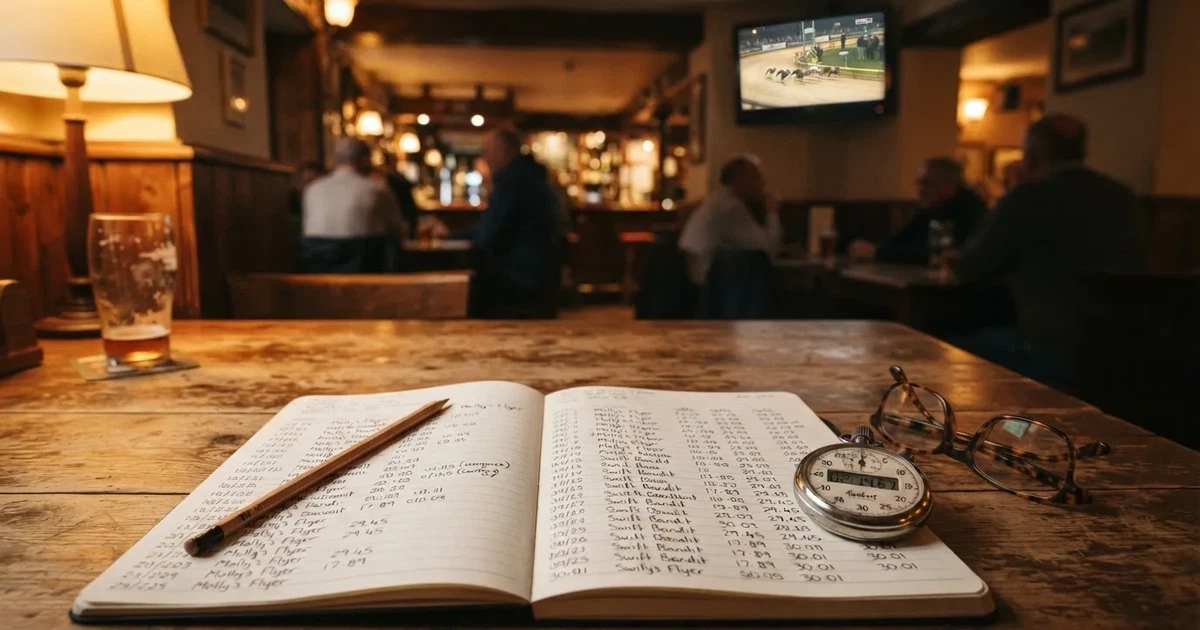
Anyone searching for greyhound racing tips in 2026 is being sold certainty, and the marketplace is crowded with confident predictions that promise a steady return. None of them can keep that promise. A greyhound race finishes in under thirty seconds, the form book is small, the field is six runners and the favourite wins about a third of the time. The honest work in greyhound betting is not finding a winner — it is reading a price, sizing a stake, and not paying more for an offer than the offer pays back. This guide is about that work: how a tip is built from form, sectional times, trainer patterns and market moves; what a value bet is once the bookmaker’s margin is stripped out; why no tip, however confident, is ever certain; and which bookmakers for British punters actually make greyhound markets and what their welcome offers and racing concessions cost the person who claims them. The angle throughout is cost — what every pound staked, every bonus claimed, every each-way ticket and every starting-price bet actually does to a bankroll.
The greyhound racing landscape in Great Britain and Ireland
Where the sport sits in 2026
Greyhound racing in Great Britain is run under one regulator — the Greyhound Board of Great Britain, the GBGB — across 18 licensed stadia. The sport is not a fringe of British racing; it is its own weekly fixture list, with meetings most nights of the week, often two or three a night, and a calendar of televised majors that pulls in casual money alongside the regular punters. The GBGB’s role covers welfare, integrity and the rules of racing; the betting markets built on top of those meetings are a separate business, and they sit under the Gambling Commission’s licence regime.

A greyhound race is short, mechanical and unforgiving. A mechanically operated artificial lure runs along a rail ahead of the dogs, and races almost always involve either parimutuel or fixed-odds bookmaker betting. The field is typically six, the distances are graded from sprint to stay, and a race settles in roughly twenty-eight to thirty-five seconds from box to line. The short format is part of the appeal for punters: a meeting gives a bettor dozens of decisions in an evening, and a losing dog is forgotten by the next race. It is also the reason the form book stays small. Six runners, a fast result, and a dog whose best form is the only form there is — that is the raw material any greyhound tip is built from.
Greyhound racing in New Zealand: the 2026 closure
The British and Irish markets are not the only places greyhound racing is written about, and the most consequential news of 2026 sits across the Tasman. Winston Peters announced on 10 December 2024 that greyhound racing in New Zealand would be banned and phased out by 2026, and the Racing Industry (Closure of Greyhound Racing Industry) Amendment Act 2026, passed on 2 April 2026, sets the phase-out for 1 August 2026. Greyhound Racing New Zealand had run seven affiliated clubs before the ban: Auckland, Waikato, Whanganui, Palmerston North, Canterbury, Otago and Southland. The British market is not directly affected, but a sport shedding its second-largest anglophone footprint in a single calendar year is a fact that resurfaces in any serious conversation about where greyhound racing is heading. It is not a tipping fact — the dogs at Perry Barr and Shelbourne Park run on regardless — but it is the kind of background a punter who reads around the sport will meet, and it sharpens the question of how confident anyone should be about a sport that is being legislated out of existence in one of its historic homes.

The ten bookmakers reviewed: what each one actually offers for greyhounds
This guide covers ten bookmakers whose domains appear on the Gambling Commission’s public register against a remote general betting standard (real events) licence. A place in this list is not a ranking. Every brand below holds a current GB licence as of the data snapshot and every one of them takes part in GAMSTOP. The order is editorial — what the bookmaker is best known for in racing — and the verdict under each is the page’s own.
| Brand | Gambling Commission licence | Greyhound-relevant terms as the operator states them |
|---|---|---|
| BetGoodwin | 002927-R-327985-008 — Goodwin Racing Limited | Best Odds Guaranteed on all UK and Irish horse and greyhound racing, up to £1,000 |
| Bar One Racing | 056516-R-332750-007 — Bar-One Racing Limited | Irish independent with shop presence and racing sponsorships at Dundalk, Fairyhouse, Navan, The Curragh, Curraheen Park and Cork |
| Star Sports | 009177-R-104555-019 — Star Racing Limited | Self-described UK’s leading independent bookmaker, with virtual sports, casino and live casino alongside the sportsbook |
| 888sport | 039028-R-319297-014 — 888 UK Limited | Pre-match and in-play betting, Cash Out, Bet Builder, racing streams, BetFinder form tools, live bet feed and daily boosted odds |
| Fitzwilliam Sports | 048760-R-335434-009 — SBKI Limited | Phone and live chat with the office open 09:00 to 21:00, seven days a week, with messenger replies generally within 90 seconds |
| BetTom | 064959-R-339314-003 — Bet Tom Limited | Sports welcome offer of 50% back as a free bet up to £50, with a matching 50% back up to £50 as free slot funds for casino play |
| Unibet | 045322-R-324275-019 — Platinum Gaming Limited | Operated since 1999; the £40 free bets welcome offer requires a sports bet of £20 or more at minimum odds of 2.0, with free bets expiring within 7 days |
| London Bet | 066162-R-340278-004 — Thistle Bet Limited | App combines football, tennis, horse racing, greyhounds, darts, golf, cricket, NFL, NBA, MLB and snooker with Pragmatic Play slots and live in-play betting |
| Betfred | 039544-R-319290-010 — Petfre (Gibraltar) Limited | Bet Builder, Sub Switch, Racing Post data, Extra Places, live casino and bingo on the app |
| Fafabet | 057385-R-333191-006 — Taichi Tech Limited | Best Odds Guaranteed on UK and Irish horse racing win and each-way bets from 9am on race days, paying the bigger of original price and starting price |
The table is one column of licence and one of what the operator’s own terms state on greyhound-relevant matters. It is not a suitability ranking, and it is not exhaustive of the racing concessions any of these bookmakers may run on the day. Three points deserve to be flagged before the write-ups.
First, “greyhound-relevant terms” here is the operator’s own claim about its racing product. It is not a market-depth audit. A bookmaker that lists greyhounds on its sportsbook homepage may carry meetings three nights a week; another may have the full GBGB card plus Irish meetings. The bettor’s own check, on the night, on the operator’s racecard, is what determines whether a dog is even priced.
Second, two of the operators above — Bar One Racing and Star Sports — are the British and Irish independents, and their greyhound product is built on shop presence and a personal service model that the online giants do not match. A punt on the telephone with a trader, an each-way inquiry on a televised major, a Rule 4 question answered in a sentence rather than a help-centre article: that is a different offer from a £5 accumulator on the Bet Builder, and it costs a different commission in the long run. Some punters will pay that cost gladly; others will not.
Third, every offer above is described as the operator’s own terms state it. Welcome offers, free-bet mechanics and BOG caps are particular to the brand that runs them, and the cap on wagering requirements for bonuses (10x under the LCCP, in force from 19 January 2026) does not free any individual offer from its own T&Cs. The BetTom headline is “50% back as a free bet up to £50”; the Unibet headline is “£40 in free bets when you bet £20”. They are not the same product, and they do not become the same product by being called a welcome offer.
BetGoodwin — the greyhound specialist
BetGoodwin is the brand whose headline racing concession most directly targets greyhound punters. Best Odds Guaranteed applies to all UK and Irish horse and greyhound racing, and the cap sits at £1,000 — which is generous against the £100 or so most major books run. A punter who backs a dog early, sees the SP drift in, and gets paid at the bigger number without having to take the early price, is paying nothing extra for that privilege on the BetGoodwin slip. The licence is held by Goodwin Racing Limited under Commission account 2927.
The cost is the cost of a specialist’s product range. BetGoodwin is not a 40-market-a-game sportsbook; it is a racing-led bookmaker, and the depth of football, tennis and the in-play menu outside the racing bubble is narrower than the major chains. A punter who lives on Premier League football and dips into greyhounds on a Saturday evening is paying for greyhound expertise he uses 10% of the time. A punter whose week is graded at Romford, Sunderland, Monmore and Shelbourne Park is paying exactly the right price.
Bar One Racing — the Irish independent
Bar One Racing rebranded to BAR 1 Betting and operates as an Irish independent with shops across Ireland, with horse racing sponsorships at Dundalk, Fairyhouse, Navan, The Curragh, Curraheen Park and Cork. The licence sits with Bar-One Racing Limited under Commission account 56516. The appeal is the same as Star Sports’ appeal across the Irish Sea: a personal service, a phone-in trade, a name on the account. A greyhound punter who wants to back a 20/1 shot at Curraheen Park and have someone on the end of the phone who knows the track will pay a wider overround in exchange for that conversation.
The cost is the cost of a small bookmaker’s online platform. A bettor who needs a polished app, an in-play interface or a bet builder will find a thinner product than the major chains. A bettor who wants the trade and the shop receipt — and a bookmaker whose loyalty bonus is a handshake rather than a spin-the-wheel promo — is in the right place.
Star Sports — the UK independent
Star Sports describes itself as the UK’s leading independent bookmaker, with virtual sports, casino and live casino alongside the sportsbook. The licence is held by Star Racing Limited under Commission account 9177. The independent offer is the phone trade, the personal account manager and the racing-led card; the addition of virtuals and a casino gives a punt something to do in the gaps between meetings, and that is a quietly useful feature on a Wednesday afternoon when the next card is two hours away.
A bettor who treats a bookmaker as a counter rather than a screen is the kind of bettor Star Sports was built for, and the greyhound card is part of that counter service. The bettor who wants every market on a Saturday afternoon priced live in three clicks will find a thinner product than the major chains. The cost is the one any independent charges: a slightly wider margin in exchange for the service.
888sport — the full-market major
888sport is the other end of the spectrum. Pre-match and in-play betting, Cash Out, Bet Builder, racing streams, BetFinder form tools, a live bet feed and daily boosted odds cover the surface of what a major online sportsbook offers in 2026. The licence is held by 888 UK Limited under Commission account 39028. A greyhound punter who wants the same app for a football accumulator, a live tennis bet and an in-play dog at Towcester will find everything in one place, and the racing streams cut out the trip to a separate video provider.
The cost is the cost of a major chain’s welcome offer and the cost of a margin that prices the racing product for volume rather than loyalty. The BOG cap on 888sport is the standard one, not the BetGoodwin one. The welcome offer is the brand’s own. A punter who splits his week across multiple sports and treats greyhounds as one product among many is paying the right price here; a punter who lives on the greyhound card and nothing else is overpaying for the breadth he does not use.
Fitzwilliam Sports — the phone-first service
Fitzwilliam Sports runs phone and live chat with the office open 09:00 to 21:00, Monday to Sunday, with messenger replies generally within 90 seconds. The licence is held by SBKI Limited under Commission account 48760. This is the other independent model: the office is open, a trader answers, a bet is on. For a greyhound punter who wants to back a 33/1 shot at Hall Green five minutes before the off and have a human confirm the price, Fitzwilliam is built for that trade.
The cost is the product range. A bettor who needs a casino tab, a virtual sports menu, an in-play feed with thirty markets on a Premier League game will not find it here. A bettor whose bet is the bet and whose conversation with the bookmaker is the only feature he wants is paying exactly the right price.
BetTom — the matched welcome
BetTom’s sports welcome offer is 50% back as a free bet of up to £50, with a matching 50% back up to £50 as free slot funds for casino play. The licence is held by Bet Tom Limited under Commission account 64959. The mechanics matter. A “50% back as a free bet” is a refund of half the stake if the first bet loses, paid in free bets rather than cash; the free bet, by long-standing convention across UK books, does not return its stake with a win, and a £50 free bet at 3/1 pays £150 profit, not £200.
A punter who reads the small print on a welcome offer before claiming it will not be surprised by that. A punter who reads only the headline will feel surprised. The matched casino half of the offer is the same offer with a different name: a slot free-bet of £50, on games with their own RTPs and their own wagering terms. Whether the offer is worth claiming depends on whether the punter was going to bet on BetTom anyway; if he was, the 50% back covers half the first stake if it loses, and that is a real number. If he was not, the offer has bought a bet that would not otherwise have been placed.
Unibet — the established major
Unibet has operated since 1999, with the UK site run by Platinum Gaming Limited, Gibraltar, under Commission account 45322. The “Get £40 in Free Bets when you bet £20” welcome offer requires a sports bet of £20 or more at minimum odds of 2.0 (1/1), with free bets expiring within 7 days of issue, for new GB customers using a debit card or instant bank transfer. That is a longer set of conditions than the headline suggests, and the seven-day expiry is the part that catches punters who do not use the free bet the day it lands.
The platform is a full major: in-play, bet builder, acca, casino, live casino, poker, bingo, and a racing product that runs the full GBGB and Irish cards. Safer gambling tools include deposit limits, a Player Profile test, product restrictions and self-exclusion, with live chat support and links to BeGambleAware, GamCare, GAMSTOP, Gambling Therapy and the BGC. The cost is the standard major-chain cost: a margin that prices for volume and an offer that pays back a percentage of the first stake. A punter who will use the platform across multiple sports is paying the right price.
London Bet — the mobile-first multi-product
London Bet’s app combines sports betting on football, tennis, horse racing, greyhounds, darts, golf, cricket, NFL, NBA, MLB and snooker with Pragmatic Play casino slots and live in-play betting. The app is published by Thistle Bet Limited and carries a 17+ age rating in the App Store. The licence sits under Commission account 66162. The product is a mobile-first one, which means the in-play experience is the central one and the racing card sits inside an app that was built for the phone rather than the desktop.
A punter whose greyhound betting happens on the bus home and whose in-play tennis is a regular habit will find the layout natural. A punter who wants a desktop-grade racing product with sectional data and form tools on a single screen will find the app limiting. The cost is the cost of a multi-product mobile bookmaker: a thinner racing product in exchange for breadth and a one-hand interface.
Betfred — the high-street giant
Betfred’s app features Bet Builder, Sub Switch, Racing Post data, Extra Places, live casino and bingo. The licence is held by Petfre (Gibraltar) Limited under Commission account 39544. Betfred is the high-street name British punters grew up with, and the online product carries the weight of that shop network: Extra Places on the televised majors, a Betfred Extra on selected multiples, a BOG that pays on UK and Irish racing, and a racing section built from the ground up rather than bolted on.
A greyhound punter who wants the bookmaker his father used and the depth that comes with a national chain is paying the standard cost. A punter who wants a personal service and a phone trade is paying for product he will not use. The Bonus King branding is a way of saying that the welcome offer and the loyalty offers are the centre of the relationship, and a punter who treats the welcome offer as the reason to open the account should not be surprised when the next email is about a price boost on a Premier League fixture.
Fafabet — the BOG specialist
Fafabet pays Best Odds Guaranteed on UK and Irish horse racing win and each-way bets from 9am on race days: if the starting price is bigger than the original price, the bigger odds are paid. The licence is held by Taichi Tech Limited under Commission account 57385. Fafabet’s racing concession is the headline: the 9am trigger is earlier than many of the major chains, and on a day when the morning market moves against the favourite the BOG has paid for itself before the first race.
The cost is the cost of a smaller chain’s product breadth. A bettor whose primary product is racing will find the racing card the centre of the Fafabet app. A bettor whose week is football, in-play tennis and a Saturday accumulator on the Premier League will find a thinner product than the major chains. The cost of the BOG is the cost of any racing concession: a tighter margin on the racing book, paid for by a slightly wider margin elsewhere.
Legality, regulation and the cost of going unlicensed
Who regulates betting in Great Britain
The Gambling Commission (UKGC) is a non-departmental public body sponsored by the Department for Culture, Media and Sport, and it licenses the whole commercial betting market under the Gambling Act 2005. The Act covers Great Britain — England, Scotland and Wales. Northern Ireland is outside the Act and has its own older law, so any phrase that ties a GB licence to Northern Ireland is wrong on the face of it. Since the Gambling (Licensing and Advertising) Act 2014 an operator whose remote facilities are used in Great Britain needs a Commission licence wherever it is based (sections 33 and 36 of the 2005 Act as amended); a Curaçao, Maltese or Gibraltar licence is not a substitute, and a brand that trades only on a non-GB licence is trading outside the law for British customers. There is no state monopoly and no cap on the number of licences; the question is whether the operator has one.
The Commission’s public register can be searched by business name, trading name, domain or account number, and it is the whole test of whether a brand holds a licence. Every operator in the table above appears on that register. A punter who wants to check the brand behind a welcome offer can do it in three minutes; a punter who does not check is trusting the marketing claim alone, and a marketing claim about a licence is not the same thing as a licence.
What the player protection regime actually costs
A GB-licensed online operator takes part in GAMSTOP — the national multi-operator online self-exclusion scheme, and a mandatory licence condition since 31 March 2020. Periods are six months, one year, five years, or five years with auto-renewal, and after the minimum period the exclusion stays in place for a further seven years unless the customer asks GAMSTOP to remove it. A financial vulnerability check (LCCP condition 3.4.4, in force since 30 August 2024) applies to licensed remote betting when a customer’s deposits minus withdrawals exceed £150 in a rolling 30 days (since 28 February 2025): it is a public-record check, not an income check and not a credit reference check. Deposit limits (RTS 12) are mandatory under the Remote Technical Standards, and the first changes have applied since 31 October 2025; a second phase was postponed to 30 September 2026, and whether it is live is not established. There is no state-set deposit or loss ceiling for betting — the limits are the customer’s choice, set on the operator’s safer-gambling page.
The cost of this regime to the bettor is the cost of being known. Name, address and date of birth are verified before a customer can deposit or gamble, and that has been the case since 7 May 2019, including when the bet is a free bet or a bonus. A punter who wants to bet £5 on the 7.30 at Romford without anyone knowing his name is in the wrong place. A punter who wants the deposit limit, the GAMSTOP opt-out, the £150 vulnerability check, the safer-gambling tools and the ADR route if the bookmaker withholds funds is paying for them with the inconvenience of the verification. The cost is the same as the cost of any insurance: a known small one in exchange for a real one if the worst happens.
Bonuses, the 10x cap, and the cost of a “free” offer
Promotion rules in force since 19 January 2026 cap wagering requirements on bonuses at 10x. A £10 bonus at 50x would have needed £500 of bets before withdrawal; under the cap no more than £100 is required. Mixed-product promotions — an offer that requires gambling on two or more product types such as betting, casino, bingo and lottery, for example “bet on football to get free spins” — are banned. Whether the cap applies to free bets with no wagering condition, and any cap on the money value of a bonus, are not established. The cap is the strongest cost-control on a British welcome offer of the last decade, and the operators in the table above have built their welcome offers around it.
The cost of a welcome offer is the cost the punter does not see. A “free bet” is a bet whose stake is not returned with a win — that is the convention across UK books, and it is the same convention at every brand in this list. A “50% back” offer is a refund of half the stake if the first bet loses, paid in free bets, and the refund pays back the loser at half the original stake. A “deposit match” is a percentage of the deposit credited as bonus funds, with the wagering requirement to clear. None of these are gifts; each is a marketing spend with conditions, and the conditions are the cost. The punter who claims the offer, reads the T&Cs and checks the wagering factor is paying exactly the cost the offer charges. The punter who claims the offer and reads only the headline is paying the headline cost plus the cost of the small print he did not read.
Tax, the 25% remote rate from 2027, and the player
The player pays no tax on betting winnings in Great Britain, and a professional gambler should ask HMRC or an adviser. General Betting Duty is the operator’s tax on gross profits, currently 15%; from 1 April 2027 a new remote betting rate of 25% applies within it, while remote bets on UK horse racing, bets on self-self-service betting terminals in licensed premises, pool betting and in-person betting stay at 15%. Until 1 April 2027 the remote rate stays at 15%; whether operators pass duty on through odds is not established. The Commission’s statutory levy is a separate charge, not a tax. None of this is a tax the punter pays, and any phrase that says the player is charged duty is wrong.
The cost to the punter is the indirect one. A higher operator tax on remote betting is a tax on the operator’s margin, and a margin that the operator may pass on through tighter prices is a margin the punter pays in the long run. A punter who tracks the margin on the market he bets on will see the move; a punter who does not will not. The 25% rate is announced, not in force, and the page writes about the regime as it is in 2026.
Offshore and the cost of no protection
A GB licence is compulsory at the point of consumption. Providing gambling facilities in Great Britain without the licence the Act requires is an offence under section 33 of the Gambling Act 2005 — aimed at the operator, not the customer. A punter who bets on an unlicensed site is not committing a criminal offence, and the page does not say he is. The cost is the cost of no protection: no GAMSTOP coverage, no Commission complaints route, no approved dispute-resolution body, no British consumer redress if funds are withheld, not bound by the 10x bonus cap or the £150 vulnerability check. The bookmaker’s terms apply as written, and the bookmaker’s terms were not written under British consumer law. Enforcement is disruption, not blocking: cease-and-desist notices, search-engine referrals, work with registrars, hosts and payment providers; the Commission has been given, or is about to receive, court-order DNS blocking powers, and a phrase that says ISP blocking is in operation is wrong on the date of writing. The honest framing is the one the regulator itself uses: licensed means checks, limits, GAMSTOP, bonus cap, but also verification before the first bet; unlicensed means none of those protections and the risk of funds being held.
Responsible gambling, the cost of help, and the cost of not asking for it
The British help landscape
GamCare runs the National Gambling Helpline. GambleAware funds treatment and research. NHS gambling clinics offer specialist cognitive-behavioural treatment. Gamblers Anonymous runs peer-support meetings. BeGambleAware, GamCare, GAMSTOP, Gambling Therapy and the BGC are the names a British punter will meet on a licensed operator’s safer-gambling page, and they are the names to use before a habit becomes a debt. The cost of using them is the cost of the conversation; the cost of not using them is the cost the rest of the page is built around.
Every operator in the table above carries the safer-gambling tools required by the LCCP: deposit limits, time-outs, self-exclusion, product restrictions, and links to the help organisations. A punter who sets a deposit limit and sticks to it is paying a small friction for a real constraint. A punter who raises the deposit limit three times in a month is paying the same friction and getting no constraint, and that is the warning sign the operator’s safer-gambling page is built to catch.
What the LCCP costs the punter in friction
The verification before the first bet, the deposit limit on the safer-gambling page, the GAMSTOP opt-out when a punter asks for self-exclusion, the £150 vulnerability check at 30 days, the source-of-funds questions at higher spend: every one of these is a cost in time. The LCCP is a friction-heavy regime by design, and the friction is the cost of the protection. A punter who has not bet on a GB-licensed site in 2026 will notice the difference immediately: the first deposit triggers a verification flow, the first withdrawal triggers a source-of-funds check, the first deposit above the threshold triggers a public-records check. A punter who has used an offshore site will notice the friction more sharply, because the offshore site did not ask.
The trade is the trade the regulator has made. A British punter pays verification for protection, and a British punter who does not want to pay verification has the offshore option at the cost of no protection. The choice is real, and the page is written on the side of the British punter who would rather have the protection.
Bonuses, free bets and what the welcome offer actually costs
The four shapes a UK greyhound welcome offer takes
There are four shapes a greyhound welcome offer takes in 2026, and a punter who has seen one has seen the market. First, the free-bet trigger: a bet of £10 or £20 at minimum odds, returning a £20 or £40 free bet if the qualifying bet wins (Unibet: bet £20, get £40 in free bets). Second, the refund as a free bet: a £10 first bet, refunded as a £10 free bet if it loses (BetTom: 50% back as a free bet up to £50). Third, the deposit match: 100% of the first deposit credited as bonus funds, with a wagering factor. Fourth, the enhanced odds: a one-off price boost on a featured race, with the stake returned as cash if the bet wins and the winnings paid in cash. BOG and Extra Places are not welcome offers — they are racing concessions that run on every bet, and the cost of them is paid by the bookmaker’s margin, not by a wagering requirement.
The cost of each shape is different. A free-bet trigger pays the punter a free bet whose stake is not returned, so a £40 free bet at 3/1 pays £120 profit, not £160. A refund as a free bet pays half the stake if the first bet loses, in free bets, and the same stake-not-returned rule applies. A deposit match is the most expensive for the punter who does not clear it: a £100 deposit at 100% with 5x wagering requires £500 of bets at minimum odds before withdrawal, and the £500 of bets is paid at the bookmaker’s margin, so the expected cost of clearing is the margin times the turnover. An enhanced odds is a one-off price boost with no wagering, and the cost is paid by the bookmaker’s margin on the boosted selection.
The wagering cap and what it changed
The 10x cap on wagering requirements (in force from 19 January 2026) is the most important change to the British welcome offer in a decade. Before the cap, deposit matches at 30x, 40x and even 50x were common, and a £100 deposit at 50x required £5,000 of bets before withdrawal. The cap means a £10 bonus at 50x needed £500 of bets; under the cap no more than £100 is required. A punter who saw a “100% up to £100” offer five years ago and now sees a “100% up to £10” offer is not seeing a worse offer — the cap has moved the size of the offer to match the cap on the wagering, and the total cost to clear has fallen.
The cap does not free any individual offer from its own T&Cs. Minimum odds on qualifying bets, time limits, payment-method restrictions (Unibet’s £20 minimum at 2.0 excludes deposits by certain e-wallets), game-weighting in mixed offers (now banned outright under the mixed-product rule), and the stake-not-returned rule on free bets are all still in force. A punter who claims an offer and reads the T&Cs is paying exactly the cost; a punter who claims the offer and reads only the headline is paying the headline cost plus the cost of the small print.
The cost of a free bet to the punter and the bookmaker
A free bet whose stake is not returned is worth less than its face value, and the difference is the cost the punter pays. For a free bet of £10 at decimal odds of 4.00 (3/1), the winnings are £30 and the stake is not returned. The punter’s profit on a winning bet is £30, not £40. For a free bet of £40 at 3/1, the punter’s profit is £120, not £160. The arithmetic is the same for every free bet at every bookmaker, and the punter who treats a free bet as cash has not understood what was given.
For the bookmaker, a free bet is a marketing cost. A £40 free bet on a 5% margin market has an expected cost of about £1.90 — the free-bet value formula gives roughly £1.90 of expected loss to the bookmaker, paid out of the marketing budget. The punter who uses the free bet at the highest available price on a market he would not otherwise have backed captures more of that value; the punter who uses it on a short-priced favourite captures less. Neither is wrong; both are taking a marketing gift at its market value, and the market value is what the page writes about rather than the headline.
Mobile apps, in-play betting and the cost of betting on the move
What a greyhound punter needs from a mobile app
A greyhound punter who bets on the move needs three things from a mobile app. First, a fast in-play feed: a greyhound race is over in thirty seconds, and a bet placed at the off is a bet on a price that has already moved. Second, a racecard with form, trainer, sectional times and a recent-results panel: a punter who does not have the form on the screen is trusting the price alone, and a price alone is the bookmaker’s margin. Third, a one-hand bet slip: a bettor who is on a train, in a queue or at the track needs to place a £5 each-way on the 8.15 at Romford with one thumb and a fingerprint, not a desktop-style slip that requires a mouse and a separate confirmation.
The apps in the table above vary on those three. Betfred, Unibet and 888sport carry a full mobile racing product with form, in-play, bet builder and a polished slip. London Bet was built mobile-first, and the in-play experience is the centre of the app. The independents — Bar One Racing, Star Sports, Fitzwilliam Sports — have apps that complement the phone trade rather than replace it, and the bettor who wants a screen-first experience with a phone fallback is in the right place at the independents. BetGoodwin and BetTom are racing-led books with mobile products built around the racing card. Fafabet is a smaller chain with a racing-led mobile product.
Live betting and what it costs the punter
In-play betting on greyhound racing is offered by GB-licensed bookmakers under their own licence conditions, and the controls are the operator’s customer-protection duties. The cost of in-play is the cost of a fast-moving market: the price at the off is not the price at the first bend, and a bet placed 0.3 seconds late is a bet on a price that has already moved. A punter who bets in-play without watching the race is betting blind; a punter who bets in-play with a delayed stream is betting on a price that is no longer there.
A greyhound race is short enough that in-play betting is a specialist’s tool. A £5 lay on a dog that breaks slowly is a one-second decision, and the punter who has the form, the box draw and the break pattern memorised is the punter who makes money on the in-play market. The punter who has none of those is paying the bookmaker’s in-play margin for the privilege of being wrong slightly faster.
Cash Out, Bet Builder and the price of flexibility
Cash Out is the operator’s offer to settle a bet before the final outcome, at a price the operator sets. The cost is the cost the operator’s margin charges for the early settlement. A bet that is winning at the 4/1 mark is worth less in cash-out than its true value, and the difference is the price of the flexibility. A punter who cashes out a £10 win double at 6/1 has taken less than the bet was worth; a punter who lets the bet run has risked the £10 stake for the full return. The choice is real, and the cost of the choice is the bookmaker’s margin on the cash-out price.
Bet Builder is the operator’s offer to combine multiple markets from the same event into one bet. The cost is the cost of multiplied margins. A Bet Builder with four legs at 3/1 each would be 80/1 if the legs were independent; in practice the price is shorter, because the legs are correlated, and the bookmaker’s margin applies to each leg and to the combined price. A punter who builds a four-leg Bet Builder on a greyhound race is paying a margin on each leg and a margin on the combination, and the cost is the price of the convenience.
Predictions, strategy and the cost of a tip
What a greyhound tip is built from
A greyhound tip is built from five sources, and a tipster who names one source only is telling you a fifth of the story. First, the form: the dog’s last six runs, the grade, the track, the distance, the finishing position and the margin back to the winner. Second, the sectional times: the split at the first bend, the run to the third bend, the finishing speed, and a comparison to the track record. Third, the trainer pattern: which trainer has a live runner, which trainer’s dogs are running well, which trainer’s kennel is in a quiet patch. Fourth, the box draw: the inside boxes are favoured on tight tracks and the outside boxes on galloping tracks, and a draw at one track is a different draw at another. Fifth, the market: the price the bookmaker offers, the price that has moved in the morning, the SP, and the BOG concession if the bookmaker runs one.
A tip that uses two of the five is a tip built on a hunch. A tip that uses all five is a tip built on the form book and the market, and the punter who pays for it is paying for the time the tipster spent on the form, the sectionals, the trainer pattern and the box draw. The punter who does not pay for it is paying for the punter’s own time, and the cost of the punter’s own time is whatever the punter decides his evening is worth.
What a value bet actually is
A value bet is a price that is higher than the true probability once the bookmaker’s margin is taken out. If a dog has a 50% chance of winning and the price is evens (2.00), the price is fair; if the price is 6/4 (2.50), the price is value, because the dog wins half the time and pays 2.5 times the stake; if the price is 4/6 (1.67), the price is not value, because the dog wins half the time and pays only 1.67 times the stake. The arithmetic is the same on every market, and the punter who does not do the arithmetic is betting on the marketing claim rather than the price.
The bookmaker’s margin is the difference between the true probability of all outcomes (100%) and the implied probability of the prices offered. On a six-dog race priced at 5/1 the field, the implied probability of the field is over 100% — the overround — and the overround is the bookmaker’s margin. A punter who bets on a price that is value after the margin has been stripped out is betting on the dog’s chance, not on the bookmaker’s cut.
The cost of a value bet is the cost of the time to do the arithmetic. A punter who backs a dog at 3/1 because the form says 40% is paying for the time to read the form, the sectionals, the trainer pattern and the box draw. A punter who backs a dog at 3/1 because the tipster said so is paying for the tipster, and the tipster’s hit rate at value prices is the question that decides whether the subscription is worth the cost.
Why no tip is ever certain
A greyhound race finishes in under thirty seconds, and a tip is a probability, not a prediction. The dog with the best form wins about 40% of the time at value prices, the dog with the best sectional times wins about 45% of the time, and the favourite wins about 33% of the time. The remaining 60% to 67% is a distribution of losses that no tip can convert into wins. A tipster who promises a strike rate of 70% is either lying or has cherry-picked the runs; a tipster who promises a strike rate of 60% at value prices is the best in the business, and a strike rate of 55% at value prices is a long-term winner.
The cost of certainty is the cost of being wrong. A punter who places a £100 each-way double on the certainty of a tip is risking £200 on a probability of 60% — an expected return of £120, an expected loss of £80, and a worst case of £200. The same £200 staked as twenty £10 singles at value prices, with a strike rate of 50% and a price of 2.50, is an expected return of £250, an expected loss of £200, and a worst case of £200. The single-bet approach is more expensive in the worst case and cheaper on average, and the choice is the punter’s.
The margin in a two-way market: the arithmetic that decides every price
The bookmaker’s margin is the difference between the implied probability of all outcomes and 100%, and the calculation is the same on every market. The example that follows uses a two-way market at decimal odds of 1.90 / 1.90 — an illustrative pair, not a quoted price — because the arithmetic is clean. The implied probability of 1.90 is 1 ÷ 1.90 = 52.63%. Two outcomes at 52.63% give an implied probability of 105.26%, and the margin is 5.26%. The payout share is 100% − 5.26% = 94.74%.
That 5.26% is the bookmaker’s edge on every pound bet on this market, and it is the cost the punter pays on a market at this price. A punter who backs one side at 1.90 with a stake of £10 has staked £10 against a payout of £19 if the bet wins; the bookmaker has kept 5.26% of every pound on this market, and the rest is paid out to winners. On a six-dog greyhound race priced at 5/1 the field, the implied probability of the field is over 120%, and the margin is over 20% — a quarter of every pound bet is the bookmaker’s cut, and the punter who bets on a single dog at value prices is paying a much higher margin to the bookmaker than on a two-way football market.
The result is stated as a band rather than a figure. The margin on a two-way market at 1.90 / 1.90 is approximately 5.3%, and the margin on a six-way greyhound race is between 20% and 30% depending on the favourite’s price. The wider the field and the shorter the favourite, the wider the margin, and a punter who bets singles on greyhound races is paying the widest margin in the sportsbook.
Bet types, odds and the cost of the betting slip
The main bet types on a greyhound race
The bet types on a greyhound race are the bet types on a horse race, with one or two differences. The win bet is a single on the dog to finish first; the place bet is a single on the dog to finish in the places (typically 1st and 2nd in a six-dog race, with each-way terms varying by race and operator); the each-way bet is two bets of equal stake — one win, one place — and the total stake doubles. Forecast and tricast are bets on the first and second (forecast) or first, second and third (tricast) in correct order; reverse forecast covers the first two in any order. An accumulator (acca) is a bet on the outcome of multiple races, with the odds multiplied into one price.
The cost of each bet type is the cost of the multiplied margin. A single on a 5/1 shot pays 5/1 plus the stake; a double on two 5/1 shots pays 35/1 plus the stake (the multiplied odds), but the margin on each leg applies, and the combined margin is wider than the margin on either leg alone. A punter who builds a five-leg acca on greyhound races is paying the multiplied margin across all five legs, and the cost is the price of the bigger payout.
The starting price, BOG, and what each pays
The starting price (SP) is the odds on an entry in the on-course fixed-odds market when the race begins, and it applies to horse and greyhound racing. Best Odds Guaranteed (BOG) is the bookmaker’s offer to pay the bigger of the original price taken by the punter and the SP, and it is the standard racing concession at most major books. The trigger time varies: BetGoodwin runs BOG on all UK and Irish horse and greyhound racing up to £1,000; Fafabet runs BOG on UK and Irish horse racing from 9am on race days. Unibet, Betfred and 888sport run BOG on UK and Irish racing under their own terms. The independents — Bar One Racing, Star Sports, Fitzwilliam Sports — run BOG or its equivalent as a matter of course, and the phone trader will confirm the trigger on a given race.
The cost of BOG is the cost the bookmaker’s margin absorbs. A bookmaker that runs BOG has priced the morning market to include the cost of paying the bigger of the taken price and the SP, and the punter who backs a dog at 3/1 and sees it drift to 4/1 is paid at 4/1 without the bookmaker losing money on the bet. A dog backed at 3/1 that shortens to 5/2 is paid at 3/1, and the difference is the bookmaker’s margin on the price taken. The cost of the concession is paid by the bookmaker, not the punter, and a BOG bookmaker is a cheaper bookmaker to bet with on the races where BOG applies.
Ante-post, Rule 4 and the cost of betting early
Ante-post betting is betting on a race before the final declarations are made, and the price is bigger because the field is wider and the non-runner risk is real. A punter who backs a dog ante-post for the English Greyhound Derby and the dog is withdrawn before the final accepts a loss of the stake, less any Rule 4 deduction. Rule 4 is a bookmaker’s rule that adjusts the price of a bet when a runner is withdrawn and the market shrinks; the deduction is a function of the withdrawn runner’s price at withdrawal, and the cost is the punter’s, not the bookmaker’s.
The cost of ante-post is the cost of the bigger price and the bigger non-runner risk. A punter who backs a dog ante-post for the Scottish Greyhound Derby at 20/1 and the dog is balloted out has lost the stake; the same punter who waited for the final declarations and backed the dog at 10/1 has paid half the price for a smaller non-runner risk. The trade is real, and the punter who understands it is the punter who decides whether the bigger price is worth the bigger risk.
Spread betting, financial and otherwise
Financial spread betting is regulated by the Financial Conduct Authority, not the Gambling Commission, and the cost is the cost of a product that can lose more than the deposit. Spreadex, for example, is regulated by the FCA for spread betting and by the Gambling Commission for fixed-odds betting, and states that spread betting losses can exceed the deposit. The point is not that spread betting is a bad product; the point is that the cost of a spread bet is not capped at the stake, and a punter who treats a spread bet as a fixed-odds bet has misunderstood the product.
Spread betting on greyhound races is offered under the FCA’s spread-betting rules at firms like Spreadex, and the markets are the timing markets (the winning time), the trap numbers markets (the winning trap), and the winning distance markets. A punter who buys the winning time at 28.5 seconds and the dog wins in 28.0 seconds has made five times the stake; a punter who buys the winning time at 28.5 and the dog wins in 29.0 seconds has lost five times the stake. The cost of the spread bet is the cost of the multiplied exposure, and a punter who does not understand the exposure has not understood the bet.
The calculations every greyhound punter should do
How much a winning bet pays back
The return on a winning bet is the stake multiplied by the decimal odds, and the net profit is the stake multiplied by the decimal odds minus one. A £10 single at 5/1 (decimal 6.00) pays £60 return (£10 × 6.00) and £50 profit (£10 × 5.00). A £10 each-way at 5/1 with a quarter of the odds for the place (decimal 2.25 for the place leg) pays £60 if the dog wins (£10 × 6.00) and £22.50 if the dog places (£10 × 2.25), for a total stake of £20 and a total return of £82.50 if the dog wins. The arithmetic is the same for every bet type, and the punter who does not know the return before placing the bet is paying the price of not knowing.
For a combination bet, the odds of the legs multiply into one price. A double on two 5/1 shots (decimal 6.00 each) is a price of 36.00, and a £10 double pays £360 if both win. The combined price is the product of the two prices, and the margin on each leg applies. A treble on three 5/1 shots is a price of 216.00, and a £10 treble pays £2,160 if all three win. The punter who builds an accumulator is buying a bigger payout at the price of a bigger compounded margin.
How many bets the bonus takes to clear
A bonus with a 5x wagering requirement on the bonus amount requires turnover of bonus × 5 in bets at minimum odds. A £10 bonus at 5x requires £50 of bets at minimum odds; a £20 bonus at 5x requires £100; a £50 bonus at 5x requires £250. The number of bets is the turnover divided by the stake per bet. At £5 per bet, the £50 turnover needs ten bets; at £10 per bet, the £50 turnover needs five bets. The 10x cap on wagering from 19 January 2026 means no bonus can require more than 10x the bonus amount, and the punter who sees a “100% up to £10” offer with 5x wagering is looking at £50 of turnover, not £500.
The cost of the turnover is the cost of the margin on the bets used to clear it. A punter who clears the £50 turnover on a six-dog greyhound race at a 25% margin is paying £12.50 of expected cost; a punter who clears the same turnover on a two-way football market at a 5% margin is paying £2.50. The difference is the cost of choosing the right market to clear the bonus, and a punter who clears on football and bets on greyhounds is paying the lower cost. A punter who clears on greyhound singles is paying the higher cost, and the bonus is worth less than its face value.
What the free bet is actually worth
A free bet whose stake is not returned is worth the free-bet amount multiplied by the decimal odds minus one, divided by the decimal odds, multiplied by the payout share of the market. A £40 free bet at decimal 3.00 on a market with a 95% payout share is worth £40 × (3.00 − 1) ÷ 3.00 × 0.95 = £25.33. A £40 free bet at 4.00 on the same market is worth £40 × 3.00 ÷ 4.00 × 0.95 = £28.50. A £40 free bet at 6.00 is worth £40 × 5.00 ÷ 6.00 × 0.95 = £31.67. The free bet is worth more at a bigger price, and a punter who uses a £40 free bet on a 6/1 shot is capturing more value than a punter who uses it on an odds-on favourite.
The result is a statistical estimate of what the free bet is worth on average, not a guaranteed outcome for any single bettor. A punter who uses the free bet at a value price (a price above the true probability after the margin) captures more than the estimate; a punter who uses it at a non-value price captures less. The estimate is the average across all uses, and the punter who understands the estimate is the punter who decides where to use the free bet.
A final word on the cost of betting on greyhounds
Greyhound betting is a sport of small fields, fast results and a wide bookmaker margin. The cost of the sport is the cost the page has been built around: the cost of a welcome offer with a stake-not-returned free bet, the cost of a 5% to 30% margin on the market, the cost of a verification flow before the first deposit, the cost of the safer-gambling tools that catch the warning signs, and the cost of the tip that is a probability, not a prediction. The cost is real, and a punter who has read the page knows what he is paying for and what he is paying with.
The honest position the page takes is the position the arithmetic supports. A greyhound punter who reads form, sets a deposit limit, claims one welcome offer a year, bets singles at value prices, and never chases a loss will lose money in the long run at the bookmaker’s margin, but the loss will be a small, predictable one, and the punter will have paid for the entertainment at a known cost. A greyhound punter who backs favourites, builds accas, claims every welcome offer in the market, and chases the certainty a tipster promises will lose more, and the loss will be a large, unpredictable one. The first punter is a customer the British licensing regime was designed for; the second is a customer the safer-gambling tools were designed to catch. The page is written for the first, and the second is the reason the page is not a tip sheet.
Frequently asked questions
How do you bet on greyhound racing?
Place a single, each-way, forecast or accumulator bet on a licensed GB bookmaker’s racing product. Pick a race, pick a dog, choose a stake, and confirm at the price shown. The bookmaker settles the bet at the SP if the price is not taken; with BOG, the punter is paid the bigger of the taken price and the SP. The bettor must be 18 or over, verified before the first deposit, and the bettor’s stake is not returned on a free bet.
How do you bet on greyhound dogs the same way?
A greyhound race settles like a horse race: a win single pays the decimal odds times the stake, an each-way bet is two bets of equal stake, and a forecast is a bet on the first two in the correct order. The difference is the field size — six runners rather than a dozen or more — and the market margin, which is wider on greyhound races than on football. A punter who treats the bet like a horse-race bet and prices accordingly is in the right frame.
How do you win at greyhound betting?
The bookmaker’s margin ensures that, on average, the punter loses. A punter who backs value prices (a price above the true probability once the margin is taken out) and stakes a small percentage of the bank per bet will, on average, lose less than the punter who backs favourites and stakes a high percentage. The bettor who wins over a sample of a thousand bets is the bettor who combined value with discipline. The bettor who wins in a single session is the bettor who was lucky.
What is a value bet, and why is no tip ever certain?
A value bet is a price that is higher than the true probability of the outcome once the bookmaker’s margin is taken out. A 50% shot at 2.50 is value; a 50% shot at 1.67 is not. No tip is certain because a greyhound race is decided in under thirty seconds by a dog that runs on form, not on contract, and the favourite wins about a third of the time. A tipster who names the winner is naming a probability, and the bettor is paying for the probability, not the outcome.
What is the bookmaker’s margin, and how does it show in the odds?
The margin is the difference between the implied probability of all outcomes and 100%. A two-way market at 1.90 / 1.90 implies 52.63% on each side, or 105.26% on the match, an overround of 5.26% and a margin of 5.0%. A six-dog greyhound race at 5/1 the field implies over 120% on the race, and the margin is over 20%. The punter is paying the margin on every bet, and a wider margin is a more expensive bet to place.
How is the return on a bet worked out from the stake and the odds?
Multiply the stake by the decimal odds to get the total return; subtract the stake to get the profit. A £10 single at decimal 4.00 pays £40 return and £30 profit. A £10 each-way at 4.00 with a quarter of the odds for the place is two bets of £10: the win leg pays £40, the place leg pays £17.50 (decimal 1.75), and the total return is £57.50 if the dog wins. The arithmetic is the same for every bet type and every price.
Horse racing & greyhounds – Independentbookies.com
Content created by the «Independentbookies.com» team
