Greyhound Racing Betting Odds in 2026: What You're Actually Paying For
 Available in US
The dogs run roughly every fifteen minutes across Britain on any given evening; eighteen licensed stadia operate under the Greyhound Board of Great Britain, and the average UK racing bet is small, quick and settled inside a single racecard cycle. What separates one bookmaker from the next is not whether it offers greyhounds (they all do) but how it prices them, what its terms take back on winnings, and how much of every pound the operator keeps as margin. This page is a working look at those numbers, the markets you’ll meet on a betting slip, and what each of the ten featured bookmakers actually brings to a bettor’s bottom line in ££CY££.
*Current as of October 30, 2026*. Verified against the Gambling Commission’s public register.
The Sport: Where Greyhound Racing Still Runs
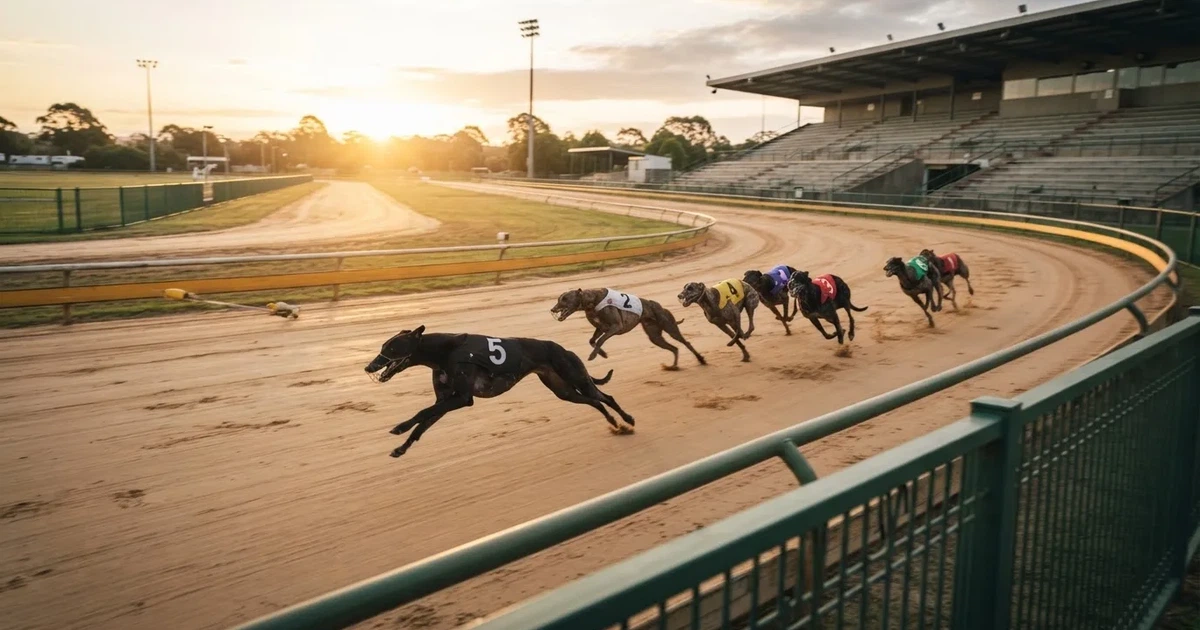
Britain’s greyhound calendar runs year-round. Eighteen stadia hold GBGB licences and stage meetings most evenings, with a heavier card on Saturday afternoons and nights. Races are sprints, typically over distances between 230 and 645 metres, run on sand or, increasingly on colder circuits, on a snow-dusted surface. Six dogs usually line up in each race; the mechanical artificial lure leads them out and crosses the line first, and the order behind it is what settles the market.
That is the shape of the sport, but the shape that matters to a bettor is the price sheet: two dogs you care about, prices attached to each, and a margin baked into both. The margin is the bookmaker’s cut on every unit staked, and it is the number that decides whether odds of 2/1 at one firm actually beat 5/2 at another once you account for everything else.
The 2026 Calendar: What Still Runs and What Doesn’t
Greyhound racing in Great Britain continues under GBGB regulation; the picture shifted only on one side of the world. New Zealand’s Racing Industry (Closure of Greyhound Racing Industry) Amendment Act 2026 passed on 2 April 2026, with a phase-out set for 1 August 2026. Winston Peters announced the policy on 10 December 2024. Before the ban, Greyhound Racing New Zealand organised seven affiliated clubs across the country; in Britain none of that applies, and a GB-licensed operator offering greyhound markets is offering events staged at licensed GBGB tracks. A punter comparing prices sees more or less the same menu at every brand: domestic cards every evening, an Irish card around the weekend, occasional Australian or American meetings on a quiet night. The disappearance of New Zealand racing removes a small slice of that menu for some operators and is mostly a fixture question for shops with a strong Irish bookmaking heritage.

The Greyhound Card: Markets You’ll See on a Betting Slip
The bulk of every greyhound market is a price against a single selection. A win bet pays out only if the chosen dog finishes first; a place bet pays if the dog finishes in the top two or three, depending on the number of runners and the operator’s place terms; an each-way bet is two equal bets at the same stake, one on the win and one on the place, so the total outlay is double the headline stake.
Combination bets stack several greyhound races into one. A double is two races; a treble is three; an accumulator, often shortened to “acca”, is four or more. Each leg multiplies its odds into the next, which makes a six-leg accumulator look enormous on a betting slip and behaves like that in price, but the payout share of any multi-race market is materially below that of a single. The “more legs you pick, the more the book wins on average” finding is mechanical: every added leg carries its own margin, and the margins compound. A Lucky 15, a Trixie or a Yankee does the same job in a slightly different number-of-bets envelope; all are famous mainly because they make a small staking unit (£1 or £50p) into a non-trivial total spend.

Then there are ante-post markets, futures on the bigger races such as the English Greyhound Derby or the Scottish Greyhound Derby, priced weeks in advance. Ante-post means the stake is lost if the dog is a non-runner, with no Rule 4-style deduction, and that single feature is the line to read before committing. Bookmakers also offer forecast and tricast bets (picking first and second in order, or first, second and third) and outright winner markets on the meeting.
Spread betting, when the dog race is a spread instrument, sits on a different regulatory rail entirely. Spreadex, for instance, is regulated by the Financial Conduct Authority for spread betting and by the Gambling Commission for fixed-odds betting; financial spread betting losses can exceed deposits, and the FCA’s framework means the question of whether a quote competes with a fixed-odds greyhound card is partly a different activity.
How Starting Prices Settle a Race
A starting price is the on-course fixed-odds price at the moment the race begins, and it applies to horse and greyhound racing. Once the tape goes up and the SP is read out, a backer who asked for SP rather than a fixed price is settled at that figure; a backer who took a fixed price is settled at the figure they took. The two diverge by design: a fixed price is locked at the moment the bet is placed, while SP moves with the on-course book and can be either better or worse for the backer.
Best odds guaranteed (BOG) is the operator’s promise to pay the higher of the two: if you take 5/1 and the SP returns 8/1, you get paid 8/1. Most British bookmakers offer BOG on greyhound racing; a few of the independent firms and the smaller exchanges do not, and that single difference is one of the few terms that meaningfully changes a long-term price comparison.
What a Margin Actually Does to the Numbers You See
Margin is the slice of every pound staked that the bookmaker keeps on average. For a two-dog market at decimal odds 1.90 and 1.90 (the 9/10 the betting slip shows), the math works out as a payout share of about 89.5% on either side and a margin of around 10.5% on the book. That band is what we calculate below.
For a fuller picture, a more typical greyhound race has six runners, and the “overround” — the total of every implied probability on the card — lands somewhere between 110% and 130%. Anything under 110% on a six-runner race is unusually competitive on the day; anything north of 130% means the bookmaker is keeping more than a quarter of every pound staked, and the punter’s expected return drops by the same amount. The honest framing of a 125% book is that the operator expects to keep a quarter of every unit of turnover, and a bettor’s only way out is to pick dogs whose true chances beat what the odds imply.
The way to see margin in a live quote is to ask: convert each price to implied probability (a five-runner race at 2/1, 5/2, 4/1, 9/2 and 12/1 sums to about 1.18, so the margin is 18%), and compare that total across operators. The one with the lowest total at the same time, on the same race, on the same morning gives back more to bettors.
The Worked Example: What a Two-Dog Market Returns
A 9/10 shot on a two-runner race (decimal 1.90) is the cleanest illustration. A £10 stake at 1.90 returns £19 if the dog wins (stake £10, profit £9); a losing bet returns nothing. With both sides priced at 1.90, the payout share is roughly 89.5%, and the margin is the remaining ~10.5%. On a losing streak of any length, that margin is exactly what the bookmaker banks; on a winning streak it is what the bettor is fighting through.
This is the page’s one worked calculation, and the order matters: payout share and margin add to 100%, and any specific bookmaker’s margin on a specific race will differ from this illustrative band. Some firms run six-dog greyhound books at 112% on a quiet Tuesday; others run them at 128% on a busy Saturday. The range is the answer, not a single number.
In-Play Greyhound Betting and Cash Out
Live greyhound betting exists at most of the larger operators but is mechanically limited compared with football or tennis. A greyhound race lasts thirty seconds. The in-play product, where it appears, is a short window of fluctuating prices between the off and the first bend; after that the race is effectively settled and the markets close.
Cash out is the bookmaker’s offer to buy back an open bet at a quoted price before the race finishes. It is meaningful only on longer-odds selections during the in-play window, and the price the operator offers is built from its own model of the remaining race, not from any exchange. Where cash out is offered, its usability on greyhounds is narrower than on football; where it is not, the bettor simply waits for the result.
Spread Betting on Greyhounds: A Different Market, A Different Cost
Spread betting on dogs sits under two regulatory umbrellas, and which one applies changes the risk shape. Where the activity is treated as a financial instrument, the firm is regulated by the Financial Conduct Authority and the customer can lose more than their initial deposit. Where it is treated as a betting product, the Gambling Commission licence covers it and the same general-betting duty rules apply. Spreadex states on its homepage that spread betting losses can exceed the deposit, and that single sentence is the reason a comparison between a fixed-odds greyhound price and a spread betting quote is not a like-for-like.
For a punter comparing the two, the conclusion is plain: spread betting on dogs is a separate instrument, with its own tax treatment, its own risk profile and its own licensing regime, and it does not compete on price with the fixed-odds card.
What the Gambling Commission Allows in ££CY££
A bookmaker serving customers in Great Britain needs a Gambling Commission licence wherever it is based, under sections 33 and 36 of the Gambling Act 2005 as amended by the Gambling (Licensing and Advertising) Act 2014. A Curaçao, Maltese or Gibraltar licence is not a substitute. Northern Ireland is outside the 2005 Act and runs under older law, so a “GB-licensed” bookmaker is licensed for Great Britain (England, Scotland and Wales) only.
There is no state monopoly and no statutory cap on the number of licences. There is also no statutory list of permitted sports or markets. The Commission’s public register, searchable by business name, trading name, domain or account number, is the whole test of whether a brand holds a licence, and every operator detail comes from its own terms.
The Named-Account Rule
Since 7 May 2019, GB-licensed operators have had to verify name, address and date of birth before a customer can deposit or gamble, including with a free bet or bonus. The verification covers free bets as well as real-money stakes. No anonymous play exists at a licensed site, and the identity check is the first cost in time that licensed betting imposes.
Bonus Rules in Force Since January 2026
Wagering requirements on bonuses at GB-licensed operators are capped at 10x the bonus (a £10 bonus at 10x needs £100 of qualifying bets; under the cap, a £10 bonus at 50x would have needed £500, which is now unlawful). Mixed-product promotions — an offer that requires gambling on two or more product types such as betting, casino, bingo and lottery — are banned. Whether the cap applies to free bets with no wagering condition, and any cap on the money value of a bonus, are not settled points in the published rules.
Bonuses with Money or Free Bets
The two reward types behave differently. A cash bonus is paid in withdrawable money once the wagering condition is cleared; a free bet is a one-shot stake whose value is generally NOT paid back with the winnings (a £10 free bet at 5/1 returns £50, not £60). That distinction is invisible at the moment of claiming and material at the moment of settlement; it is the single most useful thing for a bettor to know about any welcome offer.
Tax in ££CY££
The player pays no tax on betting winnings in Great Britain. General Betting Duty is the operator’s tax on gross profits, currently 15%; from 1 April 2027 a new remote betting rate of 25% applies within it, while remote bets on UK horse racing, self-service betting terminal stakes, pool betting and in-person betting stay at 15% (HM Government policy paper of 26 November 2025). Until 1 April 2027 the remote rate stays at 15%; whether operators pass duty on through odds is not established, and a punter is not charged duty on a winning bet.
What Offshore Means in Practice
An operator without a GB licence is offshore from a British bettor’s perspective, and the experience is materially different. The customer loses GAMSTOP coverage, the Commission complaints route, an approved dispute-resolution body and British consumer redress if funds are withheld; the operator is not bound by the 10x bonus cap or the £150 vulnerability check. No offence aimed at a customer who merely bets on an unlicensed site was found in the published rules, but the protection loss is what matters day to day. Enforcement is by disruption, not blocking — cease-and-desist notices, search-engine referrals, registrar and payment-provider work, court-order DNS blocking powers the Commission has been given or is about to receive. A punt on an unlicensed site is not “legal to use”; it is unprotected by any of the British safeguards, and that is the honest way to put it.
Responsible Gambling: What a Licensed Operator Must Offer
GAMSTOP is the national multi-operator online self-exclusion scheme. Every GB-licensed online operator takes part, and self-exclusion periods are six months, one year, five years, or five years with auto-renewal; after the minimum period, the exclusion stays in place for a further seven years unless the customer asks GAMSTOP to remove it. GAMSTOP covers online sites and apps; betting shops use a separate service.
A financial vulnerability check (LCCP condition 3.4.4, in force since 30 August 2024) applies to licensed remote betting when a customer’s deposits minus withdrawals exceed £150 in a rolling 30 days (since 28 February 2025): it is a public-record check (for example bankruptcy or county court judgments), not an income check and not a credit reference check. Financial risk assessments are announced in a staged plan (Commission article of 7 July 2026), with no start date.
Deposit limits (RTS 12) require operators to offer a gross deposit limit on a fixed time frame; the first changes have applied since 31 October 2025, a second phase is scheduled to come into force on 30 September 2026, and the actual status of that second phase is not established. There is no state-set deposit or loss ceiling for betting; limits are the customer’s choice and the operator must offer them.
Help lines and clinics run alongside operator-level tools: GamCare and the National Gambling Helpline, GambleAware, NHS gambling clinics, Gamblers Anonymous. A serious operator links to these from its safer-gambling pages.
Reading a Welcome Offer: What It Takes to Clear
A typical 2026 greyhound sports welcome runs “bet £X, get £Y in free bets”. The headline figure is rarely the cost. Three numbers to compare:
- the minimum odds on the qualifying bet (2.0 / 1/1 is standard; lower numbers mean you have to take a shorter-priced favourite);
- the wagering requirement on any cash portion (capped at 10x for licensed operators);
- the expiry window on the free bet (seven days is the typical issued-and-expired window, after which an unused portion is lost).
Coral’s sports welcome, for example, requires a £20+ deposit-and-sports-bet at minimum odds of 2.0 with £40 in free bets issued within seven days and expiring seven days after issue, for new GB customers who opt in. Bet Ahoy’s “Bet £10 & Get £10 in Free Bets” breaks the £10 into a £5 sports bet and a £5 acca — a structure that is common at independent firms and means two rather than one qualifying bet is the actual cost of the offer.
Greyhound Bonuses Beyond the Welcome
After the welcome, the offers that matter on greyhounds specifically are the recurring ones: enhanced odds or price boosts on the night’s feature race, a Best Odds Guaranteed guarantee on UK and Irish greyhound cards, an accumulator insurance that refunds a stake if one leg lets you down, and very occasionally a free bet club tied to a minimum weekly spend.
Three operators in the featured set list a BOG-style product for greyhounds. Swifty Sports runs Best Odds Guaranteed, Cash Out on horse racing and football markets, daily price boosts, live streaming and in-play betting, with Bet Builder marked as coming soon. The other independents vary; the larger firms are broadly comparable on BOG and noticeably broader on price boosts across other sports.
What the welcome and the recurring offer are NOT is a reason to back a dog. Margin on the underlying market is the same whether you claim a bonus or not; the offer is paid for out of that margin, and on a thin book the offer is what compensates a bettor for taking a worse price. There is a small class of accounts where the welcome offer alone is worth more than the operator’s typical greyhound book; that class is short, and outside it the offer is a small sweetener rather than a margin override.
Greyhound Betting on a Phone: Apps and the Mobile Experience
Most bets on dogs are placed on a phone during the evening meeting, and the app is the product. Three different shapes appear across the featured set.
The full-scale brands (Paddy Power, Coral) ship polished, dense apps with a greyhound tab, live in-play for short-course markets, cash out on most single bets, a bet builder, and price boosts pinned to the front page. bet365 is the official global betting partner of the UEFA Champions League and its app is described in the UK App Store as the most downloaded sports betting app in Britain — which says nothing about its greyhound product and a lot about its breadth.
The independent bookmakers ship lighter apps. Fitzdares offers cash out, accumulators, Lucky 15s, specials and antepost markets on horse racing, football, tennis, rugby, cricket, golf and American football, with in-play live odds. Geoff Banks’ app is published by GB Sports Advisors Ltd and offers live in-play prices and ante-post prices on future events. Bar One Racing (now BAR 1 Betting) is an Irish independent with shops across Ireland and horse racing sponsorships at Dundalk, Fairyhouse, Navan, The Curragh, Curraheen Park and Cork. Betmaster’s app is published by BM Solutions GB Ltd and covers football, cricket, horse racing, NFL and esports (League of Legends, Dota 2) — greyhound racing is not listed among its covered sports.
The hybrid apps include London Bet, which combines sports betting (football, tennis, horse racing, greyhounds, darts, golf, cricket, NFL, NBA, MLB, snooker) with Pragmatic Play casino slots and live in-play betting, and Lottoland UK, which pairs sports betting with casino, lottery betting and scratchcards.
The browser-only operators sit on the third category. Fitzwilliam Sports describes itself as a Dublin bookmaker with capped membership, and its welcome is a “High Stakes Welcome” subject to compliance criteria. The “capped” wording is the giveaway: the firm is not trying to be the largest account in Britain, and a phone-first punter looking for a slick app should expect a smaller, slower product.
How the Featured Ten Compare
| Brand | Gambling Commission account | Licence holder | Stated approach to greyhound betting |
|---|---|---|---|
| Fitzdares | 400 | Fitzdares Limited | Cash out, accumulators, Lucky 15s, ante-post and specials across multiple sports with in-play live odds on its app. |
| Geoff Banks | 54095 | GB Sports Advisors Limited | Live in-play prices and ante-post prices on future events via its standalone app. |
| Bar One Racing | 56516 | Bar-One Racing Limited | Irish independent rebranded as BAR 1 Betting; greyhounds are part of a multi-sport offering across its shop-and-app estate. |
| Bet Ahoy | 100094 | Bet Ahoy Ltd | The brand’s terms state a £10 bet / £10 free-bet welcome split across a sports bet and an acca; depth of greyhound coverage is not documented in the listing referenced. |
| Fitzwilliam Sports | 48760 | SBKI Limited | Capped membership, Dublin-based; high-stakes welcome subject to compliance criteria and safer-gambling links to GambleAware, GamStop and Gamblers Anonymous. |
| Paddy Power | 39439 | PPB Counterparty Services Limited | Broad multi-sport app (football, horse racing, boxing, rugby, tennis, golf, darts, snooker, F1) with greyhounds among its racing offering. |
| Coral | 54743 | LC International Limited | £20 qualifying bet at minimum odds 2.0 unlocks £40 in free bets, issued and expiring within seven days, for new GB customers who opt in. |
| London Bet | 66162 | Thistle Bet Limited | Combined sports-and-casino app with greyhounds, NFL, NBA, MLB, snooker and Pragmatic Play slots. |
| Betmaster | 65699 | BM Solutions GB Ltd | App coverage focused on football, cricket, horse racing, NFL and esports; greyhounds are not named among its covered sports. |
| Swifty Sports | 58957 | Swifty Global (UK) Ltd | Best Odds Guaranteed, Cash Out on horse racing and football, daily price boosts, live streaming, in-play betting; Bet Builder listed as coming soon. |
Every licence figure and licence-holder name above is a direct read from the Gambling Commission’s public register at the access date at the foot of this page; the description column reflects how each operator’s own materials describe the offering on its homepage or App Store listing.
Picking a Bookmaker for Greyhounds
A shortlist for greyhound betting balances three things: breadth of the meeting coverage (whether the firm runs UK and Irish cards, plus the occasional Australian streaming), the margin on the typical six-runner race (a 110-118% book is competitive; a 125%+ book is heavy), and the value of the operator-specific terms (BOG on UK and Irish greyhounds, price boosts on feature races, ante-post markets weeks ahead).
For a casual bettor placing a £5 treble on a Saturday night, BOG is the single most useful feature, and most of the larger firms offer it. For an ante-post backer with a £50 stake on the English Greyhound Derby months in advance, a non-runner refund rule is the only feature that matters, and only some of the bookmakers carry it. For a bettor who lives on the bet builder across other sports and wants greyhounds as a side dish, bet365’s Bet Builder+ (combining markets from one event into a single bet, available pre-match and in-play) and its layered boosts — Super Boosts, Winnings Boosts on Bet Builders and selected singles, daily Bet Boosts — translate directly.
For a bettor who wants a sharp line on the dog’s SP and the in-play window between the off and the first bend, the independent firms and the betting exchanges are where to look first, but each ships a different product and a punter should compare two of them head-to-head on the same race before committing.
Greyhound Betting Tips: What the Page Can and Cannot Say
A betting tip is a prediction that a specific dog wins a specific race; a betting strategy is a discipline of staking and selection. This page describes both, but the description stops at the line where it would name a winner or pretend to know the future. No published form guide, speed-reading service or “best bets” sheet can raise the chance of picking the winner above the level the market already knows, because the market already incorporates that information. The two things a tip is paid for are bundling — collecting indicators into a single number — and timing — releasing that number at the moment the price softens.
The strategy that works on dogs is the same one that works anywhere: stake a fixed small percentage of the bank on every bet, keep a written record of every selection at the price taken, and read that record monthly to see which categories of bets lose. Without that record, a system is a story a punter tells themselves; with it, the system is a measurable habit. Bankroll discipline, in other words, is what the punter controls; the racing on the night is what they do not.
Free Betting Systems on Greyhounds: What They Sell
A free greyhound betting system is usually a PDF or a thread that promises a steady return by staking on dogs in a sequence. The systems that look most persuasive are the ones whose results are shown on the winning streak only, or whose staking plan gets aggressive enough that any recovery is almost impossible. None of the publicly visible systems has been shown, on a sustained audited basis, to overcome a 115-120% book on regular cards.
That is the page’s one sentence on systems, and it is the honest one. A system worth taking is one whose staking rule, qualifying bet type and selection criteria are all stated up-front and tested on at least a couple of thousand documented bets across losing streaks, not one whose winning streak is the front page.
Greyhound Betting Promotions and How to Read Them
The promotions that run on greyhounds are most often price boosts on the feature race of the night, an acca insurance that refunds a stake if one leg fails, an enhanced each-way offer (more places paid than the standard one or two), and very occasionally a money-back-if-second promotion on the headline race.
Each carries a cost buried in the small print. A money-back-if-second offer looks free and is not: the maximum stake is capped, the qualifying bet must be at or above a minimum price, and only one named race qualifies per day. A price boost on a short-priced favourite (say, an odds-on shot boosted from 4/6 to evens) does not change the operator’s margin meaningfully; it changes which side of the book the operator is hoping to attract. The bettor’s task is to compare the boosted price to other operators’ unboosted price at the same moment, and to size the bet accordingly.
Spread Betting on Greyhounds: The Cost Picture
For punters comparing a fixed-odds greyhound card and a spread betting quote, the two are not the same product. The fixed-odds price is settled once; the spread quote moves through the race, and a backer whose selection drifts beyond the quote loses per unit of drift, not a fixed stake. FCA-regulated financial spread betting losses can exceed deposits.
A pure punter on a fixed-odds book should keep the two products on separate pages of the betting record; a punt on dogs at a spread firm should be understood as a separate budget line and a separate risk limit.
Where to Check a Licence Yourself
The Commission’s public register can be searched by business name, trading name, domain or Commission account number, and it is the only test of whether a brand holds a GB licence. To use it, take the brand name from any operator’s “About” or “Terms” page, search the register, and confirm that the licence categories include remote general betting standard (real events) — the category that covers greyhound race betting on a real-world event. The featured ten brands above all show up under that category at the access date at the foot of this page; a brand that does not show up, or shows up only under a non-GB register, is not licensed for the British market.
Frequently Asked Questions
Who regulates greyhound racing in Great Britain?
The Greyhound Board of Great Britain (GBGB) regulates the sport itself across its 18 licensed stadia; bookmakers that take bets on those races need a Gambling Commission remote licence under the Gambling Act 2005. Neither regulator is a substitute for the other, and neither is an alternative to checking the bookmaker’s licence status on the Commission’s public register before depositing.
How does return work on a greyhound bet?
Return is stake multiplied by the decimal odds; net profit is stake multiplied by (odds minus 1). A £10 bet at decimal 3.50 returns £35 (stake £10, profit £25). For an accumulator the odds of each leg multiply into one combined price, so a treble at 2.00, 3.00 and 4.00 is priced at 24.00 — and the combined margin is materially larger than the margin on any single leg.
How is a bookmaker’s margin measured?
For a market with all outcomes priced, payout share is 1 divided by the sum of 1 divided by each odds; margin is 1 minus payout share. A two-runner race at 1.90 and 1.90 has a payout share of about 89.5% and a margin of around 10.5%. Margin is the operator’s slice of every unit staked, on average across many bets, and is the number that decides long-term return.
What does each licence entry on the Commission’s register mean?
Each entry names a licence holder and lists the categories of remote betting that holder is licensed to offer. Greyhound race betting sits under remote general betting standard (real events). The Commission account number is the brand’s identifier on the register and is what a punter searches by.
How can a punter check that a welcome offer is genuinely worth claiming?
Compare three things against a competitor’s offer: the minimum odds on the qualifying bet, the wagering requirement on any cash portion (capped at 10x at GB-licensed operators under the promotion rules in force since 19 January 2026), and the expiry on any free bet portion (seven-day issue-and-expire is typical). A welcome whose qualifying bet must be at 2.0 or higher is materially harder to clear than one with no floor; a welcome whose free bets have a 30-day window is materially easier to use than one with seven days.
Horse racing & greyhounds – Independentbookies.com
Content created by the «Independentbookies.com» team
