Chess betting odds in Great Britain: how they work, what they cost
 Available in US
Current as of October 30, 2026, against the Gambling Commission’s public register.

A 64-square board, 32 pieces at the start, three ways for the game to end. That is the entire surface of chess as a betting product, and it sits inside the same Gambling Commission framework that licenses every other remote bookmaker in Great Britain. The matches run from classical World Championship bouts that last six weeks to 25-minute online rapid rounds that resolve before the kettle boils, and the prices that bookmakers post across them are built the same way prices are built on any two-way or three-way market. What differs is the depth of coverage, the rules each operator applies to settlement, and what the punter pays for the chance to bet on a sport the law does not name but does not forbid.
This page is a working guide to that market for the 2026 season. The first half explains the sport, the licence and the protection a customer in Great Britain either has or does not have. The second half works through the ten GB-licensed bookmakers that are reviewed in detail at the foot of the page, with a comparison table that pulls the licence number, the licence holder and the operator’s own line on chess onto a single sheet. In between sit the markets, the margins, the live-betting question and the offer terms a sharp bettor reads before the welcome banner blinks out of view.
The ten chess bookmakers, ranked and reviewed
Ten operators sit on the shortlist this season. Each one holds a Gambling Commission remote licence for real-event betting, each one is a member of GAMSTOP, and each one is reviewed in full in its own block further down the page. The set is fixed; the ranking inside it is editorial.
| Brand | Gambling Commission remote licence | What the operator’s own terms say about chess |
|---|---|---|
| Betfred | 039544-R-319290-010 (account 39544), held by Petfre (Gibraltar) Limited | A long-standing GB high-street bookmaker with a full app and a deep racing focus; chess lines are limited and sit inside the broader in-play product. |
| BetMGM | 039198-R-319450-029 (account 39198), held by LeoVegas Gaming PLC | A US-rooted brand with a polished UK app; chess is offered through the in-play feed rather than as a dedicated vertical. |
| Bet600 | 044731-R-323941-016 (account 44731), held by Tyche Tech Limited | A smaller bookmaker built around football and racing; chess coverage is sporadic and depends on what suppliers feed. |
| 10bet | 043173-R-322899-023 (account 43173), held by Blue Star Planet Limited | A multi-vertical brand with bet builder, cash out and live streaming; chess appears inside the specials feed on big FIDE events. |
| DragonBet | 064908-R-339041-003 (account 64908), held by DragonBet Ltd | A Welsh independent bookmaker with a strong rugby and racing tilt; chess is a thin addition, useful only on the marquee events. |
| Fitzwilliam Sports | 048760-R-335434-009 (account 48760), held by SBKI Limited | A Dublin-based bookmaker with capped membership and a “High Stakes Welcome” subject to compliance; chess is served as part of the broader in-play product. |
| Bar One Racing | 056516-R-332750-007 (account 56516), held by Bar-One Racing Limited | An Irish independent bookmaker rebrand of Bar One Racing to BAR 1 Betting; racing dominates the card and chess is a minor line. |
| Midnite | 101839-R-342850-001 (account 101839), held by Midnite Limited | A newer GB brand with an acca builder, popular accas, price boosts and a modern in-play product; chess is one of several non-mainstream sports on the feed. |
| Paddy Power | 039439-R-319330-013 (account 39439), held by PPB Counterparty Services Limited | One of the largest GB-licensed bookmakers with a deep app and a strong in-play product; chess is served through the wider feed. |
| NetBet | 039170-R-319343-032 (account 39170), held by Netbet Enterprises Limited | A multi-vertical brand with Daily Boosts, Profit Boosts, free bet offers and a Bet Builder; chess appears on the specials feed. |
The list is not the whole market. The Commission’s public register lists many more remote licence holders than these ten, and a brand that is not on this page may be a perfectly sound place to bet. The list is the set this guide reviews, in the order the coverage plan names, and that is the only order in which the brands appear in the table above and the blocks below.
A single column would not have done the work. The licence number, the licence holder and the operator’s own line on chess are the three matters the spec named, and the table carries them in the same row so a reader can confirm a brand against the register without leaving the page. The licence holder is the corporate entity behind the trading name — useful to know because several licence holders run more than one trading name, and a check by business name is the most reliable way to confirm a brand is on the register.
The chess product at a glance
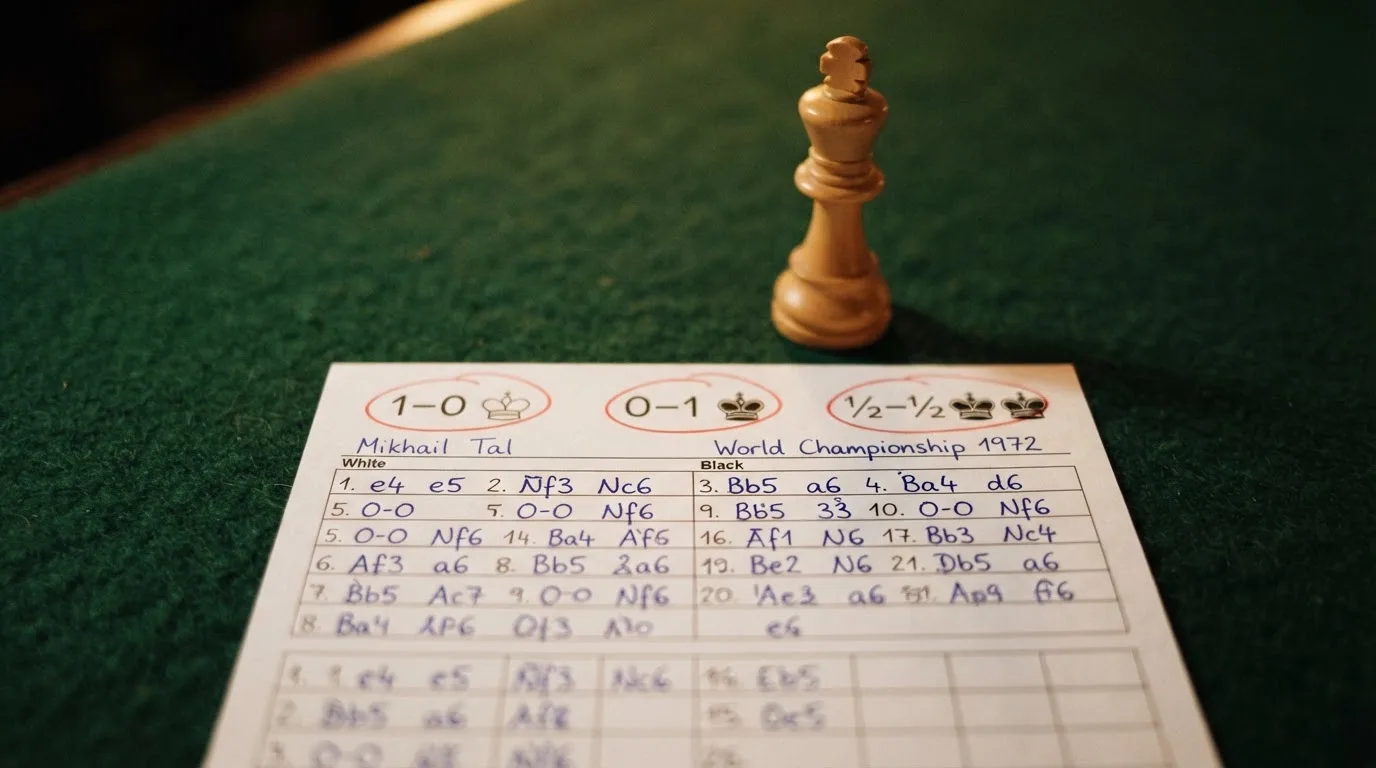
Chess is played on a board of 64 squares arranged in an 8×8 grid, with each side starting the game with 16 pieces. A win for White is recorded as 1–0, a win for Black as 0–1, and a draw as ½–½. Under FIDE rules a game ends in a draw by stalemate, by agreement between the players, or on a claim of threefold repetition or the fifty-move rule; since 2014 fivefold repetition and the seventy-five-move rule end the game automatically without a claim. The first universally recognised World Chess Champion was Wilhelm Steinitz, who claimed the title in 1886; Gukesh Dommaraju won the title in 2024.

The bookmaker’s job is to price those three outcomes across a long schedule of events, from World Chess Championship matches and Candidates Tournaments to online rapid and blitz rounds streamed from the major platforms. The customer pays a margin on every price — the same margin that sits inside a football coupon or a horse racing market — and the difference between chess and the more familiar sports is the depth of the line. Most GB bookmakers carry match winner and tournament outright on the marquee events and little else; only a handful run side markets such as the number of moves, the result of the white pieces or whether a specific game ends in a draw.
The piece that bettors miss when they first look at a chess market is the draw. A 1X2 football coupon has three outcomes; chess is a three-outcome sport by design. A World Championship match between two top-ten grandmasters ends in a draw roughly half the time, and a price on the draw that looks generous at 3.75 is, in fact, a price set against an outcome that happens about 50% of the time at the very top of the game. The bettor who reads the price as a longshot is reading the wrong market; the bettor who reads it as the favourite is reading the right one. That gap between what the price implies and what the game delivers is the margin the bookmaker keeps, and it is the same gap on every other market the bookmaker offers.
The legal frame, in plain English
The Gambling Act 2005 covers Great Britain — England, Scotland and Wales. Northern Ireland is outside the Act and runs under older law, so a “GB licence” regulates remote betting in England, Scotland and Wales only, never Northern Ireland. The Gambling Commission is the regulator: a non-departmental public body sponsored by the Department for Culture, Media and Sport. Since the Gambling (Licensing and Advertising) Act 2014 an operator whose remote facilities are used in Great Britain needs a Commission licence wherever it is based, and the Commission’s public register is the test of who holds one.
The register can be searched by business name, trading name, domain or account number, and a brand that is not on the register is not licensed for Great Britain. A Curaçao, Maltese or Gibraltar licence is not a substitute — those licences sit alongside a GB licence, they do not replace it, and an operator without a GB licence is not licensed to take bets from customers in Great Britain regardless of where its servers sit. A GB-licensed brand uses .com and .co.uk interchangeably, so the domain proves nothing; the register is the proof.
There is no statutory list of permitted sports or markets. The Commission does not publish a list of approved events or a list of forbidden ones; the operator holds a licence for a category — remote general betting standard (real events), for example, or remote betting intermediary for an exchange — and offers markets inside that licence under the Licence Conditions and Codes of Practice and its own house rules. Chess sits inside that permitted real-event category; nothing in statute or Commission guidance carves chess out and nothing carves it in, and a brand that holds such a licence may carry it as it sees fit.
The minimum age is 18. Name, address and date of birth are verified before the customer can deposit or gamble, including with a free bet or a bonus, and that verification has been in force since 7 May 2019. A licensed site is not anonymous. There is no state-set ceiling on stakes and no state-set ceiling on losses; the operator sets its own maximum stakes and may restrict a customer, and the customer sets a deposit limit on a fixed time frame as one of the customer-protection duties the operator must offer. General Betting Duty is the operator’s tax on gross profits, currently 15%; from 1 April 2027 a new remote betting rate of 25% applies within it for most remote bets, while remote bets on UK horse racing, bets on self-service betting terminals in licensed premises, pool betting and in-person betting stay at 15%. The player pays no tax on betting winnings in Great Britain.
What an unlicensed site does not offer is the British safety net. An unlicensed site is not part of GAMSTOP, the multi-operator self-exclusion scheme that has been a mandatory licence condition for online operators since 31 March 2020. An unlicensed site is not subject to the Commission’s complaints route, has no approved dispute-resolution body, and there is no British consumer redress if funds are withheld. The 10x cap on bonus wagering, the financial vulnerability check that applies at £150 of net deposits in a rolling 30 days, and the credit-card ban for gambling do not apply offshore. Whether the use of an unlicensed site is itself an offence aimed at the customer is not established; the loss of protection is what a customer is being warned about, and the warning is the right one to take seriously.
Safer gambling, in one read
GAMSTOP is the national multi-operator online self-exclusion scheme. A customer who registers with GAMSTOP is barred from every licensed online operator for a chosen period of six months, one year, five years, or five years with auto-renewal; after the minimum period the exclusion stays in place for a further seven years unless the customer asks GAMSTOP to remove it. The scheme covers online sites and apps; the offline self-exclusion for betting shops is a separate service, and the two are not interchangeable. Every brand on the Commission’s public register takes part in GAMSTOP, and that is one of the two tests of a brand being a member (the other being the register entry itself).
A financial vulnerability check applies to licensed remote betting when a customer’s deposits minus withdrawals exceed £150 in a rolling 30 days. The check is a public-record check — for example a check for an active bankruptcy order or a county court judgment — and it is not an income check and not a credit reference check. A financial risk assessment, the “affordability check” of the press coverage, has been announced in a staged plan; no start date has been set, and the right way to describe it is “announced, staged, no start date” rather than “in force”.
Deposit limits are the customer’s tool. Operators must offer a gross deposit limit on a fixed time frame, and the first changes under the Remote Technical Standards have applied since 31 October 2025; a second phase was postponed to 30 September 2026, and whether it is live is not established. Limits are the customer’s choice, not the state’s, and the operator that offers a smaller starting limit than the punter wanted is the operator that has read the rule correctly.
Help is available from GamCare, which runs the National Gambling Helpline, from GambleAware, from the NHS gambling clinics and from Gamblers Anonymous. The brand pages of every bookmaker reviewed in this guide link to one or more of those services, and a brand that did not would not be a brand the page could recommend by silence.
The mobile and app product
The bet on chess, in the vast majority of cases, is placed on a handset. The set above is the set the coverage plan names, and the table at the foot of this section pulls the app publication line out of the App Store metadata for each brand. The screenshot below is a representative App Store tile; the line a sharp bettor reads is the publisher name, which is the legal entity behind the app, and the version history, which is the cleanest evidence of how often the brand ships a real update.
| Brand | App publisher (per App Store) | Sport coverage as published |
|---|---|---|
| Betfred | Done Brothers (Cash Betting) Ltd | 21 sports plus over 2,000 casino-style games |
| BetMGM | LeoVegas Gaming PLC | Sports and casino, with a sports welcome offer for new UK customers |
| Bet600 | Tyche Tech Limited | Football, horse racing and a Best Odds Guaranteed offer on racing |
| 10bet | Blue Star Planet Limited | Football, tennis, horse racing, with Cash out, Bet Builder and Live Streaming |
| DragonBet | DragonBet Ltd | Welsh football and rugby, racing, American football, in-play and bet builder markets |
| Fitzwilliam Sports | SBKI Limited | The publisher is listed in the Commission’s public register; the App Store metadata is not a separate proof of licence |
| Bar One Racing | Bar-One Racing Limited | Racing-led, with shops across Ireland and horse racing sponsorships |
| Midnite | Midnite Limited | In-play events, an acca builder, popular accas and price boosts with maximum-stake limits |
| Paddy Power | Paddy Power PLC | Football, horse racing, boxing, rugby, tennis, golf, darts, snooker and F1 |
| NetBet | Netbet Enterprises Limited | Daily Boosts, Profit Boosts, free bet offers, a Bet Builder with instant dynamic odds |
The sport coverage in the right-hand column is the line each brand chose to advertise in its own App Store listing. None of those lines names chess by name, and that is the right way to take the listing: chess is not the headline sport of any of the ten brands. Chess is a line on the feed — present in the in-play product, on the specials feed, or as a tournament outright during a major FIDE event, and absent in between. The customer who wants a permanent chess vertical in the app is looking for a feature none of the ten brands offers as a standalone.
A bettor’s practical check is threefold. First, the publisher in the App Store listing should match the licence holder in the Commission’s register; if it does not, the brand is not the brand it claims to be. Second, the version history should show recent updates — a brand that has not updated its app in over a year is a brand that has stopped investing in the mobile product. Third, the bet builder and the in-play product on the listing should be tested in a small-stake bet before the welcome offer is touched; a slick listing and a thin in-play feed are different things, and a small-stake bet is the cheapest way to tell them apart.
Live betting, in-play and cash out
Chess is one of the easier sports to bet in play because the data is unambiguous. Each move is logged with a timestamp, the engine evaluations update throughout the game, and the live market can quote match winner, the next-move market and the result of the white pieces against a clean ledger. The problem for the bookmaker is the depth of the data feed: a live market on a World Championship game can be priced from the engine evaluation in real time, while a live market on a regional rapid event often cannot be priced at all, because the data feed is too thin to update the book between moves.
In-play betting is offered at GB-licensed bookmakers and the controls are the operator’s licence conditions and customer-protection duties, not a statutory right or a statutory prohibition. A bettor who wants a deep in-play chess product needs to pick a brand that has invested in the feed, and the App Store listing is the roughest guide; BetMGM, 10bet, Midnite, Paddy Power and NetBet all carry some form of in-play product, and a brand that lists only pre-match is a brand that has not.
Cash out is a separate product from in-play betting. The cash-out value the bookmaker offers is the bookmaker’s estimate of the live price of the bet, and the offer can be lower than the bet’s true value at that moment because the bookmaker is taking the other side of the trade. A bookmaker that offers cash out on chess matches is a bookmaker that has built the back-end to mark the position to market; a bookmaker that does not is a bookmaker that has not, and a sharp bettor reads the gap between the live price and the cash-out offer as a cost the brand is charging for the convenience.
Reading predictions, tips and strategy pieces
A chess strategy piece is a different kind of writing from a football strategy piece. Football is a high-scoring game with a deep data set and a wide base of amateur and professional analysts, and a strategy piece is a survey of the data. Chess is a low-event game with a long historical record and a relatively small pool of strong players, and a strategy piece tends to be a survey of the head-to-head record, the player’s recent form, the colour sequence in the match and the engine evaluation at move zero.
The bettor’s defence against bad strategy advice is threefold. First, the tipster who claims a winning system is selling a system, not a winning system: nobody can know the outcome of a single chess game, and a tip that promises one is a tip that lies. Second, the data set that supports chess analysis is small, and a tip that leans on a 12-game head-to-head record is leaning on a sample the size of a coin toss. Third, the engine evaluation that drives most modern chess coverage is public, and a price that is set against a 0.55 evaluation of White is a price that already contains the engine’s view; the customer who takes the opposite side is taking the opposite side of the engine, not the opposite side of the bookmaker.
The strategy the page can offer is the strategy the arithmetic supports. A bettor with a small bankroll bets on markets with the lowest margin, because the margin is the cost the bookmaker charges on every bet and the only cost a small-stake bettor can do anything about. A bettor with a long horizon bets on outright markets, because the outright market on a long tournament prices the favourites correctly and the longshots generously, and the longshot bet is the bet that pays the long horizon. A bettor with no time bets on the draw, because the draw at the top of chess is a near-50% outcome and a price that quotes it at 3.75 is a price that contains a margin the bettor can read.
Bet types, markets and how a price is set
The match winner market on a chess game is a three-outcome market: White to win, Black to win, or draw. The 1X2 on a football coupon is the same shape, and the pricing arithmetic is the same. The bookmaker builds a margin into the three prices and the bettor pays it on every bet; a £10 stake that returns £37.50 on a draw at 3.75 has cost the bettor roughly £1.30 in margin, and the cost of every other bet on the coupon is roughly the same.
The accumulator is the same product it is on any other sport. A four-fold accumulator pays the product of the four decimal odds, a £10 stake on four draws at 3.75 pays 3.75⁴ × £10 = £1,978, and the bettor pays the margin of all four markets on one bet. The bet builder, where offered, is an accumulator with the legs set by the customer: the price is the product of the legs and the margin is the compounded margin of the markets those legs come from. A bet builder that compounds a 5% margin across four legs carries a margin of roughly 18.6% on the combined bet, and that compounding is the cost the bet builder charges the customer for the convenience of building the bet on the app rather than on a betting slip.
The double chance market on chess — White or draw, Black or draw, White or Black — is a two-outcome market that bundles two of the three outcomes into one bet. The price is shorter than the price of the bundled outcome, and the margin the bookmaker charges on the bundle is the margin the bookmaker would have charged on the two bundled markets separately. A bet on White or draw at 1.50 is, in effect, a bet on White at 2.50 with a free draw on top, and the price the bookmaker offers is the price the arithmetic supports.
The outright market on a tournament is a many-outcome market with a long tail. A 14-player Candidates Tournament has 14 outright winners, plus a joint-outcome market on the two players who share first; a 16-player World Championship Match has two, plus the same joint-outcome market on a tied match. The margin on a long-tail outright is the margin the bookmaker charges across all 14 or 16 outcomes, and it is rarely less than 10% and often more. The bettor who backs a longshot on the outright market is paying a margin that already includes the bookmaker’s view that the longshot is a longshot.
The margin that sits inside a market is the difference between the payout share the prices imply and 100%. A market priced at 1.90 / 1.90 on a two-outcome event implies a payout share of 1 ÷ (1 ÷ 1.90 + 1 ÷ 1.90) = 0.95, or 95%, and a margin of 1 − 0.95 = 0.05, or 5%. A market priced at 1.85 / 1.95 on the same event implies a payout share of 1 ÷ (1 ÷ 1.85 + 1 ÷ 1.95) = 0.948, or roughly 94.8%, and a margin of 5.2%. The lower the margin, the fairer the price, and the more bets the bettor needs to win to break even on the bookmaker’s cost of doing business.
Chess, in the wider sports calendar
The chess calendar is built around the cycle of the World Chess Championship. The Championship Match sits every two years, the Candidates Tournament sits in the year between, and the FIDE Grand Prix, the FIDE Chess Olympiad, the FIDE World Cup and a long tail of opens, rapid events and blitz tournaments sit alongside. A 64-player open can be priced on the day; a World Championship Match is priced months in advance on the outright market, and the price moves with each round of preparation, each interview, each engine-release leak. The 2024 Championship ended in December with Gukesh Dommaraju’s win, and the next cycle runs from the 2026 Candidates onward.
The bettor’s calendar is the same calendar. A pre-Candidates outright market is the cheapest margin the bookmaker offers on the cycle, because the price is set on the longest data set and the sharpest input. A Championship-match game market is the most expensive, because the data is the engine’s view at move zero and the bookmaker’s price already includes that view. A blitz or rapid event is the most volatile, because the data feed is thinner and the bookmaker’s price moves faster than the customer’s.
The cycle the bettor wants to bet on is the cycle the bookmaker wants to take bets on, and the brand that carries a deep chess feed on the cycle is a brand that has invested in the feed for a reason. The brand that carries only the marquee events is a brand that has not, and a bettor who wants more than the marquee events needs to look at a smaller bookmaker with a deeper specials feed.
Offers, welcome bonuses and the 10x cap
A welcome bonus is a marketing cost the bookmaker pays to acquire a customer, and a GB-licensed bookmaker must, since 19 January 2026, attach a wagering requirement of no more than 10x the bonus. A £10 bonus at the 10x cap needs £100 of qualifying bets before the bonus converts to withdrawable cash; the same £10 bonus at 50x, the kind of cap that was common before 2026, needs £500 of qualifying bets, and the cap is the single most important number on the welcome banner.
The cap is the ceiling. A bonus that is set at 5x is a bonus that is more generous than the cap and a bonus the bettor should consider; a bonus that is set at exactly 10x is a bonus that is at the cap; a bonus that carries a higher multiple, or a bonus that carries a “minimum odds” qualifier that pushes the qualifying bets onto a market with a 10% margin, is a bonus that is more expensive than the cap implies. The 10x is on the wagering requirement, not on the bettor’s expected loss: the bettor who clears a £10 bonus at 10x on a market with a 5% margin pays £5 in expected cost, and that is the calculation the rest of this page is built around.
The minimum odds qualifier is the second number to read. A bonus that requires a minimum odds of 2.0 (1/1) on each qualifying bet is a bonus that excludes the safest market on the chess feed, and the safest market on the chess feed is the market with the lowest margin. A bettor who clears a bonus on a market with a 10% margin is paying twice the cost of a bettor who clears it on a market with a 5% margin, and that is the difference between a welcome offer that is worth touching and a welcome offer that is worth walking past.
Mixed-product promotions — an offer that requires gambling on two or more product types such as betting, casino, bingo and lottery, for example “bet on football to get free spins” — are banned under the same 2026 rules. The ban is a clear line and a bettor who sees a welcome offer that requires a casino bet to release a sports bonus is seeing a brand that is breaking the rule, and a brand that is breaking one rule is a brand that is more likely to be breaking others.
The free bet that a welcome offer pays out is a separate product from the bonus. A free bet’s stake is usually not returned with a win, and a £10 free bet at odds of 3.0 returns £30, not £40, because the £10 stake is the bookmaker’s spend on the acquisition. The free-bet value is the stake times (odds minus 1) divided by the odds, times the payout share of the market, and a £10 free bet at 3.0 on a market with a 95% payout share is worth roughly £6.33 to the bettor on average. That is the value a bettor can expect to extract from the free bet over a long series of similar offers, and a bettor who treats the free bet as a windfall is a bettor who has not read the small print.
A cap on free-bet winnings is a further cost. A welcome offer that advertises “£30 in free bets” but caps the winnings at £300 is a welcome offer that has a ceiling on the upside, and a longshot free bet on a chess game at 5.0 has a payout of £50 over the £10 stake, which is below the cap; a longshot free bet at 50.0 has a payout of £500, which is above. The cap is a quiet way of capping the value of the free bet on the markets a bettor would most want to use it on, and a sharp bettor reads the cap before reading the headline.
A deadline on the free bet is the last cost. A £10 free bet that expires in 7 days is a £10 free bet that must be used in 7 days, and a bettor who misses the deadline is a bettor who has spent the qualifying bets and received nothing for them. A 30-day deadline is a 30-day deadline, and a 90-day deadline is the generous end of the market. The Midnite welcome offer pays the free bet valid for 7 days; the BetMGM welcome offer pays four free bets valid for 7 days; the deadlines are short, and a bettor who plans to use the free bet on a specific event needs to plan around the deadline, not the other way round.
The ten operators, in detail
Betfred
A long-standing GB high-street bookmaker with a full app and a deep racing focus. The licence is 039544-R-319290-010, held by Petfre (Gibraltar) Limited, and it appears in the Commission’s public register under the remote general betting standard (real events) category. The app, published in the App Store, covers 21 sports and over 2,000 casino-style games, and the publisher is Done Brothers (Cash Betting) Ltd.
Betfred is a brand that runs the racing-first product that has been the British high-street bookmaker’s staple for decades, and the chess feed sits inside the broader specials product. The bettor who wants a permanent chess vertical will not find one at Betfred; the bettor who wants a deep racing product with a chess line for the World Championship match will.
The verdict is a verdict on fit. Betfred is worth opening for the racing and the football, and the chess line is a secondary feature. For a bettor focused purely on chess, the brand’s main strengths may seem somewhat misaligned.
BetMGM
A US-rooted brand with a polished UK app. The licence is 039198-R-319450-029, held by LeoVegas Gaming PLC, and it appears in the Commission’s public register under the remote general betting standard (real events) category. The app, published in the App Store, runs a sports welcome offer for new UK customers who deposit £10 or more and place a sports bet within 7 days: four £10 free bets, two football accumulators of 4+ selections and two sports multiples of 2+, valid for 7 days.
BetMGM is a brand that has invested in the UK product since the LeoVegas acquisition, and the welcome offer is on the more generous end of the 10x cap. The chess feed is a line on the in-play product, and the bettor who wants a deep in-play feed is the bettor who reads the BetMGM feed closely on the marquee events.
The welcome offer is a cost of entry for the bettor. A £10 deposit and a qualifying sports bet at the minimum odds, followed by four £10 free bets, gives a bettor roughly £25 of qualifying turnover and four free bets with a combined value of roughly £25, against a 7-day deadline on each leg. A bettor who plans the qualifying bet around the deadline is a bettor who treats the offer as a cost of entry, not a windfall.
Bet600
A smaller bookmaker built around football and racing. The operator is licensed under number 044731-R-323941-016 (held by Tyche Tech Limited) to provide remote general betting. The app, published in the App Store, runs a Best Odds Guaranteed offer on horse racing: if the starting price is bigger than the early or show price taken, the bet is paid at the SP.
Bet600 is a brand that is a deep racing product with a smaller football product wrapped around it, and the chess feed is a line on the specials feed rather than a vertical. The BOG offer is a real concession on the racing product, and a bettor who backs a longshot on a Saturday card is a bettor who has read the offer correctly.
The verdict is a verdict on the customer’s plan. Bet600 suits punters focused on racing-first, with football as a secondary product. The chess line is a sparse, secondary offering and the brand’s own feed is the final proof that chess is not the primary focus here.
10bet
A multi-vertical brand with bet builder, cash out and live streaming. The licence is 043173-R-322899-023, held by Blue Star Planet Limited, and it appears in the Commission’s public register under the remote general betting standard (real events) category. The app, published in the App Store, covers football, tennis and horse racing, with Cash out, Bet Builder and Live Streaming as named features.
10bet is a brand that has invested in the in-play product, and the live streaming line is the part the bettor reads closely. A live-streamed chess match on 10bet is a live-streamed chess match with a deep in-play feed, and the bettor who wants to bet in play on a World Championship game is a bettor who reads 10bet first.
The chess feed is a line on the specials feed, and the depth of the line is the line that varies most across the season.
DragonBet
A Welsh independent bookmaker with a strong rugby and racing tilt. The operator’s remote general betting licence is 064908-R-339041-003, held by DragonBet Ltd. The app, published in the App Store, features Welsh football and rugby markets, racing, American football, in-play betting and bet builder markets.
DragonBet is a brand that has built its identity around the Welsh sports market, and the chess feed is a thin addition, useful only on the marquee events. The bet builder is the part the bettor reads, and a bet builder on a chess match is a bet builder with a compounded margin that the bettor reads as a cost.
The verdict is a verdict on the Welsh market. DragonBet serves punters whose main interest is Welsh rugby and football with a racing side product. Chess appears only when the match is marquee, and the brand is clearly optimised for local sporting tastes rather than universal chess coverage.
Fitzwilliam Sports
A Dublin-based bookmaker with capped membership and a “High Stakes Welcome” subject to compliance criteria. The operator’s remote general betting licence is 048760-R-335434-009, held by SBKI Limited. The home page lists instant deposits, fast withdrawals, timeouts and deposit limits, and links to GambleAware, GamStop and Gamblers Anonymous.
Fitzwilliam is a brand that is built around a small, high-stakes membership, and the “High Stakes Welcome” is the part the bettor reads closely. A small-stake bettor is not the customer this brand is built for; a high-stakes bettor is, and the welcome is the price of entry.
The chess feed is a line on the broader in-play product, and a high-stakes bettor with a chess-heavy plan is the bettor who reads the offer. The capped membership is the cost the bettor pays for the high-stakes product, and a bettor who plans to bet at scale is a bettor who plans around the cap.
Bar One Racing
An Irish independent bookmaker, recently rebranded to BAR 1 Betting. The firm operates under Gambling Commission licence 056516-R-332750-007, held by Bar-One Racing Limited. The brand has shops across Ireland and horse racing sponsorships at Dundalk, Fairyhouse, Navan, The Curragh, Curraheen Park and Cork.
Bar One is a brand that is built around the Irish racing product, and the rebrand to BAR 1 Betting is a rebrand that signals a wider online product. The chess feed is a minor line, and a bettor who wants a chess vertical is not the customer this brand is built for; a bettor who wants a deep Irish racing product is.
The verdict is a verdict on the Irish market. Bar One serves punters whose main interest is Irish racing with a wider online product as a side offering. Chess is effectively invisible to the casual bettor, appearing only on the biggest global events.
Midnite
A newer GB brand with an acca builder, popular accas, price boosts and a modern in-play product. The operator’s remote general betting licence is 101839-R-342850-001, held by Midnite Limited. The home page cites in-play events, an acca builder, popular accas and price boosts with maximum-stake limits. The sports welcome offer pays £25 in free bets and 50 free spins.
Midnite is a brand that has built the modern in-play product, and the price boosts and the acca builder are the parts the bettor reads closely. The welcome offer is a £5 qualifying bet at minimum odds of 2.0, a £25 free-bet payout, and 50 free spins, against a 14-day deadline on the qualifying bet and a 7-day deadline on the free bet.
The verdict is a verdict on the modern product. Midnite appeals to punters whose main focus is the in-play product, offering a welcome bonus that pays a meaningful free bet. Chess sits as a minor category on the in-play feed for the tournament enthusiast.
Paddy Power
One of the largest GB-licensed bookmakers with a deep app and a strong in-play product. The licence is 039439-R-319330-013, held by PPB Counterparty Services Limited, and the Commission’s public register lists remote general betting standard (real events) as the relevant category. The app, as published in the App Store, covers football, horse racing, boxing, rugby, tennis, golf, darts, snooker and F1.
Paddy Power is a brand that has built the deep-vertical GB bookmaker, and the chess feed is one of several non-mainstream sports on the in-play product. The bettor who wants a brand that covers the widest range of sports with a deep product on each is a bettor who reads Paddy Power first; the bettor who wants a chess vertical is a bettor who reads the feed closely.
The verdict is a verdict on the depth. Paddy Power is a good option for punters whose main interest is the deep GB product. Chess is not a core vertical, though the brand manages to surface the biggest events for the curious punter.
NetBet
A multi-vertical brand with Daily Boosts, Profit Boosts, free bet offers and a Bet Builder. The licence is 039170-R-319343-032, held by Netbet Enterprises Limited, and the Commission’s public register lists remote general betting standard (real events) as the relevant category. The app, as published in the App Store, lists Daily Boosts, Profit Boosts, free bet offers, a Bet Builder with instant dynamic odds, and sports stats for major leagues.
NetBet is a brand that has built a deep boosts product, and the Daily Boosts and the Profit Boosts are the parts the bettor reads. The Bet Builder with instant dynamic odds is a polished bet builder, and a bettor who builds chess accumulators on the app is a bettor who reads the builder closely.
The verdict is a verdict on the boosts. NetBet is tailored for punters whose main interest is a deep boosts product with a bet builder on the side. The chess coverage is limited to the specials feed, which remains secondary to the core football offering.
Frequently asked questions
Where can a customer in Great Britain bet on chess?
A customer in Great Britain can bet on chess at any operator that holds a Gambling Commission remote licence for real-event betting. The Commission’s public register is the test of who holds one, and the ten brands reviewed on this page are ten of the larger names on the register, not the whole set. The brand needs a remote general betting standard (real events) licence or a remote betting intermediary licence for an exchange, and the licence holder is the corporate entity behind the trading name.
Is it legal to bet on chess in Great Britain?
Yes, for the customer. The Gambling Act 2005 covers betting in Great Britain and there is no statutory list of permitted sports, so chess sits inside the same regime as football and horse racing. The operator must hold a Gambling Commission licence to take bets from customers in Great Britain, regardless of where the operator is based. A customer who bets on a site that is not on the Commission’s public register is not betting illegally, but is giving up the British safety net: no GAMSTOP coverage, no Commission complaints route, no approved dispute-resolution body and no British consumer redress if funds are withheld.
How does a customer place a bet on chess?
A customer opens an account with a licensed operator, verifies name, address and date of birth before the first deposit, deposits by a method the operator accepts (debit card or bank-based payment; credit cards are banned for gambling in Great Britain), and selects a chess market on the app or the desktop site. The bet is a stake on an outcome, the price is the decimal or fractional odds the operator quotes, and the bet is settled by the operator when the result is confirmed. The return on a winning bet is the stake times the decimal odds; the profit is the stake times the decimal odds minus the stake.
How does a customer confirm a bookmaker holds a Gambling Commission licence?
The customer searches the Commission’s public register by business name, trading name, domain or account number. A match on the register is the test, and the licence number and the licence holder on the register are the cross-check. A brand that is not on the register is not licensed to take bets from customers in Great Britain, regardless of where it is based. A GB-licensed brand uses .com as well as .co.uk, so the domain proves nothing; the register is the proof.
How is the return on a bet worked out from the stake and the odds?
The return is the stake times the decimal odds. A £10 stake at 3.75 returns £37.50, the profit is £27.50, and the customer receives £37.50 in the account on settlement. For a combination bet, the odds of the legs multiply into one price, and the £10 stake at four legs of 3.75 each returns 3.75⁴ × £10 = £1,978. The fractional equivalent of 3.75 is 11/4, and the conversion is a/b to a ÷ b + 1.
What is the bookmaker’s margin and how is it seen in the odds?
The margin is the percentage of every unit bet that the bookmaker keeps on average across the outcomes of one market. A market priced at 1.90 / 1.90 on a two-outcome event implies a payout share of 1 ÷ (1 ÷ 1.90 + 1 ÷ 1.90) = 0.95, or 95%, and a margin of 1 − 0.95 = 0.05, or 5%. A market priced at 1.85 / 1.95 implies a payout share of roughly 94.8% and a margin of 5.2%. The lower the margin, the fairer the price; the higher the margin, the more the bookmaker keeps on every bet.
Tennis, darts & cue sports – Independentbookies.com
Content created by the «Independentbookies.com» team
