
Best Betting Exchange Sites in Great Britain
 Available in US
Last checked against operator terms and the Gambling Commission public register on October 30, 2026. Prices, commission rates and offer terms change; what follows is what each operator states on its own pages at the date above.
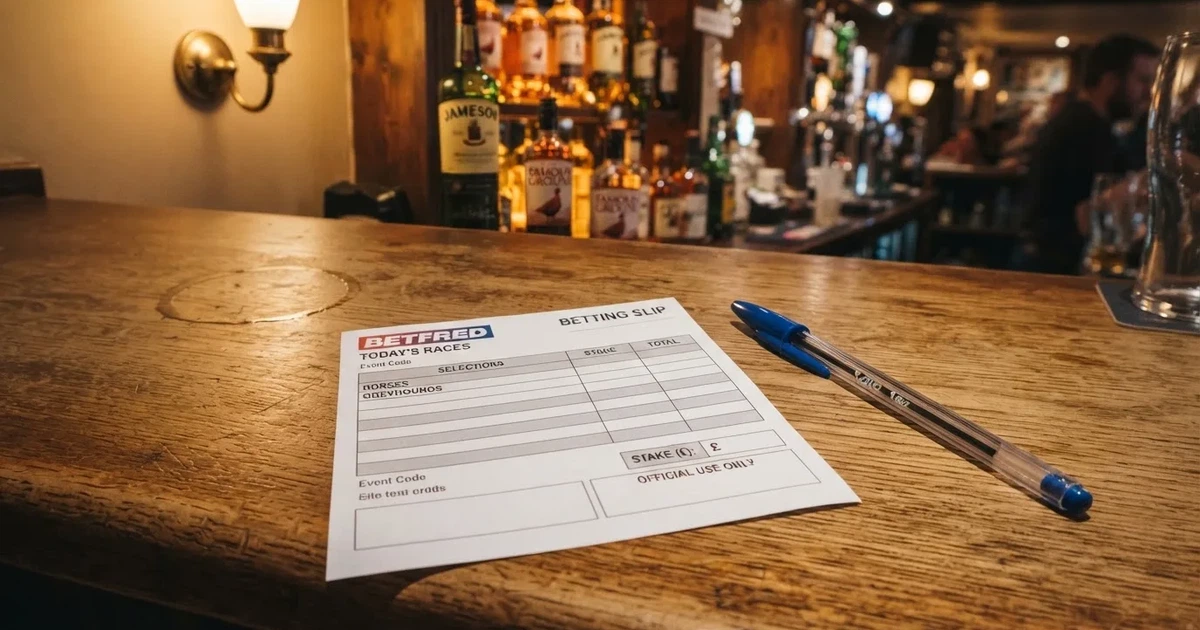
An exchange is not a bookmaker with a different name. The price a backer takes is set by another customer willing to lay the same selection, and the only revenue the platform collects from the transaction is commission on net winnings. That single structural difference is the source of every comparison that follows: the odds tend to be sharper, the takeout sits in a different place, and the way a punter loses money is different too. This page walks through that difference and what it does to a wallet on the ten platforms currently taking customers in Great Britain.
How a Betting Exchange Differs From a Bookmaker
The cleanest framing comes from the licensing regime itself. In Great Britain, a betting exchange runs under a betting intermediary licence from the Gambling Commission, a category set out for platforms that match back and lay bets between customers rather than trading against them. A bookmaker serving customers in Great Britain holds a remote general betting standard licence for real events, with the operator taking the other side of every wager. The two are not interchangeable in the eyes of the Commission, and the difference is visible in the prices.

On an exchange, a back bet wagers that an outcome will happen; a lay bet wagers that it will not. The layer takes the position a bookmaker normally occupies, and the most a layer can lose on a single bet is called the liability. Liability is the stake multiplied by (odds minus one), and a punter who lays at odds of 3.0 with a stake of £10 is on the hook for £20 if the selection wins. The bookmaker model has no lay side; the exchange model has no “house edge” in the same shape.
This is why exchange odds are usually sharper. Bookmakers build margin into every price; exchanges do not, at least not in the same place. The overround is smaller because the platform is not pricing each outcome, the crowd of customers is. The platform collects commission on net winnings instead, and that commission — typically a low single-digit percentage — is the only cut the platform takes from the punter’s edge. Losing bets generally do not incur commission, which is a real difference when a punter’s record is mixed.
A practical limit sits on top of the prices. Betting exchanges generally restrict odds to between 1.01 and 1000, and bet sizes are not capped in the same way a bookmaker’s stake limit caps them — what matters is whether another customer will take the other side. A punter who wants £10,000 on at 1.05 needs someone willing to lay 1.05 for £10,000, and the order book decides whether it can be filled.
The model has been around longer than most readers assume. Flutter and Betfair merged in 2001, with Betfair chosen as the primary exchange; Flutter’s own platform ceased operations in January 2002. That history is part of why Betfair remains the default reference point in any comparison of exchange platforms, even where it is no longer the cheapest option for a casual backer.
What the Commission Structure Actually Costs
Commission is where the comparison between exchanges really lives, and it is also where the marketing language is most prone to dressing up a number. The headline figure is usually a percentage of net winnings per market, applied only when the customer wins, and a £10 commission bet is a net win on which the platform keeps 10p in the pound. The base over which it is calculated matters as much as the percentage: a 2% commission on net winnings is not the same as 2% of turnover, and a 0% commission promotional window is not the same as zero commission for life.

A typical exchange starts at 2% on the standard rate. Smarkets, for example, applies a standard commission of 2% on eligible exchange bets, and new customers have been offered 0% commission for 60 days with a minimum first deposit of £10. The introductory window is a marketing cost the operator absorbs to get an account through the door; it does not change the long-run price. A punter who opens three accounts to chase three introductory windows pays for the trouble in time and verification, not in commission saved.
Discounted commission tiers exist on the larger platforms, usually tied to volume or a loyalty scheme. A customer who places enough bets per month sees the headline rate fall, often into a single-digit fraction of a percent. That is a real saving for a high-volume trader, and it is also a real reason to compare platforms on expected annual volume rather than the rate alone. A casual backer pays the standard rate every month of the year; an active trader pays something closer to half that.
The other cost on an exchange sits in the spread. Because the exchange does not post a single house price, the best available back odds and the best available lay odds do not meet either; the gap between them is the overround, and the punter crosses it on every trade. On a liquid football match the gap might be a single tick; on a small-field racing event it can be much wider, and a punter who must use a market maker rather than a limit order crosses a wider spread than they need to. That spread is not commission, but it is a cost that does not appear on the platform’s fee schedule.
A worked example on a two-way market illustrates how the margin sits on the exchange side. Take a market priced at 1.90 and 1.90 in decimal (9/10 fractional). The implied probabilities are each roughly 52.6%; the implied probabilities of both outcomes add to 105.2%, leaving an overround of about 5.2%. The payout share to the punter on a successful bet at either price is 1 ÷ 0.526, or about 95%, and the margin retained by the platform is roughly 5% — distributed between commission on the winning side and the spread across the book. A market priced 1.95 and 1.85 would produce a different margin, and a market where the prices sit at 2.10 and 1.71 would carry a wider margin still. The margin is not a single number on an exchange; it is a property of the market being traded at the moment of trading.
Criteria for Comparing Exchange Sites in Great Britain
A comparison that lists ten platforms and one row per platform is not a comparison; it is a phone book. The criteria below are the ones that actually shift what the platform costs a punter in pounds, and the way the table that follows is built.
Liquidity is the first test, because it is the gate on every other criterion. A market with no opposing money is a market where the punter’s limit order does not fill, where the spread is wide, and where commission is a percentage of zero. The two longest-established names in the British market — Betfair and Smarkets — attract the deepest books on Premier League football and the major horse racing meetings; the smaller platforms clear their books on volume in different sports. A punter who bets on Premier League matches every weekend sees a different picture from one who bets on lower-league rugby.
The Commission Commission’s public register is the second test, and it is the only one that can be checked from outside the platform. Every brand reviewed below is listed against a remote licence held by a named company; the licence type, the licence number and the licence holder all sit on the register and can be searched by business name, trading name, domain or account number. The register is the whole test of whether a brand holds a Commission licence, and a brand that does not appear on it does not hold one in Great Britain.
Commission and fee structure is the third test, and it has two parts. The headline rate is what casual users pay, and the discounted tier is what active traders pay after a qualifying volume is reached. A platform with a 2% standard rate and no volume discount is the right home for a casual backer; a platform with a 2% standard rate that drops to 0% above a volume threshold is the right home for a trader.
Markets and in-play coverage is the fourth test. A platform that covers football, horse racing and the major US sports at depth is not necessarily the platform that covers table tennis, eSports or lower-division cricket. In-play betting is offered across the licensed set, but the depth of the in-play book varies; a platform that takes a strong position on in-play will not necessarily be the strongest on ante-post horse racing, and the punter’s sport mix dictates which platform matters most.
The app and the on-platform experience is the fifth test. Most betting in Great Britain now happens on a phone, and the difference between a slick native app and a wrapper around a mobile site is visible in how quickly odds refresh during a live event and whether the bet slip cancels cleanly when a market suspends. The GB App Store ratings are not the only measure, but they are a starting one.
Finally, customer protection sits above every other criterion in this comparison, because the licensed set and the unlicensed set do not compete on the same terms. A GB-licensed platform carries GAMSTOP membership, the Commission’s dispute-resolution route, source-of-funds protections, and the £150 rolling-30-day vulnerability check. An unlicensed platform offers none of these, and the punter who runs into a withheld payout has no British route to recover funds. The comparison that follows is a comparison within the licensed set, and the case for staying inside it is the topic of the next section.
Legality and the Gambling Commission Register in Great Britain
In Great Britain, a remote operator needs a Gambling Commission licence, and the test of whether a brand holds one is the public register. The Commission is a non-departmental public body sponsored by the Department for Culture, Media and Sport, and the licences it grants sit on a register that can be searched by business name, trading name, domain or account number. The register is the only authoritative source, and a brand that does not appear on it has no licence.
The licensing regime sits on the Gambling Act 2005, which covers Great Britain; Northern Ireland is outside the Act and operates under its own older law. Since the Gambling (Licensing and Advertising) Act 2014, an operator whose remote facilities are used in Great Britain needs a Commission licence wherever the operator is based, so a Curaçao, Maltese or Gibraltar licence is not a substitute for a GB licence. There is no state monopoly, no cap on the number of licences, and the category a platform falls under — remote general betting standard for a bookmaker, remote betting intermediary for an exchange — is shown on the register entry.
For an exchange, the relevant category is the remote betting intermediary licence, which is granted to platforms that match back and lay bets between customers. Of the ten platforms reviewed below, Betfair, Smarkets and Matchbook hold intermediary licences alongside their general betting standard entries; the remaining seven operate as bookmakers rather than exchanges and are included because customers searching for “exchange” sites also encounter them in the British market. A punter who wants a true exchange experience and not a sportsbook with an exchange button can use the register to confirm the licence category before opening an account.
Identity verification sits on top of the licence regime, and it is part of what it means to be a GB-licensed platform. Name, address and date of birth are verified before a customer can deposit or gamble, including with a free bet or bonus. The minimum age is 18. There is no anonymous play at a licensed site, and a punter who treats anonymity as a feature will find the licensed set does not offer it.
The implication for a comparison is that the ten platforms reviewed below are not interchangeable on the question of licence category. Three are licensed as betting intermediaries in the strict sense, and the other seven are bookmakers with full remote licences; both groups hold Commission licences and appear on the register, and a punter deciding between them is choosing a model as well as a price.
Consumer Protection and What It Costs the Operator
Every GB-licensed online operator takes part in GAMSTOP, the national multi-operator online self-exclusion scheme. Self-exclusion periods are six months, one year, five years, or five years with auto-renewal, and after the minimum period the exclusion stays in place for a further seven years unless the customer asks GAMSTOP to remove it. GAMSTOP covers online sites and apps; betting shops use a separate service.
The financial vulnerability check sits inside the social responsibility code. Since 28 February 2025, the check applies to licensed remote betting when a customer’s deposits minus withdrawals exceed £150 in a rolling 30 days, and the check is a public-record one — bankruptcy or county court judgments, for example — rather than an income or credit reference check. It is not an affordability check in the press sense; financial risk assessments have been announced in a staged plan, with no start date, and they should not be written about as if they are in force.
Deposit limits are a separate obligation. Operators must offer a gross deposit limit on a fixed time frame; the first changes have applied since 31 October 2025, a second phase was postponed to 30 September 2026, and whether the second phase is live depends on the date a punter is reading this page. There is no state-set deposit or loss ceiling for betting, and the limit a punter sets is the customer’s choice.
Help lines and treatment services sit alongside the regulatory architecture. GamCare runs the National Gambling Helpline, GambleAware funds education and treatment, the NHS runs gambling clinics across the country, and Gamblers Anonymous runs peer-support meetings. These are not operator-run services; they exist for the punter who finds the controls on the operator’s own platform insufficient.
The cost of these protections is invisible to the punter, because it is paid through the operator’s compliance staff and the General Betting Duty the operator remits to HMRC. General Betting Duty is currently 15% on the operator’s gross profits from general betting, with a remote rate staying at 15% until 1 April 2027; from that date a 25% rate applies within General Betting Duty for remote bets, while remote bets on UK horse racing, bets on self-service betting terminals in licensed premises, pool betting and in-person betting remain at 15%. Whether operators pass duty on through odds is not established; the punter does not pay betting duty on winnings in Great Britain, although a professional gambler should ask HMRC or an adviser. The duty is the operator’s tax; it is not the punter’s.
Crypto, Anonymity and the Limits of the Licensed Set
The licensed set offers no anonymous play. Name, address and date of birth are verified before the first deposit, and a punter who values pseudonymity over the protections a GB licence confers will not find what they are looking for on the platforms reviewed below. Cryptocurrency deposits are not established as permitted or prohibited at the operator level for the British market; the Commission’s public register and the operator’s own terms are the only places to confirm what is accepted.
A punter who decides the licensed set is not the right home for them has decided to leave the protections behind, and the cost of that decision is concrete. No GAMSTOP coverage, no Commission complaints route, no approved dispute-resolution body, no British consumer redress if funds are withheld, and not bound by the £150 vulnerability check or the 10x bonus cap. The platform may also be operating under a regime whose enforcement is disruption — cease-and-desist notices, search-engine referrals, work with registrars, hosts and payment providers — rather than the British regime of licensed oversight. A punter who is comfortable with that trade has made a decision; a punter who does not realise they have made one has not.
There is no statutory rule against cryptocurrency deposits at licensed operators, and there is no statutory rule for them either. The Commission’s register, the operator’s own deposit page and the payment-methods section of the operator’s terms are the only places to see what a particular platform accepts. A punter who holds crypto and wants to deposit it on a GB-licensed exchange should expect to convert it to sterling before the deposit, and should expect the conversion to happen on a venue the punter chooses rather than on the operator’s site.
Bonuses, Free Bets and What They Cost the Punter
The marketing language around betting exchange bonuses is mostly borrowed from bookmaker bonuses, and the translation is not always clean. A bookmaker’s “free bet” usually pays the winnings only, with the stake returned as a free bet credit rather than cash; an exchange’s promotional offering has historically been much thinner, because the platform’s margin model is different and a free bet does not change it in the same way.
The promotion rules that took effect on 19 January 2026 apply to GB-licensed operators across the board. Wagering requirements on bonuses are capped at 10x — a £10 bonus at 50x wagering would have needed £500 of qualifying bets, and under the cap no more than £100 of bonus is subject to that turnover — and mixed-product promotions are banned. The cap applies to wagering requirements; whether it applies to free bets with no wagering condition, and any cap on the money value of a bonus, are not established in the rules themselves and depend on each operator’s terms. A punter reading an offer should look for the wagering factor and the minimum qualifying odds before deciding whether the bonus is worth the qualifying bets.
The welcome offers that appear across the licensed set are mostly bookmaker-shaped, because most of the platforms reviewed below are bookmakers rather than exchanges. A typical structure is a percentage of the first stake returned as a free bet, with the stake usually not paid back with a win, and a minimum qualifying odds threshold above which the stake counts. Midnite’s sports welcome offer is the shape that recurs: new customers who bet £5 or more on pre-match odds of EVS (2.0) or greater within 14 days of sign-up receive £25 in free bets and 50 free spins, valid for 7 days. BetTom’s sports welcome offer is similar in shape: 50% back as a free bet of up to £50, with a matching 50% back up to £50 as free slot funds for casino play; full terms apply.
The cost of a free bet to the punter is the qualifying stake plus the opportunity cost of the offer. A £5 qualifying bet at 2.0 that wins returns £10 in cash and forfeits the offer; the same bet placed as a free bet would have returned the winnings only, with the £5 stake forfeited. The free bet is worth roughly £5 multiplied by the edge on the selection, minus the platform’s margin on the market; the calculation in the worked example below gives a number in that shape.
Cashback and acca insurance appear in different shapes across the licensed set, and the difference matters to the calculation. A cashback that returns net losses as cash has a different cost from a cashback that returns net losses as a free bet credit; the first can be withdrawn, the second cannot, and the punter who treats them as interchangeable has misread the offer. A price boost that pays at enhanced odds on a specific selection is closer to a marketing feature than a bonus, and the cost sits in the margin the boost leaves on the table for the platform rather than in a wagering factor. None of these are bad offers by definition; they are offers with a price, and the price sits in the terms.
Mobile Apps, Browser Sites and Where the Bet Actually Happens
Most betting in Great Britain now happens on a phone. The GB App Store carries a native app for most licensed operators, and the difference between a native app and a wrapper around the mobile site is visible in two places: the speed at which odds refresh during a live event, and the way the bet slip cancels a market that has suspended. A punter who has placed a bet on a wrapper app during a fast-moving market will know the failure mode: the slip lags, the price moves, and the bet lands at a worse number or fails to place at all.
The Betfair Sportsbook app carries the feature set expected of the British market leader: in-play betting, Bet Builder, free live streaming of events such as UK and Irish horse racing and football within the app, and a 90 Minute Payout market that settles football bets on the result after 90 minutes regardless of extra time. The exchange side of the same operator sits in a separate app or product surface, and a punter who wants the exchange experience uses that rather than the sportsbook app.
Smarkets and Matchbook have shipped apps that wrap the exchange experience for a phone, with the order book and the cash-out controls surfaced as native elements. Matchbook, for example, exposes Bet Builder, multiples, in-play betting and live streaming of horse racing and greyhounds through the app, and the order book on a busy horse racing meeting is the difference between the exchange model and a sportsbook.
The smaller platforms in the licensed set — BetTom, Fafabet, Bet600, Star Sports — vary more in app quality than in core licence status. A punter whose primary sport is mainstream and whose stake size is moderate will not notice much difference; a punter who uses in-play markets heavily or who relies on the app to settle bets quickly will. The mid-tier names — Midnite, DAZN Bet, Kalooki Sportsbook — sit in the middle on app polish and have shipped at least one major app update in the last year.
A punter who bets primarily on a desktop machine or a tablet is not the customer the licensed set has optimised for, and the experience reflects that. The mobile experience is the production experience, and a punter who cannot place a bet quickly on a phone has chosen the wrong platform.
Live Betting, Cash Out and the In-Play Cost
Live betting on an exchange is a different proposition from live betting on a sportsbook. On a sportsbook, the operator reprices every outcome as the event unfolds and the punter takes the price the operator offers; on an exchange, the customers reprice the book and the punter takes the price another customer is willing to offer. The difference is visible in suspension patterns and in how the odds move during a goalmouth scramble.
Cash out is the feature that closes the difference, and the GB licensed set carries it across most products. DAZN Bet offers Cash Out, Bet Builder, daily bet boosts and in-play betting; cash out availability is not guaranteed, and bets stand if cash out is unavailable. The shape of the offer matters: a cash out that returns the full cash value of a position is not the same as a cash out that returns a free bet credit or a partial value, and the punter who reads the small print before relying on cash out has avoided the commonest surprise on the live betting page.
In-play on horse racing is a feature of the larger exchanges, where Matchbook carries live streaming of horse racing and greyhounds and Betfair carries free live streaming within its app. The liquidity on a busy meeting is the test of the platform; a punter who wants to lay a non-runner mid-race or trade out of a position during the closing furlong needs an order book that is deep enough to fill the order. The smaller platforms do not all carry in-play horse racing with depth, and the punter whose primary sport is racing has chosen the wrong venue if they are using one.
Best Odds Guaranteed is the racing-specific feature that bookmakers use to compete on price, and several platforms in the licensed set carry it. Fafabet pays Best Odds Guaranteed on UK and Irish horse racing win and each-way bets from 9am on race days: if the starting price is bigger than the original price, the bigger odds are paid. Bet600 pays Best Odds Guaranteed on horse racing on the same principle. Both are bookmaker-side features rather than exchange-side ones, and a punter who has migrated from a bookmaker to an exchange will not find the feature in its original form on the exchange platform itself.
The cost of in-play is in the spread and in the speed of the platform. A punter who trades in-play on a phone needs an app that does not lag during the busiest minute of the event, and the difference between a slick in-play app and a sluggish one is a difference in fill rate on limit orders. A punter who treats in-play as a casual feature rather than a trading surface will not notice; a punter who trades it seriously will, very quickly.
Strategy, Systems and the Limits of “Betting Exchange Tips”
The strategy literature on betting exchanges is mostly a literature on price discovery, and the central insight is not original to any single author: an exchange exists because customers disagree about the probability of an outcome, and the platform’s job is to clear the trades those disagreements produce. A “system” in this context is a set of rules for entering and exiting positions, and a “tip” is an opinion on the probability of an outcome; neither changes the platform’s economics.
The laying system is the most-discussed strategy in the betting exchange literature, and it has a clear shape. A punter lays selections at prices the punter believes are too short, with liability set by bankroll rules and a stop-loss that closes the position when the loss exceeds a threshold. The economics are the same as a bookmaker’s: the layer’s edge is the difference between the implied probability of the lay price and the true probability of the outcome, and the layer’s cost is commission on net winnings. A punter who lays systematically without an edge is recreating the bookmaker model on the exchange and paying the exchange’s commission on top.
Trading strategies trade out of positions before the outcome is known, and the punter who buys a back bet at 4.0 and trades out at 3.5 has made a profit on the trade without an opinion on the outcome. The economics are similar to laying in that the punter’s edge is the difference between entry and exit prices minus commission, and the punter’s cost is the commission paid on both sides of the trade. A punter who trades without an edge is paying commission on churn, and a churn-heavy account at a 2% commission rate loses roughly 2% of turnover to commission alone.
The honest framing for a punter reading strategy material is that the edge lives in the punter’s information or model, not in the system. The system is a way of expressing the edge consistently; it is not a source of edge in itself. A punter who buys a system is buying a discipline, and the discipline is what the system enforces. A punter who copies a tip without a model is paying another punter’s commission.
The practical limits are visible in the markets. On liquid markets — Premier League football, the major horse racing meetings — the edges are small because the book is efficient; on illiquid markets — lower-division football, smaller eSports events — the edges can be larger but the limits are smaller, because there is less money on the other side. A punter’s bankroll and the markets they bet on determine the realistic edge, and the system is the wrapper around that decision.
The Ten Platforms in the British Licensed Set
The ten platforms reviewed below are all listed on the Gambling Commission’s public register against a named licence holder, and the table that follows sets out the licence details and a focus area for each. The table is the entry point; the write-ups beneath it are the comparison.
| Brand | Licence category and holder | Focus area |
|---|---|---|
| Betfair | Remote betting intermediary and remote general betting standard (real events); PPB Counterparty Services Limited; account 39439 | The reference platform for exchange betting in Great Britain; sportsbook side adds Bet Builder, in-play and free live streaming |
| Smarkets | Remote betting intermediary; Smarkets (Malta) Limited; account 39173 | Standard 2% commission on eligible exchange bets, with an introductory 0% commission window for new customers |
| Matchbook | Remote general betting standard (real events) and remote betting intermediary; Triplebet Limited; account 39504 | Exchange with Bet Builder, multiples, in-play betting and live streaming of horse racing and greyhounds |
| Kalooki Sportsbook | Remote general betting standard (real events); Kalooki Sportsbook Limited; account 57730 | Sportsbook operated by Kalooki Sports Book Ltd (company number 12938274); GAMSTOP member |
| BetTom | Remote general betting standard (real events); Bet Tom Limited; account 64959 | Sports welcome offer of 50% back as a free bet up to £50, with a matching casino-side component |
| DAZN Bet | Remote general betting standard (real events); DZBT Limited; account 48756 | Cash Out, Bet Builder, daily bet boosts and in-play betting; cash out availability not guaranteed |
| Midnite | Remote general betting standard (real events); Midnite Limited; account 101839 | Sports welcome offer: £25 in free bets and 50 free spins on a £5+ qualifying bet at EVS or greater within 14 days |
| Star Sports | Remote general betting standard (real events); Star Racing Limited; account 9177 | Pre-event and in-play markets with Bet Boosts, Daily Specials and Weekend Enhanced Boosts |
| Fafabet | Remote general betting standard (real events); Taichi Tech Limited; account 57385 | Best Odds Guaranteed on UK and Irish horse racing from 9am on race days |
| Bet600 | Remote general betting standard (real events); Tyche Tech Limited; account 44731 | Best Odds Guaranteed on horse racing on the SP-bigger principle |
Betfair
Betfair is the longest-established exchange in the British market, and the platform against which the others measure themselves. The exchange side matches back and lay bets across football, horse racing and the major US sports at depth, and the order book on a Premier League match is the test of any rival’s liquidity claim. Commission tiers drop from the standard headline rate for high-volume customers, and the discounted tiers are the home for active traders.
The sportsbook side is a separate product with its own feature set, and the GB app carries in-play betting, Bet Builder, free live streaming of events such as UK and Irish horse racing and football, and a 90 Minute Payout market. The two sides are licensed under the same Commission account but are different products, and a punter who wants the exchange experience uses the exchange surface rather than the sportsbook.
For a punter choosing between exchanges, Betfair is the right home for liquid markets and high-volume trading. The commission tiers reward activity, and the order book fills orders that smaller platforms cannot. The trade-off is on casual markets: the discounted tier is harder to reach for a low-volume backer, and the standard rate is no cheaper than the headline rates on the smaller platforms.
Smarkets
Smarkets applies a standard commission of 2% on eligible exchange bets, and new customers have been offered 0% commission for 60 days with a minimum first deposit of £10. The standard rate is in line with the market, and the introductory window is a marketing cost the platform takes on to seed an account. The platform’s pitch is the rate itself, and the pitch lands cleanly on a casual backer who wants to see what the exchange model is like before paying the headline commission.
The exchange side covers the major sports with a clean order book interface, and the in-play coverage is adequate on football and the major US sports without being the deepest in the market. The app is native, and the bet slip cancels cleanly when a market suspends. For a punter who is price-sensitive and trades at modest volume, Smarkets is the sensible choice among the three dedicated exchanges reviewed here.
The trade-off is liquidity on less-popular markets. A punter whose primary sport is Premier League football will not notice; a punter whose primary sport is table tennis or eSports may find the book thin. The discounted tiers are less aggressive than Betfair’s, and a high-volume trader pays closer to the standard rate than on the market leader.
Matchbook
Matchbook is a betting exchange where customers bet against other users, with Bet Builder, multiples, in-play betting and live streaming of horse racing and greyhounds. The platform is one of three in the licensed set that holds a remote betting intermediary licence, and the order book on horse racing is the standout feature. A punter who bets racing seriously will find the depth they need on Matchbook; a punter who bets football will find it adequate without being the deepest.
The app is native and the bet slip is responsive during in-play markets, which matters for a punter who trades out of positions before the outcome. The commission rate is competitive with the other two dedicated exchanges, and the platform’s pitch is the racing coverage rather than the headline rate. The Bet Builder feature is a sportsbook shape that sits on top of the exchange, and it is the difference between Matchbook and the more exchange-pure experiences elsewhere.
For a punter whose betting is split between football and the racing sports, Matchbook is a sensible single-platform choice. The trade-off is on the very largest football fixtures, where Betfair’s order book is deeper and fills larger stakes faster. A punter with a large racing book has chosen the right platform; a punter with a large football book may prefer an exchange with more liquidity.
Kalooki Sportsbook
Kalooki Sportsbook is operated by Kalooki Sports Book Ltd (company number 12938274), licensed by the Gambling Commission under account number 57730, and is a GAMSTOP member. The platform is a sportsbook rather than an exchange. The pitch is the depth of markets on the sports it covers and the operational transparency of the company behind it.
The platform’s offering sits in the mid-tier of the licensed sportsbook set, and the commission and fee structure follows the bookmaker model rather than the exchange model. A punter who is comparing sportsbooks will find the platform adequate across football, horse racing and the major US sports without it standing out in any one area. The registered company and the Commission account are visible on the platform’s own site and on the register, and that transparency is the cleanest feature of the brand.
The trade-off for a punter who came to the platform looking for an exchange is the model itself. Kalooki Sportsbook is a sportsbook with full Commission protections, but it does not offer the back and lay mechanics of an exchange. For a punter who wants the Commission protections and the sportsbook shape, this is a clear home.
BetTom
BetTom’s sports welcome offer is 50% back as a free bet of up to £50, with a matching 50% back up to £50 as free slot funds for casino play; full terms apply. The shape is a percentage-of-stake free bet with a casino-side companion, and the offer’s headline figure is the maximum rather than the typical. A punter who bets the qualifying stake will receive the maximum free bet if the bet loses; a punter who wins the qualifying bet does not.
BetTom is a sportsbook. The welcome offer is the strongest feature on the marketing side, and the platform’s pitch is the offer itself rather than a depth claim in any one sport. A punter evaluating the offer should look at the wagering requirement on the free bet, the minimum qualifying odds and the expiry of the free bet credits; the 10x wagering cap that took effect on 19 January 2026 is the ceiling on what the offer can require.
The trade-off is the same as for any sportsbook with a strong welcome offer: the welcome offer is a marketing cost the platform takes on once per customer, and the long-run price sits in the margin the sportsbook builds into its prices. A punter who stays for the offer has chosen the platform for the wrong reason; a punter who stays for the sportsbook’s depth has chosen it for the right one.
DAZN Bet
DAZN Bet offers Cash Out, Bet Builder, daily bet boosts and in-play betting; cash out availability is not guaranteed and bets stand if it is unavailable. The cash out feature is the headline, and the qualifier in DAZN’s own terms — that bets stand if cash out is unavailable — is the practical limit a punter needs to know. The bet builder and the daily boosts sit on top of the standard sportsbook offering, and the platform’s pitch is the in-play experience rather than any one sport.
DAZN Bet is a sportsbook. The in-play offering is the strongest feature, and the cash out feature is the cleanest expression of it. A punter who relies on cash out as a feature will find it offered on most markets, and the qualifier about availability is the practical reminder that no platform guarantees it across the book.
The trade-off is on the welcome offer, which is not the platform’s strongest feature, and on the depth of the book on less-popular sports. DAZN Bet is a sensible choice for a punter whose betting is in-play-heavy on the major sports; a punter who prefers ante-post racing or lower-league football will find the book narrower.
Midnite
Midnite’s site cites Gambling Commission licence 101839 and shows in-play events, an acca builder, popular accas and price boosts with maximum-stake limits. The sports welcome offer is the shape that recurs across the licensed sportsbook set: new customers who bet £5 or more on pre-match odds of EVS (2.0) or greater within 14 days of sign-up receive £25 in free bets and 50 free spins, valid for 7 days. The 14-day window is the qualifier a casual backer needs to know, and the 7-day expiry on the free bet credits is the limit on a punters’s planning.
Midnite is a sportsbook. The acca builder is the strongest product feature, and the price boosts are the cleanest expression of it. A punter whose betting is accumulator-shaped has chosen a sensible home; a punter who bets singles has chosen a platform whose pitch is not aimed at them.
The trade-off is on the exchange side: Midnite is not licensed as a betting intermediary. For a punter who wants the exchange model, the platform is the wrong home regardless of how strong the acca builder is; consider it a sportsbook alternative.
Star Sports
Star Sports offers pre-event and in-play markets with Bet Boosts, Daily Specials and Weekend Enhanced Boosts, plus in-play betting on football, horse racing, golf and US sports. The platform’s pitch is the depth of the in-play book across four sports, and the boost-heavy marketing is the surface expression of it. The boost structure is the closest the platform comes to a distinctive feature, and the daily and weekend cadence is the rhythm a punter bets to.
Star Sports is a sportsbook. The in-play offering is the strongest feature, and the boost cadence is the marketing hook. A punter whose betting is weekend-shaped and whose primary sports are football, horse racing, golf and US sports has chosen the right home; a punter whose primary sports sit outside those four has not.
The trade-off is on the welcome offer, which is not the platform’s strongest feature, and on the depth of the book on less-popular sports. Star Sports is a sensible choice for a punter whose betting calendar matches the boost cadence; a punter who bets off-cadence may prefer a platform with a wider range of standard markets.
Fafabet
Fafabet pays Best Odds Guaranteed on UK and Irish horse racing win and each-way bets from 9am on race days: if the starting price is bigger than the original price, the bigger odds are paid. The feature is the strongest product hook, and the 9am cutoff is the practical limit a punter needs to know. A bet placed before 9am on a UK or Irish race qualifies; a bet placed after does not. The each-way component means the place half of an each-way bet is paid at one-fifth of the win odds by default, and the terms govern any deviation from that.
Fafabet is a sportsbook. The horse racing pitch is the strongest feature, and the Best Odds Guaranteed feature is the cleanest expression of it. A punter whose primary sport is UK and Irish racing has chosen a sensible home; a punter whose primary sports are elsewhere has chosen a platform whose pitch is not aimed at them.
The trade-off is on the exchange side: Fafabet is not licensed as a betting intermediary. The Best Odds Guaranteed feature is the racing-side equivalent of a price-match, and it does the same job for a racing punter as an exchange’s sharper odds would do for a football punter. The platform is aimed at racing customers.
Bet600
Bet600 pays Best Odds Guaranteed on horse racing: if the starting price is bigger than the early or show price taken, the bet is paid at the SP. The feature is the strongest product hook, and the qualifying prices — early or show — are the practical limit. A bet taken at an early or show price on a UK or Irish race qualifies; a bet taken at the SP itself does not, because the SP is the benchmark the bet is paid against.
Bet600 is a sportsbook. The horse racing pitch is the strongest feature, and the Best Odds Guaranteed feature is the cleanest expression of it. A punter whose primary sport is racing and whose habit is to take an early or show price has chosen a sensible home; a punter who bets at the SP has chosen a platform whose feature does not apply to them.
The trade-off is the same as for Fafabet: Bet600 is not licensed as a betting intermediary and does not offer the exchange model. The Best Odds Guaranteed feature is a racing-side mechanism, and a punter who wants the exchange shape is looking at the wrong venue. For a punter who wants the racing shape and the SP-paid principle, it is the right one.
Worked Margin on a Two-Way Market
The margin of an exchange market is not a number the platform posts; it is a property of the book at the moment of trading, and the calculation below shows how to read it.
Take a two-way market priced at 1.90 and 1.90 in decimal odds, equivalent to 9/10 in fractional form. The implied probability of each outcome is 1 ÷ 1.90, or roughly 52.6%. The sum of the implied probabilities is roughly 105.2%, and the overround — the margin built into the book — is the difference between that sum and 100%, or about 5.2%. The payout share to a successful backer at either price is 1 ÷ 1.052, or about 95%; the platform keeps about 5% of every unit staked on this market, distributed between commission on the winning side and the spread the order book carries.
A market priced 1.95 and 1.85 would produce a different number. The implied probabilities are about 51.3% and 54.1%, summing to 105.4%, and the margin is about 5.4%. A market priced 2.10 and 1.71 would carry a wider margin still: the implied probabilities are about 47.6% and 58.5%, summing to 106.1%, the overround is 6.1% and the margin is 5.7%. The margin is wider when the book is more lopsided, and it is narrower when the book is closer to balanced. The band on a typical liquid football market runs from about 2% to 8%, depending on the event and the time before kick-off.
The figure that matters to a punter is the payout share, because that is what the punter keeps on a successful bet before commission. A market with a 95% payout share gives the punter 95p of every £1 staked on a winning selection; the platform takes the rest. A market with a 90% payout share gives 90p; the platform takes 10p. The margin is the inverse: a 5% margin means a 95% payout share, and the two are the same market seen from two sides.
The headline numbers above assume an example market at example prices and are not a quoted price on any event. A punter comparing markets on a real event should run the calculation against the actual prices on the order book at the time of trading, because the margin is a property of that book, not of the platform.
What This All Costs
The cost of a betting exchange account sits in three places, and a punter who treats any one of them as the whole picture has misread the bill.
The commission is the visible cost, and it is the cost the platform quotes on its fee schedule. A 2% standard rate on a £100 net win is £2; on a £1,000 net win it is £20. The rate is the same across the win, and a punter’s bill scales with the punter’s profit. A punter who never wins pays no commission; a punter who wins consistently pays the standard rate on every winning market.
The spread is the less visible cost, and it is the cost the punter pays when a limit order does not fill at the mid-price. On a liquid football market the spread might be a tick or two; on an illiquid market it can be several percentage points. A punter who places a market order on an illiquid book crosses the spread and pays the difference; a punter who places a limit order waits for the book to come to them, and may not get filled.
The opportunity cost is the cost the punter pays in offers not taken and selections not placed. A punter who would have bet on a bookmaker’s enhanced odds does not see those enhanced odds on the exchange; a punter who would have claimed a sportsbook’s welcome offer does not see a comparable offer on the exchange. The exchange model’s cleaner economics come with a thinner promotional layer, and a punter who values the promotional layer has chosen the wrong platform. The cost of the cleaner economics is the absence of the promotional layer.
A punter who has chosen the exchange model for the right reason — sharper prices on a sport they know well, with the discipline to place limit orders — pays the commission and crosses the spread and accepts the absence of a promotional layer. A punter who has chosen the exchange model for the wrong reason — because the marketing language sounds more sophisticated — pays all three costs without the offset of an edge.
Frequently Asked Questions
How does a betting exchange actually work?
A betting exchange is a marketplace where customers bet against each other on the outcome of discrete events, and the platform itself is not a party to the bets. A back bet wagers that an outcome will happen, and a lay bet wagers that it will not. The platform collects commission on net winnings per market, and losing bets generally incur no commission. Betting exchanges in Great Britain run under a betting intermediary licence from the Gambling Commission, and the public register lists the licence holder and the licence category for each.
How can it be checked that a bookmaker holds a Gambling Commission licence?
The Gambling Commission’s public register is the whole test of whether a brand holds a licence in Great Britain. The register can be searched by business name, trading name, domain or account number, and every entry lists the licence type, the licence holder and the licensed activities. A brand that does not appear on the register has no licence, and a brand that appears with the right licence type is the brand it claims to be. The register is the only authoritative source, and a licence claimed on a brand’s own site should be checked against the register before the customer opens an account.
How is the return on a bet worked out from the stake and the odds?
In decimal odds, the return on a winning single bet is the stake multiplied by the odds. A £10 stake at odds of 3.50 returns £35 in total, of which £25 is profit and £10 is the returned stake. In fractional odds, the return is the stake plus the stake multiplied by the fraction, so a £10 stake at 5/1 returns £60 in total, of which £50 is profit and £10 is the returned stake. For a combination bet, the odds of the legs multiply into one price, and the stake is multiplied by that combined price to give the return if every leg wins.
What is the bookmaker’s margin and how can it be seen in the odds?
The margin is what the bookmaker earns on every unit staked on a market, and it sits in the difference between the implied probabilities of the prices and 100%. A two-way market priced 1.90 and 1.90 has implied probabilities of about 52.6% each, summing to about 105.2%, and the margin is the difference, or about 5.2%. The payout share is the inverse: about 95%. The margin is visible in the odds the moment they are written down, and a punter who runs the calculation against a market’s prices sees the margin that market carries at that moment.
What is the difference between an exchange and a sportsbook?
A sportsbook takes the other side of every bet and earns revenue from less favourable odds built into the prices. An exchange matches back and lay bets between customers and earns revenue from commission on net winnings. Exchange odds are usually sharper because overrounds are smaller, but the punter pays commission on wins rather than margin on every bet. In Great Britain, sportsbooks hold a remote general betting standard licence and exchanges hold a remote betting intermediary licence, and the difference is visible on the Commission’s public register. Both models carry the Commission’s consumer protections, including GAMSTOP membership, the £150 vulnerability check and the licensed dispute-resolution route.
Betting sites & exchanges – Independentbookies.com
Content created by the «Independentbookies.com» team
