
Where to back the line: ten UK bookmakers that price asian handicap seriously
 Available in US
The asian handicap is not a market most punters arrive at by accident. Football has three possible results, the draw is the awkward middle, and the bookmaker has to price all three — usually by widening favourites until the price looks generous enough to take. The handicap throws the wheel out instead. One side starts the match a goal up, or down, on paper, and only two outcomes remain: a winner or a loser. For the punter who has decided which team wins the match but wants nothing to do with the draw, the handicap is the cleanest way to say so.
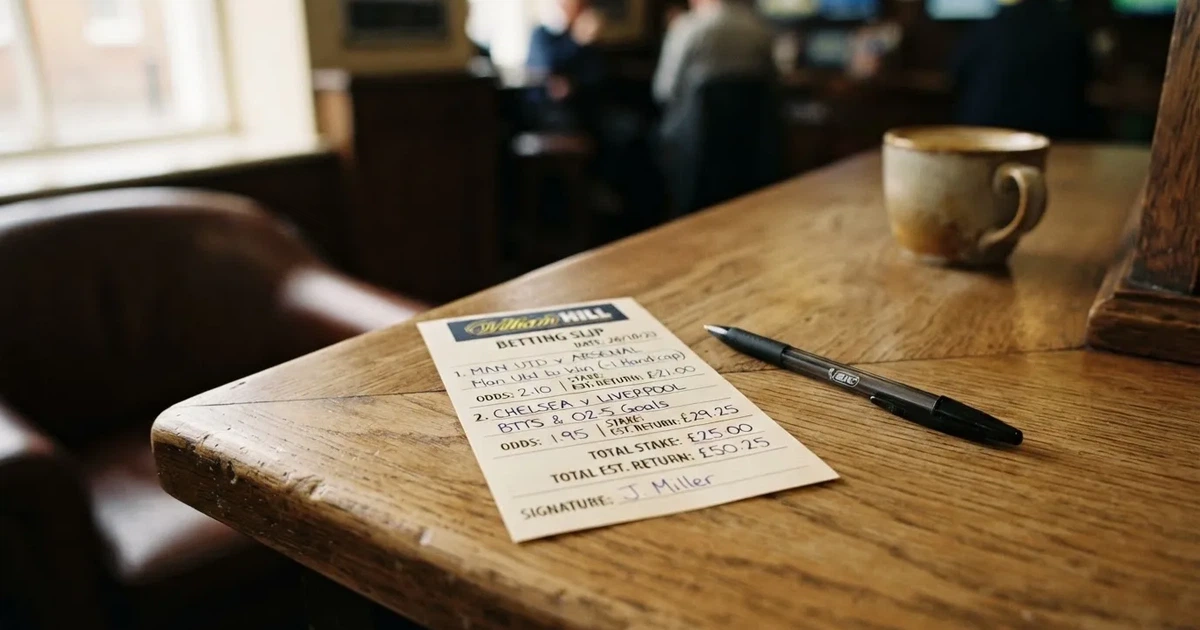
What follows works through who offers the line, what each licensed operator in the set actually says about it, and what a stake on a whole-number, half-goal or quarter-line handicap does to a return. The page leans into the arithmetic: every asian handicap line carries a margin the way every 1X2 market does, and the difference between -1.5 and -1.75 is the difference between a single settlement and two half-stakes to track.
Data current as of October 30, 2026 and verified against the Gambling Commission’s public register of licences.
Landmarks for this page
A few markers worth pinning down before the detail starts.

- Handicap, used as a noun, is the head start a bookmaker applies to one side of a football match. It is a number of goals, almost always a half or a quarter, never an integer plus a fraction of a goal that does not exist on a scoreboard.
- Push is the asian handicap’s word for a stake returned in full. It happens only on whole-number lines, because a result can end level after the handicap is applied and the goal that decides the bet has not actually been scored.
- Quarter-line is the asian handicap’s split stake: the book takes a £100 bet on a 1.75 line and treats it as two bets of £50 on the adjacent 1.5 and 2.0 lines. The two halves settle separately, which is why a quarter-line ticket can produce a return that is half a push and half a win.
- Margin is what the book keeps out of every pound staked. It is the gap between 100% and the implied probabilities of the prices on offer, and the asian handicap’s two-outcome structure means the margin has fewer places to hide than a three-way 1X2.
- Punter is what British bookmakers call the person betting with them. The page uses it throughout.
- Each-way, Thebet *, and acca** are British wagering terms and not exchangeable for their American or continental equivalents.
The shape of the landscape in Great Britain
Ten bookmakers make up this comparison. Each holds a remote operating licence from the Gambling Commission under the Gambling Act 2005; the Commission’s public register is the single source of truth on who is licensed, and the licence types it lists — remote general betting standard (real events) and, for one exchange, remote betting intermediary — are the legal frame within which each one offers the asian handicap.
The order of the table is not a ranking. It is alphabetical, because the audit cares about the spread of licence types, sign-up terms and platform features, and not about who pays out fastest on a Tuesday afternoon in March. A different cut — best for live asian handicap, best for quarter-line settlement, best for a stake of £2 — would produce a different order.
Why the verification matters in this market
The gambling landscape in Great Britain has two layers. The licensed layer carries the protections the Commission and the LCCP require: GAMSTOP membership, the 10x bonus cap, the financial vulnerability check at £150 of net deposits in a rolling 30 days, identity verification before the first stake, and a Commission complaints route if a dispute cannot be resolved with the brand. The unlicensed layer — a Curaçao, Maltese or Gibraltar licence presented as if it regulated a British customer — carries none of those. The 2014 Act made the point of consumption the test: a brand whose servers are touched by a customer in Great Britain needs a Commission licence, wherever the company sits.
That is why every name in the comparison below appears on the public register. It is not because each one is “the safest” — “safest” is a word the page avoids — but because each one has met the test of being licensed, and the rest of the comparison turns on what each one does with the licence.
Statute: the legal frame an asian handicap bet sits inside
A bookmaker offering the asian handicap to a customer in Great Britain does so under the Gambling Act 2005. The Act covers England, Scotland and Wales; Northern Ireland runs on its own older law and is outside the Commission’s remit. Every remote bookmaker accepting a stake from a customer in Great Britain needs a Commission operating licence at the point of consumption, regardless of where the company behind the brand is incorporated — the Gambling (Licensing and Advertising) Act 2014 closed that route.

Licence types that touch the asian handicap
Two licence categories on the Commission’s public register cover what this page compares. The first is remote general betting standard (real events), which is the standard licence for fixed-odds and asian handicap football. Every bookmaker in the comparison except the exchange holds it. The second is remote betting intermediary, which is the licence for a betting exchange — a platform where customers back and lay against each other rather than against the book. The exchange in the comparison holds both, because it offers fixed-odds multiples as well as an exchange order book.
The Commission’s register lists each licence with an account number and, since 2014, the licensed domain against it. The ten brands below each carry an account number a punter can look up; the domain on the licence is the one the brand uses in Great Britain, and licensed operators use .com as well as .co.uk, so the suffix proves nothing on its own.
What the licence does not do
The licence authorises the category of betting — football, racing, exchange — and binds the operator to the LCCP and the Remote Technical Standards. It does not list permitted markets. An operator holds a licence and offers markets under its own rules within the conditions of that licence. A punter who asks the Commission whether a specific market — say, an asian handicap on a friendly — is “legal” is asking the wrong body: the test is whether the brand offering it is licensed, not whether the market itself is approved.
In-play betting sits inside the same frame. There is no statutory ban and no statutory permission; the controls are the licence condition and the operator’s customer-protection duties. Cash out, where the book settles the bet early at a price it quotes, is an operator product, not a regulated market.
Tax and the punter
Betting winnings in Great Britain are not taxed in the punter’s hand. General Betting Duty is the operator’s tax on gross profits (currently 15% across most products, with a remote betting rate rising to 25% from 1 April 2027 under the policy paper of 26 November 2025), and it is the operator’s problem to set prices that pay the duty and the margin out of the stake. Whether the duty is passed on through shortened odds is not established. The punter’s side of the tax question ends at the price on the slip.
Safeguards: what the licensed book offers the punter beyond the line
The licence is a permission to take stakes. What comes with it is the safety net.
Identity, age and the first deposit
Every licensed operator verifies name, address and date of birth before a customer can deposit or place a stake. The rule has been in force since 7 May 2019 and covers free bets and bonus stakes as well as cash ones. There is no anonymous play on a Commission-licensed site, and the verification is the same whether the punter joins through the desktop site or the app.
The minimum age is 18 across the licensed market. Any promotion aimed at under-25s in its imagery — an actor who looks under 25 in marketing — is a breach of CAP Code section 16, not of the betting licence itself; the betting licence carries the age floor.
Self-exclusion through GAMSTOP
GAMSTOP is the national multi-operator online self-exclusion scheme and a mandatory licence condition for online operators since 31 March 2020. A punter who registers with GAMSTOP is excluded from every licensed online operator for the period they choose — six months, one year, five years, or five years with auto-renewal. After the minimum period the exclusion stays in place for a further seven years unless the punter asks GAMSTOP to remove it.
GAMSTOP covers online sites and apps. Betting shops run a separate scheme. A licensed bookmaker who lets a self-excluded customer through the GAMSTOP check is in breach of its licence condition.
Financial checks at £150 of net deposits
The financial vulnerability check is a public-record check (bankruptcy, county court judgments and the like) that applies once deposits minus withdrawals cross £150 in a rolling 30-day window. The rule came into force on 28 February 2025 and is the early tier of the Commission’s staged affordability framework. It is not an income check and not a credit reference check; it looks at public records of financial difficulty, not at the punter’s payslip.
A second tier of “financial risk assessments” — the affordability checks the press has written about — is announced and staged, with no start date. The page writes “announced, staged, no start date” and stops there.
Deposit limits the punter sets
Operators must offer a gross deposit limit the punter sets themselves on a fixed time frame. The first changes have applied since 31 October 2025; a second phase was postponed to 30 September 2026, and whether it is in force at the moment of reading is not established. There is no state-set ceiling on what a punter may deposit: the limit is the punter’s choice, and the operator’s job is to offer the dial.
Help outside the bookmaker
GamCare runs the National Gambling Helpline. GambleAware funds treatment and education. The NHS runs gambling clinics in several regions. Gamblers Anonymous runs meetings. None of these is the bookmaker’s own safer-gambling page, and a punter who feels the line has become the problem will find the same routes at every licensed brand.
Unfolding: in-play and cash out on the asian handicap
The asian handicap was built for the full-time result. It was also built before live pricing on football became a serious product. The two have had to meet.
What live means for the line
Most of the ten brands on this page offer in-play football, and most of them price the asian handicap live for the matches where the in-play product is properly staffed — the Premier League, the Champions League, the Spanish, Italian and German top flights, and the larger international fixtures. Below that, the in-play asian handicap can be thin or absent, and a price that was on the pre-match slip may not survive the first goal.
The asian handicap’s two-outcome structure is an advantage in-play: with no draw to reprice, the bookmaker’s live traders have one fewer decision to make when the score changes. It is also a disadvantage: a single goal on a half-goal line settles the bet. A live trader who moves the line from -0.5 to -0.5 still owes the punter a binary outcome; a live trader moving a 1X2 from 2.10/3.40/3.60 to 2.10/3.40/3.60 has, in practice, more knobs to turn.
Cash out on the handicap
Cash out is the bookmaker’s offer to settle the bet early at a price it sets. On a single asian handicap bet, cash out is a clean calculation: the book takes the current live price of the same line, applies the stake, and offers a number. The number is rarely as good as holding the bet to full-time, because the book holds a margin in the cash-out price the way it does in the pre-match price.
On a Bet Builder or a same-game multi that includes an asian handicap leg, cash out gets messier. The cash-out price has to reflect the live prices of all the legs and the book’s margin on the combined product. A punter who cashes out a bet builder leg early is paying the book for the privilege of locking in a partial win; the offer is rarely generous.
What to look for in a live product
Three practical checks before staking live.
The first is whether the asian handicap is priced for the match at all. The pre-match slip may list a dozen lines; the in-play slip may list three. The second is whether the line moves smoothly — a live line that jumps 0.5 goals inside a minute is a line that is being managed rather than priced, and the punter is more often the customer of that management than its beneficiary. The third is whether cash out is offered on the bet as struck or only on singles. A book that cashes out singles but not multiples is a book that wants the punter to hold the harder position.
Forecast: what a strategy looks like without pretending to know the result
A page that names winners is a page that the reader loses money on. A page that walks through what a strategy costs and where it bumps into the line is a page that earns its keep.
The bankroll is the stake limit
The first rule of any handicap strategy is the rule the punter sets for themselves: how much of the bank is on any one match, and how much is exposed at any one time. A flat-stake approach — the same stake on every selection — is the comparison’s baseline. A proportional approach — a fixed percentage of the bank, recalculated after every result — flattens the variance at the cost of compounding the drawdown. The page takes no position on which approach works best. Both strategies have merits, and the choice depends entirely on the punter’s personal tolerance for variance.
Why “tips” are not a strategy
A tip is a forecast: someone else’s view on who wins. A strategy is a method: a stake size, a price floor, a stop-loss, a set of matches the punter backs and a set the punter leaves alone. The two are not the same, and a punter who follows tips without a strategy is a punter paying someone else’s edge from their own bank.
The asian handicap rewards strategy in a way the 1X2 does not. A 1X2 tip is a single forecast with three ways to be wrong. A handicap tip is a forecast on the margin of victory with two ways to be wrong and a third — the push on a whole number — that returns the stake. The shape of the line punishes overconfident forecasts on heavy favourites and rewards a punter willing to take a small line on an underdog.
Where the strategy meets the rule
Three rules the licensed operator’s terms add to whatever the punter brings.
The first is the stake limit. The book sets a maximum stake on any line, and the limit can move: a £500 limit on a Premier League asian handicap can be £50 on a League Two tie on the same day. The second is the price floor for promotions. An offer that requires a minimum odds of 2.0 (1/1) means a 1.5 line on a heavy favourite does not qualify, even though the line is the most generous in the slip. The third is the settlement rule on abandoned and postponed matches. Most licensed books settle an abandoned match as a push on the asian handicap; a few settle at the odds if a result is reached under the rules of the competition. The punter reads the rule before staking, not after.
A worked stake
A £20 stake at decimal odds of 2.29 on Everton -1.75, with Everton winning the match 2-0, splits into a £10 stake at 2.29 on the -1.5 half and a £10 stake at 2.29 on the -2.0 half. The 2-0 win means the -1.5 half wins (Everdon’s margin of one goal after the half-goal handicap) and the -2.0 half pushes (Everdon’s margin of zero goals after the whole-goal handicap). The return is £10 × 2.29 + £10 = £32.90. A punter who took the same stake at 2.29 on Everton -1.5 alone would have had £20 × 2.29 = £45.80, and a punter who took Everton -2 would have had £20 returned. The quarter-line is the average of the two halves, which is why the line exists at all.
Selection: what an asian handicap line is, and what it does to a stake
This is the shelf where the arithmetic lives. The four sections below work through the line types and the settlement rules that turn a price into a payout.
The whole-number line and the push
A whole-number line — -1, +1, -2, +2 — adds a number of whole goals to one side of the fixture before the result is read. A bet on the favourite at -1 wins if the favourite wins by two or more; loses if the favourite draws or loses; pushes if the favourite wins by exactly one. The push is the line’s distinctive feature: a result that ends level after the handicap is applied returns all original stakes.
The push is also the punter’s protection on heavy lines. A bet on a -2 favourite that wins 2-1 is a stake returned, not a stake lost. The same bet on a -1.5 line is a losing stake; the same bet on a -2.5 line is a losing stake. The whole number is the line the punter chooses when the model says “two-goal favourite, but the draw worries me” — the push buys the draw back at the cost of a smaller price.
The push also affects the punter’s record. A punter running a tipster-style log shows a push as a returned stake and neither a win nor a loss; a punter running a yield-style log can count the push as a half-win or skip it. The settlement rule and the recording rule are two different things, and both belong to the punter.
The half-goal line and the binary result
A half-goal line — -0.5, +0.5, -1.5, +1.5 — adds a non-integer number of goals to one side. No football match can end level after a half-goal handicap, so no push is possible. A bet on the favourite at -1.5 wins if the favourite wins by two or more; loses otherwise. The line is the punter’s choice when the model says “two-goal favourite, the draw is not in the result” — the binary outcome is the punter’s certainty at the cost of a smaller price.
The half-goal line is the most common live line on a Premier League slip. The bookmaker’s live trader reprices the line as the score changes, and a goal at 1-0 on a -1.5 line settles the bet at the price struck; a goal at 1-1 makes the same line a loser. The punter’s job on a live half-goal line is to decide whether the favourite will score again before the book closes the bet.
The quarter-line and the split stake
A quarter-line — -0.75, +0.75, -1.75, +1.75 — splits the stake across two adjacent lines. A bet on the favourite at -1.75 is a stake at 2.29 on the -1.5 half and a stake at 2.29 on the -2.0 half, with the two halves settled separately. A 2-0 win on Everton -1.75 means the -1.5 half wins (return = stake × odds) and the -2.0 half pushes (return = stake). The return on a £100 stake at 2.29 is £164.50: £114.50 from the winning half and £50 from the push.
The quarter-line is the punter’s choice when the model says “two-goal favourite, but the draw or a one-goal win worries me enough to want half the stake back”. The price on a -1.75 line is between the prices on -1.5 and -2.0, and the settlement is a blend of the two. The line is the most common asian handicap on a Champions League slip and the most common line on which a punter’s record shows a partial return.
A worked example. A 100 stake at 2.29 on Everton -1.75, Everton winning 2-0, refunds 50 on the -2.0 half (a push) and wins on the -1.5 half (50 × 2.29 = 114.50), a total return of 164.50.
The settlement rule the punter reads first
Three rules cover most asian handicap bets on a licensed book.
The first is the abandoned-match rule. A match that is abandoned before full time is usually settled as a push on the asian handicap, regardless of the line. A few books settle an abandoned match at the odds if the result is reached under the rules of the competition; the punter reads the rule on the book’s terms page before staking.
The second is the extra-time rule. A bet on a cup tie’s asian handicap is settled on the 90-minute result unless the punter is told otherwise. The punter who wants the bet to include extra time and penalties reads the terms for “to qualify” markets and stakes there instead.
The third is the settlement-rule rule for live bets. A bet struck in-play is settled on the result at full time, with live cash out available before then. The punter who wants the bet settled at the price struck reads the in-play terms; the punter who wants to hold the bet to full time does not need to.
Shortlist: ten licensed bookmakers, side by side
The table below covers every operator in the comparison. The columns are the matters the comparison turns on: the brand, the licence account number and the licence holder on the Commission’s public register, and what the operator’s own terms state about the asian handicap or the football markets on which it sits.
| Brand | Gambling Commission account and licence holder | What the operator’s terms say about the asian handicap and adjacent markets |
|---|---|---|
| Bet Ahoy | 100094 — Bet Ahoy Ltd | Welcome offer of a £5 sports bet and a £5 acca on a £10 qualifying bet; site lists football and other sports but the asian handicap market is not surfaced in the listings the comparison reviewed |
| BetVictor | 39576 — BV Gaming Limited | Best Odds Guaranteed on UK and Irish horse racing, enhanced live race streaming, BetFinder for racing bets, Smart Stats; football pricing and the asian handicap line are set in the BV Gaming sportsbook |
| Betfred | 39544 — Petfre (Gibraltar) Limited | Bet Builder, Sub Switch, Racing Post data, Extra Places on racing, live casino and bingo; football and the asian handicap line are priced in the Betfred sportsbook |
| bet365 | 55148 — Hillside (UK Sports) ENC | Bet Builder+ on singles and multiples pre-match and in-play, Super Boosts, Winnings Boosts on Bet Builders and selected singles, daily Bet Boosts; the asian handicap is among the football markets priced in the bet365 sportsbook |
| Betmaster | 65699 — BM Solutions GB Ltd | Site states it is operated by BM Solutions GB Ltd, registered in Malta, under Gambling Commission account 65699; football pricing and the asian handicap are set in the BM Solutions sportsbook |
| Dabble | 65677 — Dabble Sports UK Ltd | Welcome offer of a £10 free bet on a first £10 deposit, minimum odds, 7-day expiry, stake not returned; football markets including the asian handicap are priced in the Dabble app |
| Matchbook | 39504 — Triplebet Limited | Betting exchange where customers bet against other users, plus Bet Builder, multiples, in-play betting and live streaming of horse racing and greyhounds; football markets including the asian handicap sit alongside the exchange order book |
| Octobet | 62545 — Octopus Game Limited | Best Odds Guaranteed on UK and Irish horse racing, up to £150 per customer per race; football markets and the asian handicap line are priced in the Octobet sportsbook |
| Unibet | 45322 — Platinum Gaming Limited | Sports welcome offer of £40 in free bets on a £20 qualifying bet at minimum odds of 2.0, free bets expiring within 7 days, debit card or instant bank transfer only; the asian handicap is among the football markets priced on the Unibet site |
| William Hill | 39225 — WHG (International) Limited | Best Odds Guaranteed on UK and Irish horse racing from 8 AM on the day of the race, on single and multiple bets, excluding ante-post, tote and pari-mutuel; football markets including the asian handicap are priced in the William Hill sportsbook |
The account numbers above are the numbers a punter enters into the Commission’s public register to confirm a licence. The register returns the licence status, the licence holder and the licensed domain; a punter who finds a brand on the register against a different domain or a different trading name has not found the brand at all.
How the comparison sits against the subject
The asian handicap is a football market. The ten brands above price it because they price football. The differences between them are not on whether the line is offered but on what surrounds it: the live in-play product, the bet builder that pulls the asian handicap into a same-game multi, the price boost that lifts an asian handicap leg of an acca, the cash-out product that lets the punter settle the bet early. A punter who has decided to back the line reads the columns for the brand feature that matters most — live coverage, bet builder, acca insurance — and not for the asian handicap itself.
The licensed bookmaker a punter chooses for the asian handicap is rarely chosen for the asian handicap alone. It is chosen because the punter already has an account, because the app is on the phone, because the live product is staffed on the matches the punter watches, or because the welcome terms or the existing balance make the brand the cheapest place to strike the bet. The comparison’s job is to put the licence and the brand features side by side, and to leave the choice to the punter.
Betmaster (BM Solutions GB Ltd) — a Malta-registered operator under a GB licence
Betmaster’s UK site is operated by BM Solutions GB Ltd, a company registered in Malta. The Commission lists it under account 65699 against the betmaster.co.uk domain, with the standard remote general betting licence for fixed-odds and asian handicap football. The Malta registration is the corporate form; the GB licence is the regulatory form, and the punter checks the licence, not the registration.
The site positions itself as a multi-product sportsbook with casino alongside the sportsbook. Football pricing and the asian handicap line sit inside the sportsbook product. The page does not have a product detail beyond the licensing and the home page for this brand in the data the comparison reviewed, and that absence is worth flagging: a punter who wants to know whether Betmaster offers Bet Builder+ or in-play cash out on the asian handicap reads the betting slip on the site before staking.
Verdict
A licensed bookmaker under a familiar corporate form. The punter checks the Commission’s register for account 65699 and the betmaster.co.uk domain, and reads the asian handicap line in the betting slip before staking. The brand suits a punter who already has an account and is comparing the line against other books on the same fixture, rather than a punter choosing where to open a new account.
Bet Ahoy (Bet Ahoy Ltd) — a young account on the register
Bet Ahoy’s welcome offer is a £5 sports bet and a £5 acca on a £10 qualifying bet. The Commission lists the brand under account 100094 against Bet Ahoy Ltd and the betahoy.co.uk domain, with the standard remote general betting licence. The betahoy.co.uk domain is the licensed address; the listing the comparison reviewed for the asian handicap did not surface the market.
A young account on the register means the licence is new. The brand is licensed, and the Commission’s public register is the test. The brand feature that distinguishes Bet Ahoy is the welcome split between a single and an acca, and that split is the punter’s first encounter with the brand’s terms: minimum odds, expiry, stake not returned on the free bet leg. The asian handicap market is a feature on the app; the punter reads the slip before staking.
Verdict — Bet Ahoy (Bet Ahoy Ltd)
A licensed bookmaker whose welcome offer is a single plus an acca. The brand suits a punter opening a new account and willing to read the slip before staking; a punter who wants the asian handicap on every Premier League fixture will find more lines on a larger bookmaker.
BetVictor (BV Gaming Limited) — the long-standing sportsbook with BOG on racing
BetVictor’s site is operated by BV Gaming Limited under Commission account 39576, with the standard remote general betting licence. The brand has been a sportsbook for decades; the live race streaming, BetFinder for racing bets and Smart Stats are racing-led features, and the football pricing and the asian handicap line sit inside the BV Gaming sportsbook.
The racing features are the brand’s mark on the comparison, and they are a marker for the punter who follows racing as well as football. The punter who wants the asian handicap on every Premier League fixture reads the betting slip; the punter who wants racing and football on one account reads BetFinder alongside the football slip. The licence, the racing features and the corporate form are the comparison’s view of BetVictor.
Verdict — BetVictor
A licensed sportsbook under a long-standing brand. The racing features are the comparison’s mark for BetVictor, and the asian handicap is priced within the sportsbook. The brand suits a punter who follows racing as well as football and wants one account to price both.
Betfred (Petfre (Gibraltar) Limited) — the high-street name
Betfred’s app carries Bet Builder, Sub Switch, Racing Post data, Extra Places on racing, live casino and bingo. The Commission lists the brand under account 39544 against Petfre (Gibraltar) Limited, with the standard remote general betting licence. The Gibraltar incorporation is the corporate form; the GB licence is the regulatory form.
The Bet Builder and Sub Switch features are the brand’s mark on the comparison: the Bet Builder pulls markets from one event into a single bet, and Sub Switch is the punter’s name for a feature the comparison’s data did not surface beyond the term. A punter who wants the asian handicap inside a Bet Builder reads the slip on the app before staking to verify the combined odds against their own expected return.
Verdict — Betfred
A licensed sportsbook under a high-street name with a Bet Builder product. The brand suits a punter who already has a Betfred account on the high street and wants the same brand online; the asian handicap sits inside the Betfred sportsbook and the Bet Builder is the product that pulls it into a same-game multi.
bet365 (Hillside (UK Sports) ENC) — the product-led sportsbook
bet365’s app carries Bet Builder+, Super Boosts, Winnings Boosts on Bet Builders and selected singles, and daily Bet Boosts. The Commission lists the brand under account 55148 against Hillside (UK Sports) ENC, with the standard remote general betting licence. Bet Builder+ combines markets from one event into a single bet, available pre-match and in-play, and is the most product-led feature on the comparison’s list.
Bet Builder+ is the brand’s mark on the comparison. A punter who wants the asian handicap inside a same-game multi reads the slip on the app, and the in-play product is the second feature the punter checks: a live line that is staffed for the match the punter watches is the line the punter backs. The Super Boosts and Winnings Boosts are price boosts on selected markets, and they are the punter’s third check.
Verdict — bet365 (Hillside (UK Sports) ENC)
A licensed sportsbook with a product-led same-game multi and a deep in-play product. The brand suits a punter who wants the asian handicap inside a Bet Builder+ and a live product that is staffed for the matches the punter watches; the product is the brand’s mark, and the licence is the comparison’s.
Dabble (Dabble Sports UK Ltd) — a social-led newcomer
Dabble’s welcome offer is a £10 free bet on a first £10 deposit, with minimum odds, a 7-day expiry and the stake not returned. The Commission lists the brand under account 65677 against Dabble Sports UK Ltd, with the standard remote general betting licence. The Dabble app has positioned itself as a social sportsbook with chat features alongside the markets.
The welcome offer and the social product are the brand’s marks. A punter who opens a Dabble account reads the slip on the app before staking: the asian handicap line is priced in the football markets, and the social features are the surrounding product. The brand differentiates itself through social features, while the licence ensures it meets GB regulatory standards.
Verdict — Dabble (Dabble Sports UK Ltd)
A licensed sportsbook with a social product and a £10-on-£10 welcome. The brand suits a punter who wants a chat-led sportsbook and is willing to read the slip; the asian handicap sits inside the football markets, and the social features are the surrounding product.
Matchbook (Triplebet Limited) — the betting exchange in the set
Matchbook is a betting exchange where customers back and lay against each other. The Commission lists the brand under account 39504 against Triplebet Limited, with two licence categories: remote general betting standard (real events) and remote betting intermediary — the licence for exchanges. The site also offers Bet Builder, multiples, in-play betting and live streaming of horse racing and greyhounds.
The exchange is the brand’s mark on the comparison. A punter who wants to lay the asian handicap — bet against the favourite at a chosen line — uses Matchbook’s order book; a punter who wants to back the asian handicap uses the order book the same way. The fixed-odds multiples and the Bet Builder sit alongside the exchange. The licence carries both categories, and the punter checks the register for the dual listing.
Verdict — Matchbook
A licensed betting exchange under a dual-category licence. The brand suits a punter who wants to back and lay the asian handicap on a single platform, with fixed-odds multiples alongside; the exchange is the product the others in the comparison do not offer.
Octobet (Octopus Game Limited) — the racing-led newcomer
Octobet offers Best Odds Guaranteed on UK and Irish horse racing, up to £150 per customer per race. The Commission lists the brand under account 62545 against Octopus Game Limited, with a remote general betting standard (real events) category. The Best Odds Guaranteed cap is the brand’s mark on the comparison; the asian handicap sits inside the football markets.
The £150 BOG cap is a feature the punter reads against the racing terms before staking: a BOG cap at £150 per customer per race is the size of the punter’s stake the book will pay out at the SP if the starting price is higher. A punter who backs both racing and football reads the BOG terms for the former and checks the asian handicap pricing for the latter to compare value.
Verdict — Octobet
A licensed sportsbook with a Best Odds Guaranteed product on UK and Irish racing. The brand suits a punter who backs racing and football and wants one account; the £150 BOG cap is the racing mark, and the asian handicap sits inside the football markets.
Unibet (Platinum Gaming Limited) — the long-standing operator with a £40-on-£20 welcome
Unibet states it has operated since 1999, and its UK site is run by Platinum Gaming Limited, Gibraltar, under Commission account 45322 with a remote general betting standard (real events) category. The sports welcome offer is £40 in free bets on a £20 qualifying bet at minimum odds of 2.0, with free bets expiring within 7 days, for new GB customers using a debit card or instant bank transfer.
The £40-on-£20 welcome and the long history are the brand’s marks. The minimum odds of 2.0 is the punter’s first check on the welcome: a 1.5 line on a heavy favourite does not qualify. The 7-day expiry is the second check: a free bet unused at 7 days is gone. The debit card or instant bank transfer restriction is the third: an e-wallet deposit may not qualify. The asian handicap sits inside the football markets; the welcome is the entry, and the punter’s check of the odds determines the value.
Verdict — Unibet (Platinum Gaming Limited)
A licensed sportsbook with a long history and a £40-on-£20 welcome. The brand suits a punter opening a new account and willing to meet the minimum odds, the 7-day expiry and the deposit-method terms; the asian handicap sits inside the football markets, and the licence is the comparison’s mark.
William Hill (WHG (International) Limited) — the high-street name with BOG on racing from 8 AM
William Hill pays Best Odds Guaranteed on UK and Irish horse racing from 8 AM on the day of the race, on both single and multiple bets, and it does not apply to ante-post, tote or pari-mutuel bets. The Commission lists the brand under account 39225 against WHG (International) Limited, with a remote general betting standard (real events) category.
The 8 AM BOG window is the brand’s mark on the comparison. A punter who backs racing reads the window: a bet struck before 8 AM does not qualify, and a bet on an ante-post market does not qualify. The asian handicap sits inside the football markets; the racing terms and the football slip are the comparison’s two marks. The brand suits a punter who already has a William Hill account on the high street and wants the same brand online.
Verdict — William Hill
A licensed sportsbook under a high-street name with a Best Odds Guaranteed product on racing from 8 AM. The brand suits a punter who follows racing and football and wants one account; the racing terms and the football slip are the punter’s two checks, and the licence is the comparison’s mark.
Foundations: what an asian handicap line costs in margin
Every price carries a margin. The asian handicap’s two-outcome structure means the margin has fewer places to hide than on a 1X2, and the arithmetic is straightforward.
The two-outcome market
The illustrative two-outcome market is priced at decimal odds of 1.90 / 1.90 — an example, not a quoted price. The implied probability of 1.90 is 1 ÷ 1.90 = 0.5263, or 52.63%. With two outcomes at the same price, the implied probabilities sum to 105.26%. The margin is the gap between that sum and 100%, which is 5.26%, and the payout share is 100% − 5.26% = 94.74%.
The same calculation at 1.80 / 1.80 gives implied probabilities of 0.5556 each, summing to 111.11%. The margin is 11.11% and the payout share is 88.89%. The shorter the price, the higher the margin as a fraction of the implied probabilities, and the lower the payout share of every pound staked. The asian handicap does not change this — it only removes the draw, so the margin that was spread across three outcomes is concentrated in two.
The band the page writes
A two-way market priced at 1.90 / 1.90 carries a margin of roughly 5% and a payout share of roughly 95%. The same market priced at 1.95 / 1.95 carries a margin of roughly 2.5% and a payout share of roughly 97.5%. The punter’s edge on the asian handicap is the gap between the book’s margin on this market and the book’s margin on the 1X2 on the same fixture; the punter’s loss is the margin itself, expressed as a fraction of every stake.
The margin of 5% at 1.90 / 1.90 is an illustrative band, not a quoted price. A real Premier League asian handicap line at the same firm may carry a margin of 3% on a high-liquidity match and 7% on a lower-liquidity one. The punter reads the prices on the slip and computes the margin before staking to assess the bookmaker’s take on the fixture.
Why the margin moves
Three pressures move the margin on an asian handicap line.
The first is liquidity. A Premier League match with £2m matched on the exchange attracts a thinner margin than a League Two tie with £20,000. The second is the time to kick-off. The margin on a pre-match line is at its tightest an hour before kick-off and widens as kick-off approaches if the in-play traders are not staffed. The third is the book’s exposure. A book that has taken a heavy favourite bias on a line will widen the favourite price and shorten the underdog price to attract two-way action. The punter who reads the prices at intervals across the hour before kick-off sees the margin move; the punter who reads the price once at the moment of staking pays the wider margin.
Frequently asked questions on asian handicap betting in Great Britain
The questions below are the ones the comparison’s data is set up to answer. Each answer is a paragraph, not a list.
What is the asian handicap in betting?
The asian handicap is a football betting method in which one side of the match is given a head start of a half or whole number of goals before the result is read. The head start removes the draw, leaving two outcomes: a winner or a loser. A bet on the favourite at -1 wins if the favourite wins by two or more; loses if the favourite draws or loses; pushes if the favourite wins by exactly one. The handicap is the punter’s way of taking a view on the margin of victory without paying for the draw.
What is the asian handicap in soccer betting?
The asian handicap is the same product under a different name. Football and soccer are the same sport; the term used depends on the market. British bookmakers write “asian handicap” on the slip; American and continental books write “spread” or “handicap” without the regional prefix. The lines are the same — half-goal, whole-number and quarter — and the settlement rules are the same. The punter’s reading list does not change with the name.
What is an asian handicap bet?
An asian handicap bet is a single wager on one of the two outcomes of an asian handicap line. The bet is struck at a price the book quotes on the slip, settled at full time unless the punter cashes out, and pushed on a whole-number line if the result ends level after the handicap is applied. The bet is not a parlay and not a multi; it is a single position on a single line, and the settlement rule is the rule the punter reads before staking.
How can it be checked that a bookmaker holds a Gambling Commission licence?
The Commission’s public register is the test. A punter enters the brand’s trading name, domain or Commission account number into the register and reads the result: the licence status, the licence holder, the licensed domain and the licence category. A brand on the register against a different domain or a different trading name has not been found; a brand not on the register at all is not licensed. The register is the comparison’s source of truth on every account number in the table above.
How is the return on a bet worked out from the stake and the odds?
The return on a winning single bet is the stake multiplied by the decimal odds. A £20 stake at 2.29 returns £45.80, of which £20 is the stake returned and £25.80 is the profit. The same stake at 1.90 returns £38.00, of which £20 is the stake and £18.00 is the profit. A combination bet multiplies the odds of the legs into a single price; a £10 stake on a two-leg combination at 2.29 and 1.90 returns £10 × 2.29 × 1.90 = £43.51, of which £10 is returned and £33.51 is the profit. The arithmetic is the same on every market, and the punter’s return is the stake times the price, less the stake.
What is the bookmaker’s margin and how can it be seen in the odds?
The bookmaker’s margin is the gap between 100% and the sum of the implied probabilities of the prices on offer. On a two-way market priced at 1.90 / 1.90, the implied probabilities are 52.63% each, summing to 105.26%, and the overround is 5.26%, making the margin 5.0%. The same calculation on a 1X2 with three outcomes distributes the margin across three implied probabilities, and the gap between their sum and 100% is the book’s take. The punter reads the prices on the slip, computes the implied probabilities, and sees the margin. A margin is the cost of the bet before the bet is struck.
Bet types & in-play – Independentbookies.com
Content created by the «Independentbookies.com» team
